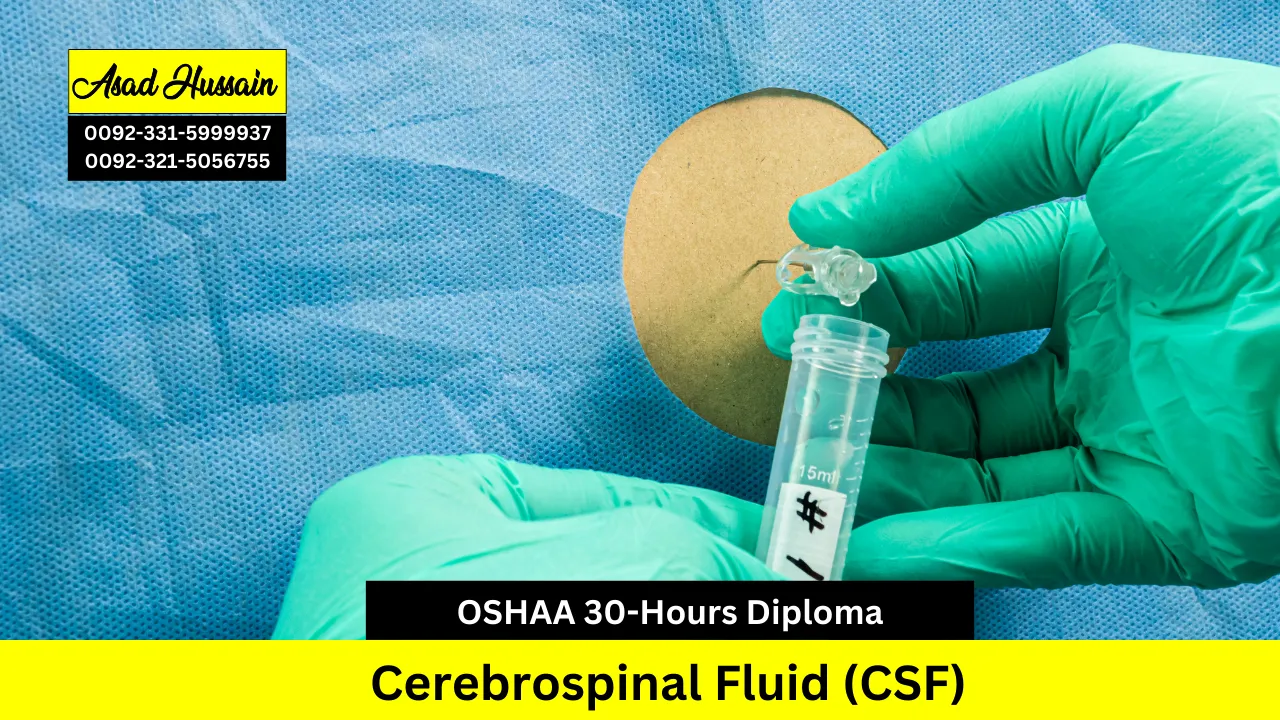
Strengthen Your Medical Expertise with Professional Diploma in Cerebrospinal Fluid (CSF)
The OSHAA 30-Hours Professional Diploma in Cerebrospinal Fluid (CSF) is designed to provide healthcare professionals and learners with an in-depth understanding of cerebrospinal fluid, its physiological functions, and clinical significance. The course explores the production, circulation, and composition of CSF, as well as its role in protecting the central nervous system. Participants will learn to recognise abnormalities in CSF and understand their implications for neurological health, disease diagnosis, and patient care. The programme integrates theoretical knowledge with practical insights to enhance comprehension of complex neurological processes.
The course also covers techniques for CSF collection, analysis, and interpretation in a clinical setting. Learners will gain knowledge of common CSF-related conditions, including infections, hemorrhages, and neurological disorders, and understand how CSF assessment supports diagnosis and treatment planning. Emphasis is placed on accurate interpretation, safety protocols, and ethical considerations when handling samples. The course equips learners with the ability to apply evidence-based approaches to CSF management in both laboratory and clinical environments, promoting patient safety and care quality.
OSHAA 30-Hours Professional Diploma in Cerebrospinal Fluid (CSF) provides participants with professional skills and practical knowledge to enhance their expertise in neurology and clinical diagnostics. Learners will gain confidence in understanding CSF physiology, identifying abnormalities, and applying laboratory and clinical protocols effectively. The course aligns with related certifications and diplomas in neurology, clinical laboratory science, and healthcare, offering a career-focused foundation for individuals seeking to strengthen their professional credentials, improve patient outcomes, and excel in clinical or laboratory roles.
Program Highlights
Study Units
- Introduction to Cerebrospinal Fluid and the Central Nervous System (3 hours)
- Physiology and Biochemistry of CSF (4 hours)
- CSF Circulation, Regulation, and Homeostasis (3 hours)
- Diagnostic Importance of CSF in Neurological Conditions (4 hours)
- CSF Sampling Techniques and Lumbar Puncture Procedures (6 hours)
- Laboratory Analysis and Interpretation of CSF Parameters (4 hours)
- Infections, Inflammation, and Immune Markers in CSF (3 hours)
- CSF in Neurodegenerative and Demyelinating Disorders (3 hours)
Entry Requirements
The OSHAA 30-Hours Professional Diploma in Cerebrospinal Fluid (CSF) is designed to ensure that learners have the necessary foundation to fully engage with the course content and apply their knowledge in clinical or laboratory settings. The entry requirements are structured to provide accessibility while maintaining professional standards.
- Age Requirement: Learners must be at least 18 years old at the time of enrolment to ensure readiness for professional-level study.
- Educational Background: Participants should have a secondary education or higher. Those with related certifications or diplomas in healthcare, nursing, medical laboratory science, neurology, or clinical diagnostics will find it particularly beneficial.
- Language Proficiency: Learners should have a good command of English to comprehend course materials, technical terminology, and assessment exercises effectively.
- Work Experience: Previous experience in healthcare, laboratory work, or neurology is advantageous but not mandatory. Practical application of course knowledge can be enhanced by exposure to clinical or laboratory environments.
This course is suitable for motivated learners seeking professional knowledge in CSF physiology and analysis, providing a strong foundation for careers or advanced roles in neurology, clinical diagnostics, and healthcare practice.
Learning Outcomes
Introduction to Cerebrospinal Fluid and the Central Nervous System (3 Hours)
- Understand the anatomical relationship between CSF and the central nervous system
- Identify the primary functions of CSF in protecting and supporting neural structures
- Describe the origin and historical significance of CSF in clinical neuroscience
- Recognise the role of CSF in maintaining brain stability and neural function
- Explore the connection between CSF dynamics and neurological health
Physiology and Biochemistry of CSF (4 Hours)
- Explain the chemical composition of normal CSF and its physiological roles
- Understand how CSF supports metabolic and biochemical balance in the brain
- Recognise changes in CSF composition linked to pathological conditions
- Learn how CSF biochemistry reflects neurological function
- Apply knowledge to understand clinical implications of CSF abnormalities
CSF Circulation, Regulation, and Homeostasis (3 Hours)
- Describe the flow of CSF through the ventricular system and subarachnoid space
- Understand mechanisms involved in CSF production, circulation, and reabsorption
- Identify disruptions in homeostasis that contribute to clinical disorders
- Explore factors affecting intracranial pressure and CSF dynamics
- Recognise how altered circulation impacts neurological health
Diagnostic Importance of CSF in Neurological Conditions (4 Hours)
- Recognise how CSF analysis assists in diagnosing meningitis, encephalitis, and multiple sclerosis
- Understand the role of CSF in detecting intracranial bleeding and neoplastic processes
- Interpret the clinical relevance of abnormal CSF findings
- Learn to link CSF results with patient symptoms and diagnostic strategies
- Explore the value of CSF in guiding treatment decisions
CSF Sampling Techniques and Lumbar Puncture Procedures (6 Hours)
- Understand the indications, contraindications, and procedural steps for lumbar puncture
- Learn safe handling and collection methods for CSF samples
- Identify potential complications and post-procedure care requirements
- Develop awareness of aseptic techniques and patient safety measures
- Apply practical knowledge for effective sample collection and clinical practice
Laboratory Analysis and Interpretation of CSF Parameters (4 Hours)
- Learn standard laboratory techniques used in CSF examination
- Interpret key parameters such as cell count, protein, glucose, and pressure
- Evaluate CSF results in the context of various neurological diagnoses
- Understand normal versus pathological ranges for CSF markers
- Apply analytical skills to support accurate clinical interpretation
Infections, Inflammation, and Immune Markers in CSF (3 Hours)
- Identify CSF changes associated with bacterial, viral, and fungal infections
- Understand immune response indicators and their diagnostic relevance
- Interpret CSF findings in inflammatory neurological diseases
- Recognise patterns that differentiate types of infection
- Learn the significance of immune markers in CSF for clinical decision-making
CSF in Neurodegenerative and Demyelinating Disorders (3 Hours)
- Understand the role of CSF in diagnosing Alzheimer’s disease and multiple sclerosis
- Identify specific biomarkers and their diagnostic applications
- Analyse the significance of oligoclonal bands and other immunological markers
- Recognise how CSF testing supports early detection of neurodegenerative disorders
- Explore the implications of CSF findings for patient management and prognosis
Target Audience
he OSHAA 30-Hours Professional Diploma in Cerebrospinal Fluid (CSF) is designed for healthcare professionals, laboratory specialists, and learners seeking advanced knowledge in neurology, clinical diagnostics, and CSF analysis. This course provides practical and theoretical expertise for those aiming to enhance their skills in neurological assessment and patient care.
Healthcare and Medical Professionals
- Doctors and neurologists seeking to expand their diagnostic knowledge
- Nurses involved in neurology or critical care settings
- Clinical practitioners working with neurological patients
- Healthcare professionals monitoring CNS-related conditions
- Medical staff responsible for patient assessment and sample collection
- Professionals aiming to enhance clinical decision-making skills
Laboratory and Diagnostic Specialists
- Clinical laboratory scientists and technicians
- Professionals handling CSF sample collection and analysis
- Laboratory staff involved in neurological or immunological testing
- Individuals aiming to interpret CSF parameters accurately
- Specialists interested in laboratory safety and aseptic techniques
- Professionals enhancing their understanding of CSF biomarkers
Students in Health and Life Sciences
- Medical and nursing students with an interest in neurology
- Learners pursuing diplomas or certifications in clinical diagnostics
- Individuals aiming to gain foundational and applied knowledge in CSF physiology
- Students interested in neurodegenerative and infectious CNS disorders
- Learners wanting practical knowledge applicable to healthcare settings
- Health science students looking to strengthen professional competencies
Neurology and Research Enthusiasts
- Professionals involved in neuroscience research
- Researchers studying neurodegenerative or demyelinating disorders
- Individuals exploring CSF biomarkers and immune markers
- Clinicians interested in neuroimmunology and CNS pathology
- Professionals applying research findings to patient care
- Those aiming to integrate lab and clinical knowledge in neurology
Career Changers and Lifelong Learners
- Individuals seeking to transition into neurology or laboratory roles
- Professionals wanting flexible, accessible advanced learning
- Learners aiming to gain recognised diplomas in neurological diagnostics
- Individuals seeking practical knowledge for clinical and laboratory application
- Professionals committed to continuous learning and skill enhancement
- Those looking to strengthen their credentials in healthcare and diagnostics
This course is suitable for anyone aiming to advance their knowledge of cerebrospinal fluid, clinical diagnostics, and neurological care, providing practical skills, professional insights, and confidence to apply CSF analysis in healthcare or research environments.