Biomedical Science Diploma – Gain Cutting-Edge Knowledge and Professional Skills
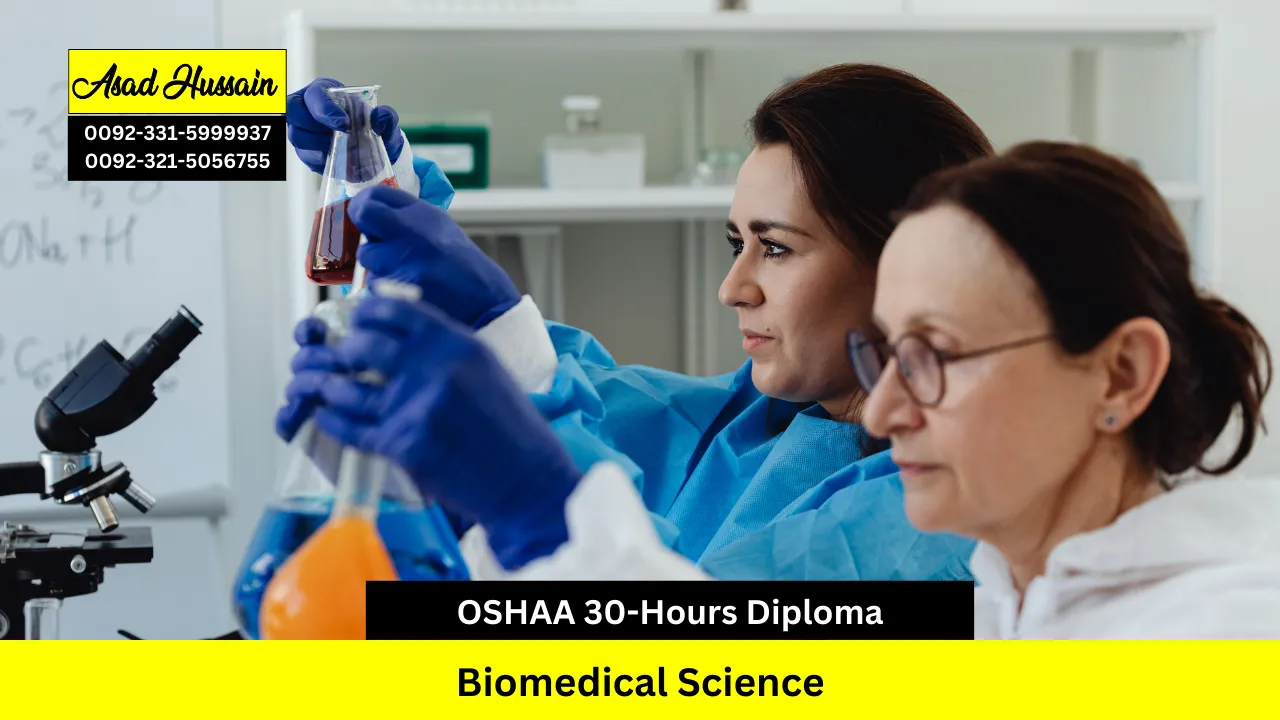
The OSHAA 30-Hours Professional Diploma in Biomedical Science offers a detailed exploration of the essential principles and practical techniques used in modern biomedical laboratories. Learners will gain a strong understanding of human biology, cellular processes, and the role of biomedical science in healthcare and research. The course covers key topics including microbiology, immunology, molecular biology, and diagnostic testing methods. It also emphasizes laboratory safety, hygiene, and accurate record-keeping practices to ensure a safe and efficient working environment. By combining theoretical knowledge with practical applications, students develop a solid foundation for professional biomedical work.
This course provides learners with the skills to interpret laboratory results, identify biological hazards, and apply scientific methodologies in clinical and research settings. Participants will learn how to analyze samples, understand pathogen detection techniques, and implement quality control measures in the laboratory. The program also highlights ethical considerations, regulatory compliance, and the importance of maintaining professional standards in biomedical operations. Through interactive training and real-world examples, students develop critical thinking and problem-solving abilities necessary for handling complex biomedical scenarios safely and accurately.
The OSHAA 30-Hours Professional Diploma in Biomedical Science prepares learners for further certifications and diplomas in biomedical science and related health and laboratory fields. Upon completion, students can enhance their career prospects by pursuing specialized qualifications that build on the knowledge and skills acquired in this course. The program is ideal for those seeking practical, industry-relevant expertise in biomedical science, whether for laboratory work, healthcare support, or research assistance. Graduates leave the course with a thorough understanding of biomedical principles, laboratory safety, and scientific techniques, positioning them for success in a variety of professional environments.
Program Highlights
Study Units
- Introduction to OSHA and Laboratory Safety Regulations (3 Hours)
- Hazard Identification and Risk Assessment in Biomedical Settings (4 Hours)
- Biological Hazard Control and Infection Prevention (4 Hours)
- Chemical Safety and Hazardous Material Handling (3 Hours)
- Personal Protective Equipment (PPE) and Laboratory Hygiene Practices (5 Hours)
- Emergency Response and Incident Management (6 Hours)
- Safe Handling and Disposal of Biomedical Waste (3 Hours)
- Ergonomics and Physical Safety in Laboratory Environments (2 Hours)
Entry Requirements
To enroll in the OSHAA 30-Hours Professional Diploma in Biomedical Science, applicants should meet the following criteria to ensure they are well-prepared for the course content and practical learning:
- Age Requirement: Candidates must be at least 18 years old to participate in the course, ensuring the maturity needed for laboratory practices and health and safety awareness.
- Educational Background: Applicants should have a basic understanding of science, biology, or health-related subjects. Completion of diplomas or certificates such as a Certificate in Health Science, Laboratory Techniques Diploma, or Medical Science Certificate is advantageous but not mandatory.
- Language Proficiency: Students should be proficient in English, including reading, writing, and comprehension skills, as all instructional materials and assessments are delivered in English.
- Work Experience (Optional): While prior experience in a laboratory, healthcare, or research environment is beneficial, it is not essential. The course is designed to provide foundational knowledge suitable for beginners and those seeking professional development.
Meeting these entry requirements ensures that learners can fully engage with the course material and gain maximum benefit from the OSHAA 30-Hours Professional Diploma in Biomedical Science.
Learning Outcomes
Introduction to OSHA and Laboratory Safety Regulations (3 Hours)
- Understand the purpose and scope of OSHA regulations relevant to biomedical science
- Identify key responsibilities of employers and participants under OSHA standards
- Interpret basic compliance requirements for laboratory operations
- Recognise the role of safety policies and regulatory frameworks in workplace protection
- Build foundational knowledge to ensure a safe and compliant laboratory environment
Hazard Identification and Risk Assessment in Biomedical Settings (4 Hours)
- Identify common physical, chemical, and biological hazards in biomedical environments
- Conduct systematic risk assessments using standard methodologies
- Evaluate the severity and likelihood of risks associated with laboratory activities
- Apply control measures to minimise or eliminate workplace hazards
- Strengthen skills in anticipating and mitigating laboratory risks
Biological Hazard Control and Infection Prevention (4 Hours)
- Distinguish between different types of biological agents and their risk classifications
- Apply appropriate biosafety levels and containment procedures
- Implement infection control measures to prevent contamination and spread
- Understand the principles of immunisation and post-exposure protocols
- Promote safe practices that protect both staff and the surrounding environment
Chemical Safety and Hazardous Material Handling (3 Hours)
- Classify laboratory chemicals based on hazard categories
- Interpret safety data sheets (SDS) for chemical handling and storage
- Implement safe handling, labelling, and disposal practices for hazardous substances
- Use ventilation systems and containment devices effectively
- Reduce exposure risks through proper chemical safety protocols
Personal Protective Equipment (PPE) and Laboratory Hygiene Practices (5 Hours)
- Identify types of PPE used in biomedical laboratories and their correct applications
- Demonstrate proper donning, doffing, and maintenance of PPE
- Understand hygiene protocols that minimise exposure risks
- Promote consistent adherence to laboratory cleanliness and contamination control
- Ensure safety compliance through effective PPE usage and hygiene practices
Emergency Response and Incident Management (6 Hours)
- Recognise different types of laboratory emergencies and their potential impact
- Follow structured response protocols for fire, chemical spills, biological exposure, and injuries
- Operate emergency equipment such as eyewash stations, safety showers, and fire extinguishers
- Contribute to emergency planning, reporting, and post-incident analysis
- Develop the ability to respond quickly and effectively during critical incidents
Safe Handling and Disposal of Biomedical Waste (3 Hours)
- Identify categories of biomedical waste and associated risks
- Follow procedures for segregation, labelling, and storage of waste materials
- Apply best practices in decontamination and disposal of biological and chemical waste
- Ensure compliance with local and international waste management regulations
- Minimise environmental impact while maintaining laboratory safety
Ergonomics and Physical Safety in Laboratory Environments (2 Hours)
- Recognise ergonomic hazards related to repetitive motion, workstation design, and manual handling
- Apply safe lifting, posture, and equipment use techniques
- Adapt laboratory setups to reduce physical strain and enhance efficiency
- Promote a safe and comfortable working environment through ergonomic best practices
- Improve productivity while maintaining staff health and safety
Target Audience
This course is ideal for individuals seeking to build a strong foundation in biomedical science, gain practical laboratory skills, and enhance their knowledge of health and safety practices in clinical and research environments. It is designed to support professionals, students, and those aspiring to enter the biomedical or healthcare sectors.
Laboratory Technicians and Assistants
- Individuals working in diagnostic or research laboratories seeking to improve safety and procedural knowledge
- Technicians wanting to develop skills in handling biological and chemical materials
- Staff aiming to enhance competence in laboratory hygiene and infection prevention
- Professionals looking to apply risk assessment and hazard control methods effectively
- Employees wishing to understand OSHA regulations and compliance requirements
Healthcare and Medical Support Staff
- Nursing assistants, phlebotomists, and clinical support workers aiming to expand biomedical knowledge
- Staff responsible for handling biological samples safely
- Individuals seeking training in infection control and exposure prevention
- Professionals aiming to strengthen their understanding of laboratory procedures
- Employees wanting to enhance patient safety through proper biomedical practices
Aspiring Biomedical Science Professionals
- Students or graduates interested in entering biomedical, clinical, or research fields
- Individuals looking to gain practical knowledge in laboratory safety and sample handling
- Those seeking a foundation to build further professional certifications or diplomas
- Learners wanting exposure to standard laboratory protocols and safety procedures
- Individuals motivated to develop both technical and analytical skills in biomedical science
Facility and Safety Managers
- Managers overseeing laboratory operations who need knowledge of biomedical hazards
- Supervisors responsible for ensuring OSHA compliance and workplace safety
- Staff involved in risk assessments, emergency planning, and incident response
- Professionals seeking to implement safety protocols and monitoring systems effectively
- Individuals looking to strengthen their leadership and safety management capabilities
Research and Academic Professionals
- Researchers working with biological samples who require advanced laboratory safety skills
- Academics and lecturers seeking to update knowledge of biomedical safety regulations
- Staff responsible for training and supervising laboratory personnel
- Individuals needing expertise in PPE, hygiene practices, and emergency procedures
- Professionals aiming to apply best practices in biomedical waste handling and disposal
This course provides comprehensive, practical, and regulatory knowledge suitable for a wide range of professionals and learners, ensuring participants are well-prepared to handle biomedical environments safely and effectively.