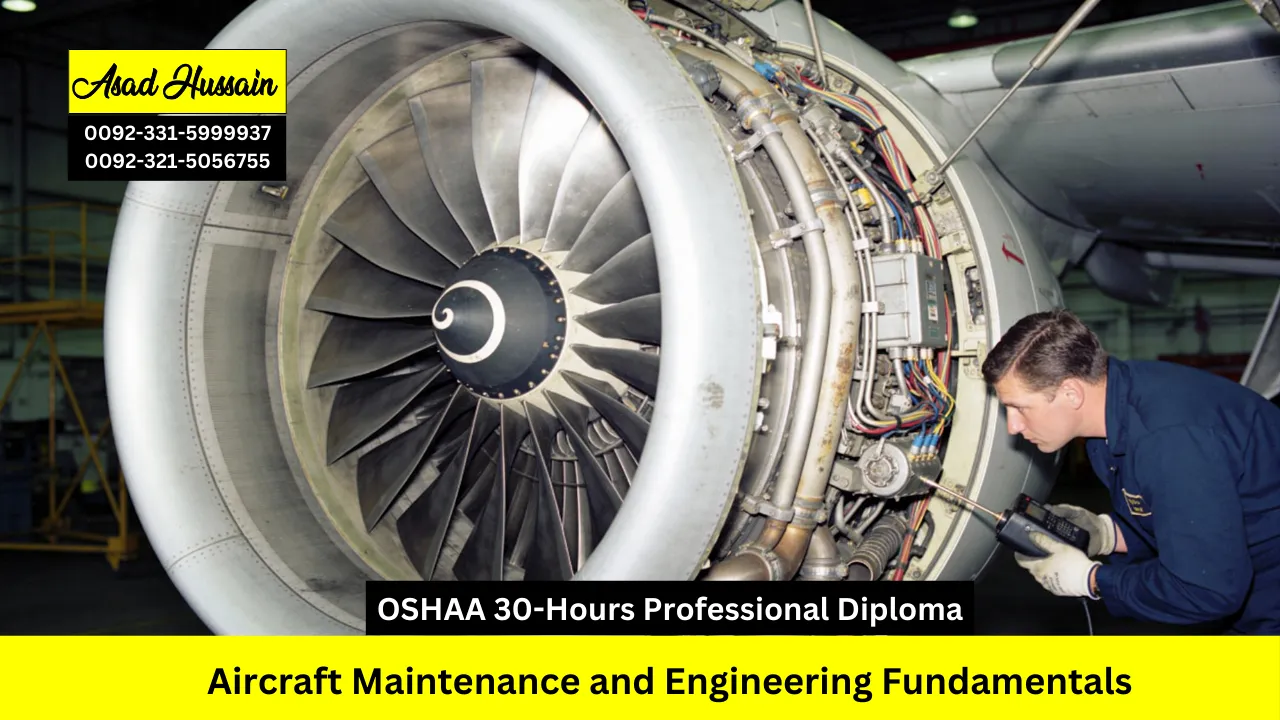
Advance Your Aviation Expertise with Professional Diploma in Aircraft Maintenance and Engineering Fundamentals
The OSHAA 30-Hours Professional Diploma in Aircraft Maintenance and Engineering Fundamentals is designed to provide learners with a strong foundation in aircraft systems, maintenance practices, and engineering principles essential to modern aviation operations. This course focuses on safety, reliability, and technical accuracy within highly regulated aviation environments. Participants gain a clear understanding of how proper maintenance and engineering controls contribute to aircraft performance, operational efficiency, and risk reduction, making it ideal for those seeking structured and industry-relevant aviation knowledge.
This professional diploma emphasizes practical awareness of aircraft structures, mechanical systems, inspection procedures, and maintenance safety protocols. Learners explore how engineering fundamentals align with operational standards to ensure airworthiness and workplace safety. The course also highlights the importance of compliance, documentation, and hazard control within maintenance environments. Through real-world scenarios and applied concepts, participants develop the confidence to support maintenance operations while maintaining high standards of precision and accountability.
OSHAA 30-Hours Professional Diploma in Aircraft Maintenance and Engineering Fundamentals also supports professional development by strengthening technical understanding applicable across aviation maintenance roles. While not Ofqual regulated, the program complements industry-recognized certifications and professional diplomas related to aviation safety, engineering support, and maintenance operations. By completing this course, learners enhance their technical competence, safety awareness, and professional credibility, enabling them to contribute effectively to aircraft maintenance teams and aviation engineering environments.
Program Highlights
- Introduction to Aircraft Maintenance and Global Aviation Safety Standards (3 Hours)
- Fundamentals of OSHA Regulations and International Aviation Compliance (3 Hours)
- Principles of Aircraft Engineering and Technical Systems (3 Hours)
- Aircraft Structures, Materials, and Maintenance Procedures (3 Hours)
- Hazard Identification, Risk Assessment, and Control in Aircraft Maintenance (3 Hours)
- Safety Management Systems and Workplace Safety Culture in Engineering (3 Hours)
- Human Factors in Aircraft Maintenance and Engineering Operations (3 Hours)
- Emergency Response Planning and Crisis Management in Aviation Maintenance (3 Hours)
- Regulatory Audits, Compliance Monitoring, and Quality Assurance (3 Hours)
- Final Assessment, Case Studies, and Professional Applications (3 Hours)
The entry requirements for the OSHAA 30-Hours Professional Diploma in Aircraft Maintenance and Engineering Fundamentals are designed to ensure learners can confidently engage with technical aviation training while keeping the programme accessible to a broad range of participants.
- Age Requirements: Applicants should normally be at least 18 years of age at the time of enrollment, reflecting the responsibility and safety awareness required in aircraft maintenance and engineering environments.
- Educational Background: A basic secondary education is recommended. Learners holding diplomas or certificates in mechanical engineering, electrical engineering, aviation technology, aircraft maintenance support, industrial engineering, or technical safety disciplines will find the course especially beneficial.
- Language Proficiency: Participants should have a good working knowledge of the English language to understand technical manuals, safety procedures, engineering terminology, and training materials effectively.
- Work Experience: Previous experience in aviation maintenance, engineering workshops, mechanical or electrical maintenance, or technical operations is advantageous but not mandatory, as the course is suitable for both entry-level learners and professionals seeking foundational aviation engineering knowledge
Learning Outcomes
The Learning Outcomes of the OSHAA 30-Hours Professional Diploma in Aircraft Maintenance and Engineering Fundamentals are designed to equip participants with advanced technical skills, compliance knowledge, and safety leadership abilities essential for success in the aviation industry. This course provides learners with the expertise to manage aircraft maintenance operations effectively, ensure adherence to OSHA and international aviation standards, and implement risk management strategies that enhance both safety and operational efficiency. By completing this program, participants will gain the competencies required to excel in highly regulated, safety-driven environments while contributing to professional growth and organizational excellence.
Introduction to Aircraft Maintenance and Global Aviation Safety Standards (3 Hours)
- Understand the global importance of aircraft maintenance in ensuring aviation safety and reliability
- Identify international aviation safety standards and their influence on maintenance practices
- Demonstrate how compliance frameworks integrate into daily aviation operations
- Recognize the importance of aligning maintenance activities with OSHA and ICAO standards
Fundamentals of OSHA Regulations and International Aviation Compliance (3 Hours)
- Gain a clear understanding of OSHA standards relevant to aircraft maintenance environments
- Interpret international aviation regulations, including ICAO, EASA, and FAA requirements
- Apply occupational health and safety principles within engineering and maintenance settings
- Develop awareness of employer duties, employee rights, and regulatory enforcement processes
Principles of Aircraft Engineering and Technical Systems (3 Hours)
- Learn core aircraft engineering principles supporting safe flight operations
- Understand the functions of avionics, propulsion, hydraulic, and electrical systems
- Apply engineering concepts to basic troubleshooting and maintenance tasks
- Develop technical awareness to support compliance with engineering safety standards
Aircraft Structures, Materials, and Maintenance Procedures (3 Hours)
- Gain knowledge of aircraft structural components and commonly used materials
- Understand approved maintenance procedures for airframes and engines
- Apply inspection methods to identify fatigue, corrosion, and structural damage
- Implement preventive maintenance practices to enhance aircraft reliability
Hazard Identification, Risk Assessment, and Control in Aircraft Maintenance (3 Hours)
- Conduct systematic hazard identification in maintenance and engineering activities
- Apply risk assessment techniques to evaluate technical and workplace hazards
- Develop effective control measures to reduce risks and prevent incidents
- Integrate hazard prevention strategies into routine maintenance operations
Safety Management Systems and Workplace Safety Culture in Engineering (3 Hours)
- Understand the structure and purpose of Safety Management Systems in aviation
- Apply proactive safety management approaches to reduce accidents and errors
- Promote a positive safety culture within engineering and maintenance teams
- Integrate SMS principles into organizational maintenance practices
Human Factors in Aircraft Maintenance and Engineering Operations (3 Hours)
- Recognize the impact of human factors on aviation maintenance safety
- Understand how fatigue, stress, and communication affect engineering performance
- Apply leadership approaches to support safe work behaviours
- Strengthen teamwork and communication to improve maintenance outcomes
Emergency Response Planning and Crisis Management in Aviation Maintenance (3 Hours)
- Understand emergency response planning within aviation maintenance operations
- Develop crisis management strategies for technical failures and accidents
- Apply effective communication protocols during emergency situations
- Analyze case studies to improve preparedness and response capability
Regulatory Audits, Compliance Monitoring, and Quality Assurance (3 Hours)
- Interpret aviation compliance frameworks and regulatory oversight processes
- Apply compliance monitoring strategies to meet safety and operational standards
- Understand the role of audits and inspections in maintaining maintenance quality
- Develop continuous improvement strategies for regulatory adherence
Final Assessment, Case Studies, and Professional Applications (3 Hours)
- Demonstrate comprehensive understanding of aircraft maintenance and engineering fundamentals
- Apply theoretical knowledge to real-world maintenance and safety scenarios
- Develop problem-solving skills for complex engineering and compliance challenges
- Showcase professional readiness to support aircraft maintenance operations and regulatory compliance
The OSHAA 30-Hours Professional Diploma in Aircraft Maintenance and Engineering Fundamentals is designed for individuals who wish to build strong foundational knowledge in aircraft maintenance, engineering principles, and aviation safety while aligning with industry best practices.
Aspiring Aircraft Maintenance Professionals
- Individuals seeking an entry point into aircraft maintenance and engineering roles
- Learners interested in understanding basic aircraft systems and components
- Candidates aiming to develop technical awareness for aviation environments
- Those preparing to work in maintenance hangars or aviation workshops
- Individuals exploring long-term careers in aviation engineering support
Aviation Technicians and Technical Support Staff
- Existing aviation technicians looking to strengthen core engineering knowledge
- Maintenance support staff seeking improved understanding of aircraft systems
- Professionals involved in inspection, servicing, or repair activities
- Personnel aiming to enhance safety awareness in technical operations
- Workers supporting licensed engineers in maintenance environments
Engineering and Technical Background Learners
- Students with mechanical or electrical education entering aviation fields
- Diploma holders in engineering seeking aviation-specific fundamentals
- Technical learners interested in applied engineering concepts
- Individuals wanting to bridge general engineering skills with aviation practice
- Those seeking structured exposure to aircraft maintenance principles
Airport and Ground Operations Personnel
- Airport staff working closely with maintenance and engineering teams
- Ground operations professionals seeking better technical coordination
- Personnel involved in aircraft turnaround and technical support areas
- Staff aiming to understand maintenance-related safety requirements
- Professionals supporting compliance and operational efficiency
Safety and Compliance-Oriented Professionals
- Individuals responsible for maintaining safe technical workplaces
- Staff involved in inspections, audits, or quality monitoring
- Professionals aiming to strengthen hazard awareness in maintenance areas
- Personnel supporting regulatory compliance within aviation operations
- Team members contributing to a strong safety culture
Career Transition and Skill Enhancement Seekers
- Professionals transitioning from general engineering to aviation sectors
- Individuals seeking structured technical knowledge without prior aviation experience
- Learners aiming to enhance employability in aviation support roles
- Workers upgrading skills to meet aviation industry expectations
- Candidates seeking confidence in technical aviation environments