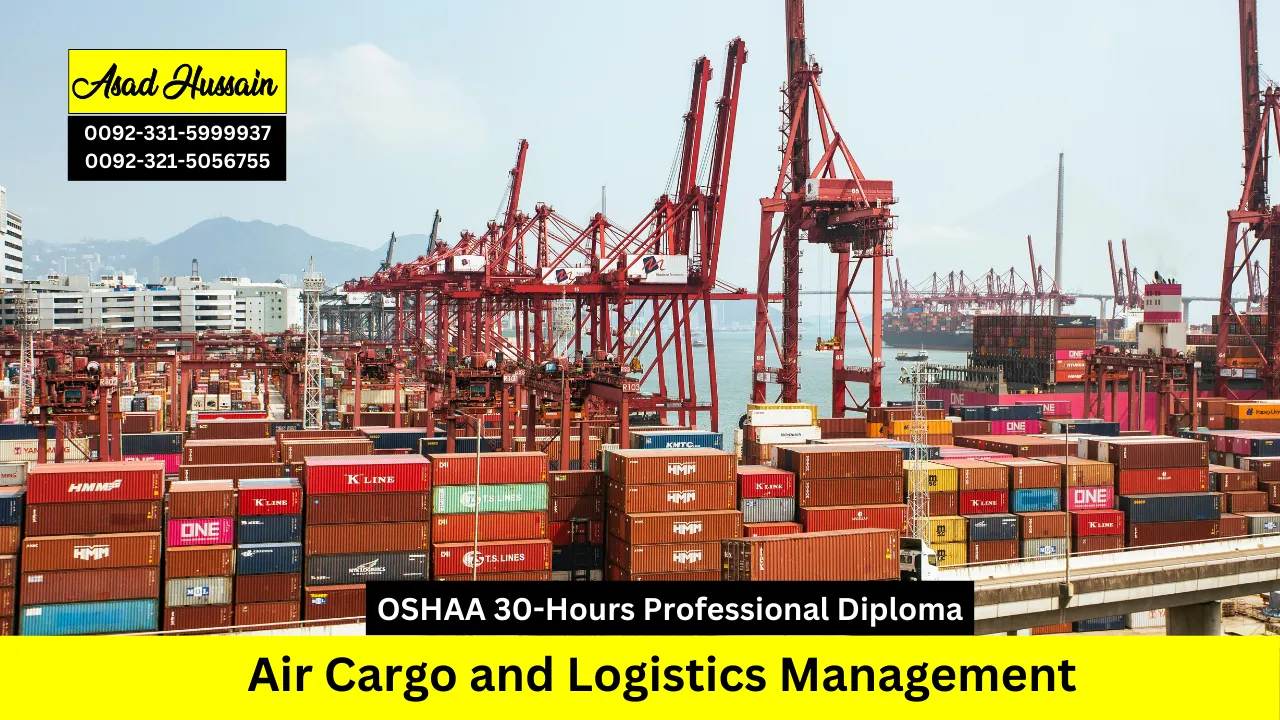
OSHAA 30-Hours Professional Diploma in Air Cargo and Logistics Management for Operational Excellence
The OSHAA 30-Hours Professional Diploma in Air Cargo and Logistics Management is designed to provide learners with a strong foundation in modern air cargo operations, logistics coordination, and supply chain efficiency within the aviation sector. This course focuses on the critical role air cargo plays in global trade, time-sensitive deliveries, and economic growth. Learners will gain practical insight into cargo handling processes, documentation requirements, safety practices, and operational workflows that support reliable and compliant air logistics services in fast-paced aviation environments.
The programme emphasizes the integration of safety, compliance, and operational control within air cargo and logistics management. Participants will develop an understanding of regulatory requirements, risk awareness, and quality control measures essential for maintaining secure and efficient cargo operations. The course also highlights coordination between airlines, freight forwarders, ground handling agents, and regulatory authorities, helping learners build the operational mindset required to manage cargo flows while ensuring workplace safety and service reliability.
The OSHAA 30-Hours Professional Diploma in Air Cargo and Logistics Management supports professional development by aligning industry-focused knowledge with practical skills relevant to aviation logistics roles. Learners are introduced to recognized industry certifications and professional diplomas relevant to air cargo, logistics management, and aviation operations, enhancing career credibility and competence. This structured training enables participants to strengthen operational confidence, improve decision-making, and contribute effectively to safe, compliant, and efficient air cargo and logistics operations.
Program Highlights
- Introduction to Air Cargo and Logistics Management (3 Hours)
- Fundamentals of Occupational Safety and Health Standards (3 Hours)
- Air Cargo Handling Procedures and Safety Protocols (3 Hours)
- Cargo Storage, Documentation, and Security Regulations (3 Hours)
- Hazard Identification, Risk Assessment, and Control Measures (3 Hours)
- Emergency Response Planning and Crisis Management in Logistics (3 Hours)
- Regulatory Compliance in Air Cargo and International Logistics (3 Hours)
- Workplace Safety Culture and Human Factors in Aviation Logistics (3 Hours)
- Environmental Sustainability in Air Cargo and Supply Chain Operations (3 Hours)
- Final Assessment, Case Studies, and Professional Applications (3 Hours)
The entry requirements for the OSHAA 30-Hours Professional Diploma in Air Cargo and Logistics Management are designed to ensure learners can successfully engage with aviation logistics concepts while keeping the programme accessible to a wide range of participants.
- Age Requirements: Applicants should normally be at least 18 years of age at the time of enrolment, reflecting the professional responsibilities involved in air cargo and logistics operations.
- Educational Background: A basic secondary education is recommended. Learners holding diplomas or certificates in logistics management, supply chain management, air cargo operations, freight forwarding, airport operations, aviation management, or related business and transport fields will find the course particularly suitable.
- Language Proficiency: Participants should have a good working knowledge of the English language to understand course materials, complete assessments, and communicate effectively within aviation and logistics environments.
- Work Experience: Prior experience in logistics, warehousing, freight forwarding, aviation ground handling, airline cargo services, or supply chain operations is advantageous but not mandatory, as the course is designed for both entry-level learners and working professionals.
Learning Outcomes
The Learning Outcomes of the OSHAA 30-Hours Professional Diploma in Air Cargo and Logistics Management are designed to provide participants with advanced skills, compliance knowledge, and safety leadership abilities that are essential for success in the aviation and logistics industry. This course equips learners with the expertise to manage air cargo operations, ensure adherence to OSHA and international safety standards, and implement effective strategies that enhance both workplace safety and operational efficiency. By completing this program, participants will gain the competencies required to excel in highly regulated, safety-driven environments while contributing to professional growth and organizational excellence.
Introduction to Air Cargo and Logistics Management (3 Hours)
- Understand the structure, functions, and global significance of air cargo and logistics operations
- Identify the roles of key stakeholders within aviation and supply chain sectors
- Demonstrate how air cargo supports international trade and logistics networks
- Recognize the importance of safety, efficiency, and compliance in cargo operations
Fundamentals of Occupational Safety and Health Standards (3 Hours)
- Gain an understanding of OSHA standards and international safety frameworks
- Apply occupational health and safety principles to cargo and logistics environments
- Recognize how compliance helps reduce workplace hazards and operational risks
- Develop awareness of employee rights, employer responsibilities, and enforcement systems
Air Cargo Handling Procedures and Safety Protocols (3 Hours)
- Learn safe and efficient air cargo handling techniques
- Apply safety protocols during loading, unloading, and cargo transfers
- Understand coordination between ground staff, airlines, and authorities
- Implement best practices for equipment use and ramp safety
Cargo Storage, Documentation, and Security Regulations (3 Hours)
- Understand principles of safe cargo storage and warehouse management
- Apply international cargo security regulations to prevent risks and losses
- Learn documentation requirements for customs and cargo movement
- Identify hazardous materials and follow safe handling procedures
Hazard Identification, Risk Assessment, and Control Measures (3 Hours)
- Conduct hazard identification in cargo and logistics operations
- Apply risk assessment methods to evaluate operational threats
- Develop control measures to reduce risks and improve safety
- Integrate proactive safety management into daily workflows
Emergency Response Planning and Crisis Management in Logistics (3 Hours)
- Understand emergency response planning in aviation logistics
- Develop crisis management strategies for accidents and disruptions
- Apply communication protocols during emergencies
- Analyze real-world incidents to improve preparedness
Regulatory Compliance in Air Cargo and International Logistics (3 Hours)
- Interpret international aviation and cargo regulations such as ICAO and IATA
- Apply compliance frameworks to meet safety and operational requirements
- Understand the role of audits, inspections, and certifications
- Develop approaches for continuous regulatory improvement
Workplace Safety Culture and Human Factors in Aviation Logistics (3 Hours)
- Recognize the impact of human factors on safety performance
- Promote a positive safety culture within logistics teams
- Understand the effects of fatigue, stress, and communication on operations
- Apply leadership practices to improve safety engagement
Environmental Sustainability in Air Cargo and Supply Chain Operations (3 Hours)
- Understand environmental challenges in aviation logistics
- Apply sustainable practices to reduce emissions and waste
- Promote energy efficiency in cargo operations
- Integrate sustainability into safety and compliance frameworks
Final Assessment, Case Studies, and Professional Applications (3 Hours)
- Demonstrate comprehensive understanding of course concepts
- Apply knowledge to real-world cargo and logistics scenarios
- Develop problem-solving skills for safety and compliance challenges
- Showcase professional readiness for roles in air cargo and logistics management
The OSHAA 30-Hours Professional Diploma in Air Cargo and Logistics Management is designed for individuals who aim to develop strong operational, safety, and compliance competencies within the aviation cargo and global logistics sector.
Aspiring Air Cargo and Logistics Professionals
- Individuals seeking to build a career in air cargo, freight forwarding, or aviation logistics
- Learners interested in understanding cargo operations, documentation, and safety practices
- Those planning to enter airport cargo terminals or airline logistics departments
- Candidates aiming to gain industry-relevant knowledge aligned with global standards
- People looking to strengthen their professional profile in aviation logistics
Aviation and Airport Operations Personnel
- Airport ground staff involved in cargo handling and ramp operations
- Airline employees working with cargo coordination and logistics support
- Supervisors responsible for daily cargo movement and safety compliance
- Operational staff seeking structured knowledge of cargo safety protocols
- Team members aiming to enhance operational efficiency and risk awareness
Freight Forwarders and Supply Chain Practitioners
- Professionals working in freight forwarding and international logistics
- Supply chain coordinators handling air cargo documentation and compliance
- Logistics planners seeking aviation-specific operational insights
- Warehouse and cargo terminal staff involved in air transport logistics
- Individuals aiming to improve coordination between aviation and supply chain systems
Safety, Compliance, and Quality Assurance Staff
- Personnel responsible for workplace safety and regulatory compliance
- Quality assurance professionals involved in cargo audits and inspections
- Safety officers seeking aviation-focused cargo risk management knowledge
- Compliance staff aiming to align operations with international aviation standards
- Individuals supporting safety management systems in logistics environments
Managers and Supervisors in Cargo Operations
- Cargo managers overseeing air freight and logistics activities
- Supervisors responsible for team performance, safety, and compliance
- Operations managers aiming to improve risk control and efficiency
- Leaders seeking to promote a strong safety culture in cargo operations
- Decision-makers involved in planning and operational improvement
Career Switchers and Skill Development Seekers
- Professionals transitioning into aviation cargo and logistics roles
- Individuals seeking structured training to upgrade existing logistics skills
- Learners aiming to understand aviation-specific safety and compliance requirements
- Employees preparing for broader responsibilities within logistics operations
- Candidates looking to strengthen their practical and professional capabilities