Professional Diploma Mastering Acute Stress Disorder Management
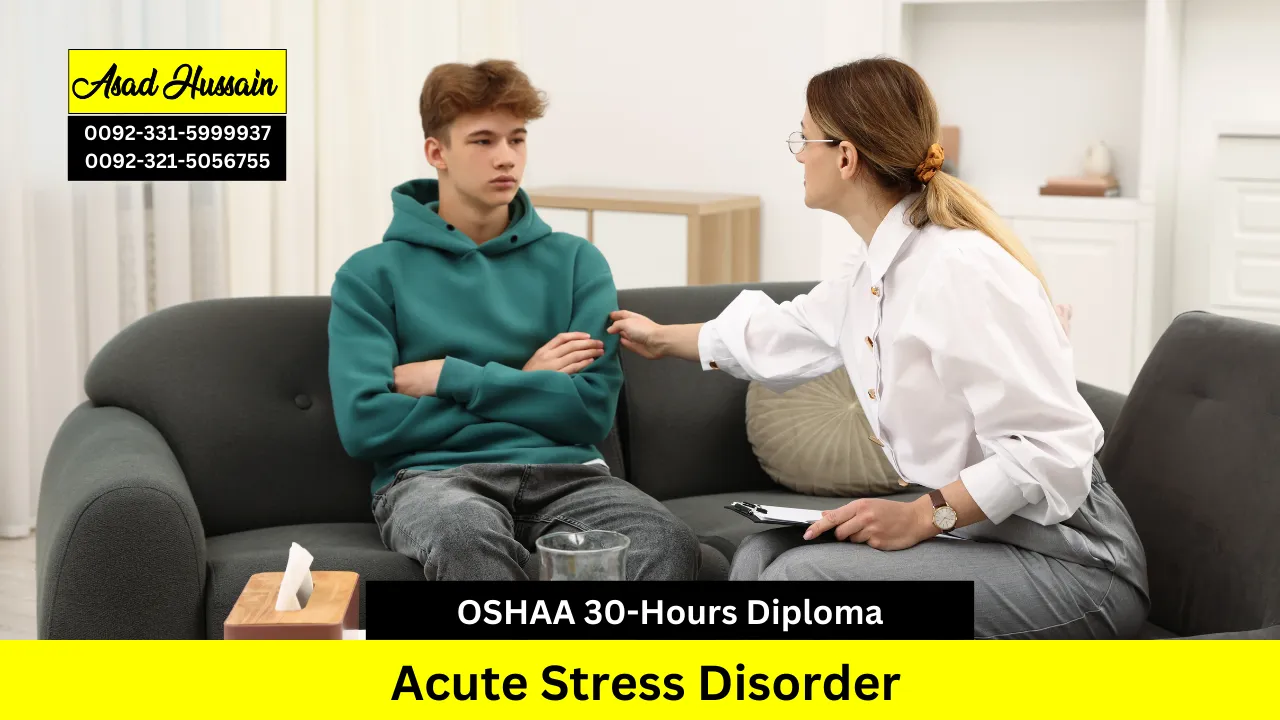
The OSHAA 30-Hours Professional Diploma in Acute Stress Disorder equips learners with essential knowledge to identify, understand, and manage acute stress reactions in various professional and personal settings. The course explores the physiological and psychological responses triggered by traumatic events, helping participants recognise signs of acute stress, anxiety, and emotional distress. Through practical examples and case studies, learners will develop the ability to assess individuals at risk, understand contributing factors, and implement immediate interventions. Emphasis is placed on improving resilience, enhancing situational awareness, and fostering supportive environments for those experiencing stress.
Participants will gain insights into evidence-based strategies for stress mitigation and prevention. The course covers approaches for emotional regulation, coping mechanism development, and short-term therapeutic interventions that can reduce the intensity and duration of stress responses. Learners will also explore the impact of stress on cognitive performance, communication, and interpersonal relationships, equipping them to respond effectively in high-pressure situations. By combining theory with actionable skills, participants will understand how to apply assessment tools, observe behavioural cues, and promote psychological safety in workplaces, communities, and healthcare settings.
OSHAA 30-Hours Professional Diploma in Acute Stress Disorder focuses on practical application and professional competency in stress management. The course guides learners through recognising acute stress symptoms, implementing immediate support strategies, and maintaining long-term mental wellbeing for individuals affected. It also highlights the importance of ethical practice, confidentiality, and multi-disciplinary collaboration when handling stress-related incidents. By the end of this programme, participants will possess the skills to provide effective interventions, offer emotional support, and contribute to safer, healthier environments. The course is designed for professionals across healthcare, emergency services, education, and community support roles seeking specialised expertise in acute stress disorder management.
Program Highlights
Study Units
- Introduction to Acute Stress Disorder and Trauma Response (3 hours)
- Neurobiology and Psychological Impact of Acute Stress (4 hours)
- Diagnostic Criteria and Differential Diagnosis (5 hours)
- Risk Factors, Protective Factors, and Resilience (5 hours)
- Assessment Tools and Early Identification Strategies (4 hours)
- Trauma-Informed Communication and Engagement (3 hours)
- Acute Stress Interventions and Supportive Therapies (4 hours)
- Managing Dissociation, Flashbacks, and Anxiety Responses (2 hours)
Entry Requirement
To enrol in the OSHAA 30-Hours Professional Diploma in Acute Stress Disorder, participants should meet the following basic criteria to ensure a smooth learning experience:
- Age Requirement: Candidates should be at least 18 years of age to ensure maturity in handling sensitive topics related to acute stress and trauma.
- Educational Background: A minimum of secondary education or equivalent is recommended. Participants with related diplomas or certificates in healthcare, counselling, psychology, mental health, or social care will benefit from prior foundational knowledge.
- Language Proficiency: Participants should have a strong command of English, both written and spoken, to fully comprehend course materials, assessments, and practical scenarios.
- Work Experience: While no formal professional experience is strictly required, individuals currently working in healthcare, emergency services, education, social work, or community support roles will find the content highly relevant. Experience in patient care, crisis management, or mental health support is advantageous but not mandatory.
This course is designed to accommodate both newcomers and professionals looking to enhance their practical skills in identifying, managing, and supporting individuals experiencing acute stress. Completing the programme equips learners with actionable knowledge to effectively address stress-related situations in professional settings.
Learning Outcomes
Introduction to Acute Stress Disorder and Trauma Response (3 hours)
- Define acute stress disorder and distinguish it from other trauma-related conditions
- Understand the immediate psychological and behavioural responses to traumatic events
- Recognise the importance of timely intervention in reducing long-term impact
Neurobiology and Psychological Impact of Acute Stress (4 hours)
- Explore how trauma affects the brain and nervous system
- Understand the role of the amygdala, hippocampus, and prefrontal cortex in stress processing
- Identify psychological responses such as hyperarousal, numbing, and emotional dysregulation
Diagnostic Criteria and Differential Diagnosis (5 hours)
- Learn the DSM-5 diagnostic criteria for acute stress disorder
- Differentiate acute stress disorder from PTSD, generalised anxiety, and adjustment disorders
- Understand the clinical course and timeline of symptom progression
Risk Factors, Protective Factors, and Resilience (5 hours)
- Identify individual and situational risk factors contributing to acute stress disorder
- Explore protective factors that buffer the effects of trauma
- Understand the concept of psychological resilience and its role in recovery
Assessment Tools and Early Identification Strategies (4 hours)
- Learn to use validated screening and assessment tools for early detection of ASD
- Understand best practices in trauma history taking and observation
- Apply assessment outcomes to inform support and referral pathways
Trauma-Informed Communication and Engagement (3 hours)
- Develop skills to engage sensitively with trauma-affected individuals
- Practise principles of safety, trust, empowerment, and collaboration in communication
- Recognise the impact of language, tone, and body language in trauma contexts
Acute Stress Interventions and Supportive Therapies (4 hours)
- Gain an overview of evidence-based early interventions such as psychological first aid
- Explore supportive therapeutic approaches suitable for acute settings
- Understand the importance of stabilisation and short-term safety planning
Managing Dissociation, Flashbacks, and Anxiety Responses (2 hours)
- Recognise symptoms and triggers of dissociation and intrusive memories
- Learn immediate grounding and self-regulation techniques
- Understand how to support individuals experiencing anxiety surges in acu
Target Audience
This course is ideal for professionals and individuals who want to develop expertise in recognising, managing, and supporting people experiencing acute stress and trauma. It is suitable for those in healthcare, emergency response, social care, education, and mental health support roles.
Healthcare Professionals
- Nurses, paramedics, and clinical staff dealing with trauma patients
- Mental health practitioners, counsellors, and therapists
- Understand early signs of acute stress disorder in patients
- Enhance skills in crisis assessment and immediate intervention
- Support recovery through evidence-based care and communication
- Strengthen professional competence in trauma-informed care
Emergency Responders
- Firefighters, police officers, and ambulance staff
- Identify acute stress reactions in victims and colleagues
- Apply rapid assessment and stabilisation techniques
- Communicate effectively during high-pressure emergency situations
- Implement safety and support measures for affected individuals
- Reduce the risk of secondary trauma in emergency personnel
Social Care and Community Workers
- Social workers, youth workers, and care home staff
- Recognise signs of stress and trauma in vulnerable populations
- Apply trauma-informed communication strategies
- Support individuals while maintaining personal wellbeing
- Collaborate with multidisciplinary teams for follow-up care
- Promote resilience and coping skills in care recipients
Educators and School Counsellors
- Teachers, school support staff, and educational psychologists
- Identify stress responses in students and staff members
- Use supportive strategies to reduce anxiety and emotional distress
- Facilitate safe and empathetic discussions around trauma
- Enhance emotional and psychological support in learning environments
- Promote mental health awareness among children and adolescents
Individuals Interested in Mental Health
- Anyone seeking to understand acute stress and its impact
- Gain practical tools for personal or professional use
- Learn coping strategies and intervention techniques
- Build confidence in responding to stressful or traumatic events
- Improve knowledge of early identification and risk management
- Apply insights to enhance overall emotional resilience
This course equips learners with practical knowledge, strategies, and communication skills to effectively support individuals experiencing acute stress while fostering safe and professional intervention practices.