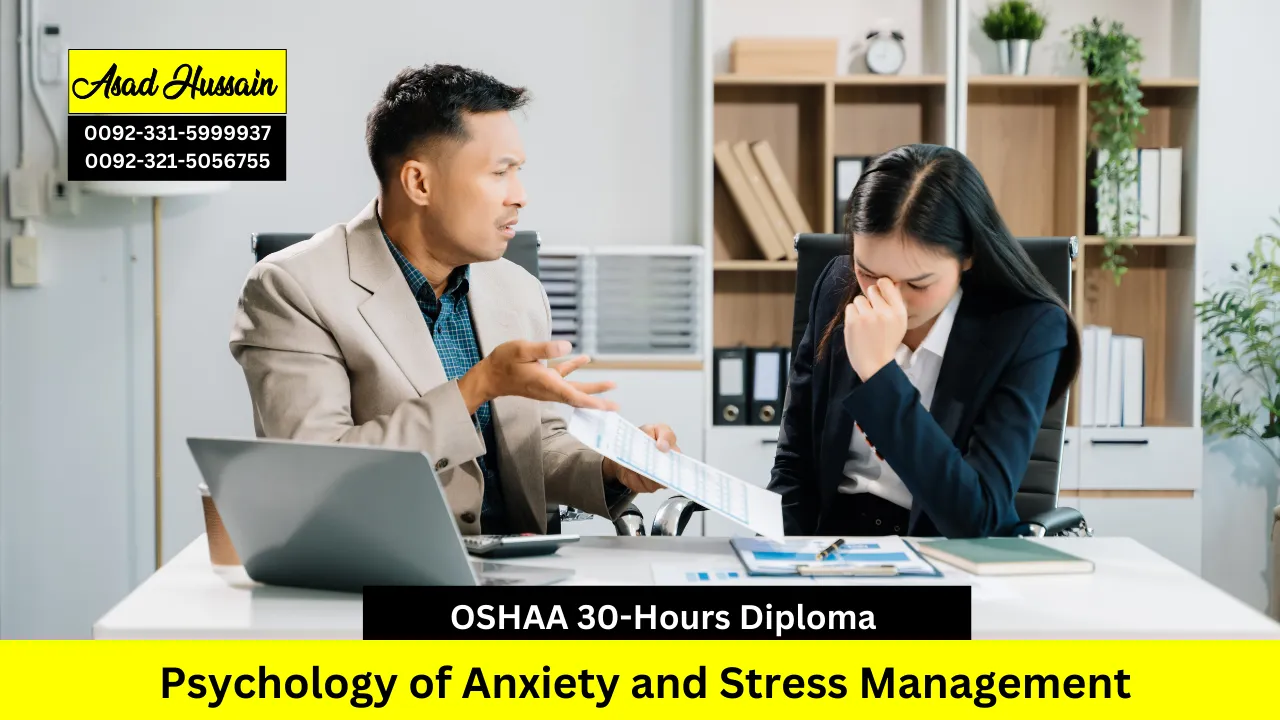
Master Anxiety and Stress Management with Diploma in Psychology
The OSHAA 30-Hours Diploma in Psychology of Anxiety and Stress Management is a comprehensive programme designed to provide learners with a deep understanding of the psychological factors behind anxiety and stress. Participants explore how these mental health challenges affect cognition, behaviour, and overall wellbeing. The course examines the physiological and emotional responses to stress and anxiety, helping learners recognise triggers, patterns, and coping mechanisms. Through a combination of theory and practical strategies, participants gain insight into evidence-based approaches for managing stress and promoting mental resilience in personal and professional settings.
Throughout the programme, learners develop practical skills to assess and support individuals experiencing anxiety or stress. The course covers stress management techniques, relaxation strategies, mindfulness, and behavioural interventions, providing tools to improve emotional regulation and enhance mental wellbeing. Participants also learn to create structured stress reduction plans, apply psychological principles in real-world contexts, and understand the ethical considerations when supporting clients. This holistic approach ensures learners can confidently integrate mental health strategies into wellness, therapy, or professional care practices.
OSHAA 30-Hours Diploma in Psychology of Anxiety and Stress Management equips learners with professional knowledge and practical skills to enhance careers in counselling, therapy, wellness, healthcare, and support services. As a non-Ofqual regulated programme, it focuses on applied learning and competence in managing stress and anxiety effectively. Upon completion, participants may pursue further certifications and diplomas in mental health, psychology, counselling, or holistic wellness, providing opportunities to expand expertise and deliver professional mental health support in diverse settings.
Program Highlights
Study Units
- Introduction to Organic Food Systems and Sustainability Principles (3 Hours)
- Soil Health and Organic Fertility Management (3 Hours)
- Sustainable Crop Planning and Rotation Practices (4 Hours)
- Natural Pest and Disease Control in Organic Farming (5Hours)
- Organic Certification Standards and Compliance (6Hours)
- Water Conservation and Sustainable Irrigation Techniques (3 Hours)
- Ethical Food Sourcing and Transparent Supply Chains (3 Hours)
- Climate Change and the Role of Organic Agriculture (3 Hours)
Entry Requirements
To enrol in the OSHAA 30-Hours Diploma in Psychology of Anxiety and Stress Management, learners should meet basic criteria to ensure they can fully engage with the course content and practical applications:
- Age Requirement: Participants must be at least 18 years old to ensure maturity and readiness for professional practice in mental health and wellness.
- Educational Background: A minimum of secondary education or equivalent is recommended. Individuals with related diplomas or certificates in psychology, counselling, mental health, healthcare, social work, or wellness practices will find it easier to grasp theoretical and practical concepts.
- Language Proficiency: Good command of English is required to understand course materials, participate in discussions, and complete assessments effectively.
- Work Experience: While prior professional experience is not mandatory, experience in counselling, healthcare, wellness, or support services can enhance practical understanding and application of stress management techniques.
Meeting these entry requirements ensures learners are prepared to gain maximum benefit from the programme and develop professional competence in managing anxiety and stress effectively.
Learning Outcomes
Introduction to Anxiety and Stress Psychology (3 Hours)
- Define anxiety and stress from a psychological perspective
- Understand the basic concepts and models related to anxiety and stress
- Identify different types of anxiety disorders and stress responses
- Recognise how anxiety and stress influence thoughts, emotions, and behaviour
- Develop foundational knowledge for effective stress management
Causes and Triggers of Anxiety and Stress (3 Hours)
- Identify common internal and external causes of anxiety and stress
- Understand the role of genetics, environment, and lifestyle factors
- Recognise situational and chronic triggers that contribute to stress and anxiety
- Analyse how individual differences affect responses to stressors
- Explore interactions between personal and environmental influences on stress
Psychological and Physiological Effects of Anxiety and Stress (4 Hours)
- Describe the impact of anxiety and stress on mental health and cognitive function
- Understand physiological responses to stress, including the fight-or-flight reaction
- Recognise symptoms and signs of prolonged anxiety and stress on the body
- Explore the relationship between stress, anxiety, and physical health conditions
- Analyse how chronic stress can affect overall wellbeing
Cognitive-Behavioural Approaches to Anxiety and Stress Management (4 Hours)
- Understand the principles of cognitive-behavioural therapy (CBT) related to anxiety and stress
- Apply CBT techniques to challenge negative thought patterns
- Develop practical strategies to reduce anxiety and manage stress effectively
- Evaluate the effectiveness of cognitive-behavioural interventions
- Integrate CBT methods into personal and professional practice
Mindfulness and Relaxation Techniques (6 Hours)
- Define mindfulness and its relevance to anxiety and stress management
- Learn various relaxation methods such as deep breathing, progressive muscle relaxation, and meditation
- Practice mindfulness exercises to enhance emotional regulation
- Incorporate relaxation techniques into daily routines for stress reduction
- Develop practical skills to maintain calm and focus under pressure
Developing Personal Resilience and Coping Strategies (4 Hours)
- Understand the concept of resilience and its role in managing anxiety and stress
- Identify personal strengths and resources to build resilience
- Develop adaptive coping strategies for dealing with stressors
- Create a personalised plan to enhance resilience in challenging situations
- Apply resilience techniques to improve long-term mental wellbeing
Identifying and Supporting Anxiety and Stress in Others (3 Hours)
- Recognise signs and symptoms of anxiety and stress in others
- Understand effective communication techniques to provide support
- Learn how to offer appropriate interventions and referrals
- Promote a supportive environment that encourages mental wellbeing
- Apply strategies to help others manage stress effectively
Stress Management in the Workplace (3 Hours)
- Identify workplace factors that contribute to stress and anxiety
- Implement strategies to manage and reduce stress in professional settings
- Promote organisational policies that support mental health
- Encourage work-life balance and healthy coping mechanisms among colleagues
- Develop a framework for creating a mentally healthy workplace environment
Target Audience
The OSHAA 30-Hours Diploma in Psychology of Anxiety and Stress Management is designed for anyone who wants to understand, manage, and support mental wellbeing in themselves or others. This course is ideal for professionals and individuals seeking practical strategies to handle anxiety and stress effectively in personal and professional contexts.
Mental Health Practitioners
- Counsellors and therapists aiming to enhance client support
- Psychologists seeking practical tools for anxiety and stress management
- Social workers working with vulnerable or at-risk individuals
- Wellness coaches integrating mental health practices into services
- Professionals providing guidance on coping strategies
- Practitioners wanting to improve emotional support skills
Healthcare Professionals
- Nurses and medical staff managing patient stress
- Occupational therapists addressing anxiety in rehabilitation
- Physiotherapists supporting holistic care approaches
- Healthcare workers improving patient mental wellbeing
- Professionals learning strategies to reduce burnout
- Individuals applying psychological principles in care settings
Corporate and Workplace Professionals
- Managers and team leaders aiming to reduce workplace stress
- HR professionals developing employee wellbeing initiatives
- Employees seeking strategies to improve productivity and resilience
- Organisational leaders promoting work-life balance
- Staff implementing stress management programmes
- Professionals fostering positive workplace mental health culture
Students and Learners in Psychology or Wellness
- Students exploring practical applications of psychology
- Learners interested in mental health and wellbeing strategies
- Individuals preparing for careers in counselling or therapy
- Those wanting foundational knowledge in stress and anxiety management
- Beginners aiming to develop professional competence in mental health
- Learners enhancing skills for future mental health-related roles
Individuals Seeking Personal Growth
- Anyone experiencing personal anxiety or stress
- Individuals aiming to improve emotional regulation
- People wanting to develop resilience in challenging situations
- Those seeking practical mindfulness and relaxation techniques
- Individuals learning to support family or friends with stress
- Anyone committed to improving overall mental wellbeing
Professionals in Education and Training
- Teachers managing student stress and classroom challenges
- Trainers and coaches supporting learners’ emotional wellbeing
- Education staff developing strategies for resilience in students
- Professionals promoting mental health awareness in schools or workshops
- Facilitators applying stress management tools in group settings
- Educators integrating practical psychological strategies into daily practice
This course equips learners with practical strategies, professional knowledge, and confidence to manage anxiety and stress effectively, making them capable of supporting mental wellbeing in diverse personal and professional environments.