Advance Your Healthcare Career with Diploma in Nursing Studies and Clinical Skills
The OSHAA 30-Hours Diploma in Nursing Studies and Clinical Skills provides a comprehensive foundation in nursing theory, patient care, and clinical practice. This course is designed to introduce learners to essential concepts in healthcare, including anatomy, physiology, infection control, and patient safety. Participants will gain knowledge of routine clinical procedures, ethical considerations, and communication skills required to deliver effective and compassionate care. Emphasis is placed on developing practical understanding alongside theoretical knowledge, preparing learners to confidently support healthcare teams across various settings.
Learners will explore the full spectrum of nursing responsibilities, from patient assessment and monitoring to administering care safely and efficiently. The course covers critical topics such as wound management, vital signs monitoring, medication administration principles, and patient mobility techniques. Alongside clinical procedures, participants will learn the importance of documentation, observation, and multidisciplinary teamwork to ensure holistic patient care. Real-world examples and case studies are integrated throughout the course to demonstrate how clinical knowledge is applied in everyday healthcare environments, enhancing practical learning outcomes.
The OSHAA 30-Hours Diploma in Nursing Studies and Clinical Skills equips learners with the essential skills and confidence to work effectively in healthcare roles. Participants will gain hands-on knowledge of clinical techniques, patient interaction strategies, and professional conduct in medical settings. The course also provides guidance on managing challenging scenarios, supporting vulnerable patients, and maintaining safety and hygiene standards. Upon completion, learners will have a strong foundation in both the theory and practice of nursing, preparing them to deliver competent care while building further expertise through other professional diplomas and certifications in healthcare and clinical studies.
Program Highlights
Study Units
- Fundamentals of Nursing and Patient Care (3 Hour
- Anatomy and Physiology for Nursing Practice (4 Hours)
- Communication Skills in Healthcare Settings (3 Hours)
- Infection Prevention and Control (5 Hours)
- Medication Administration and Safety (6 Hours)
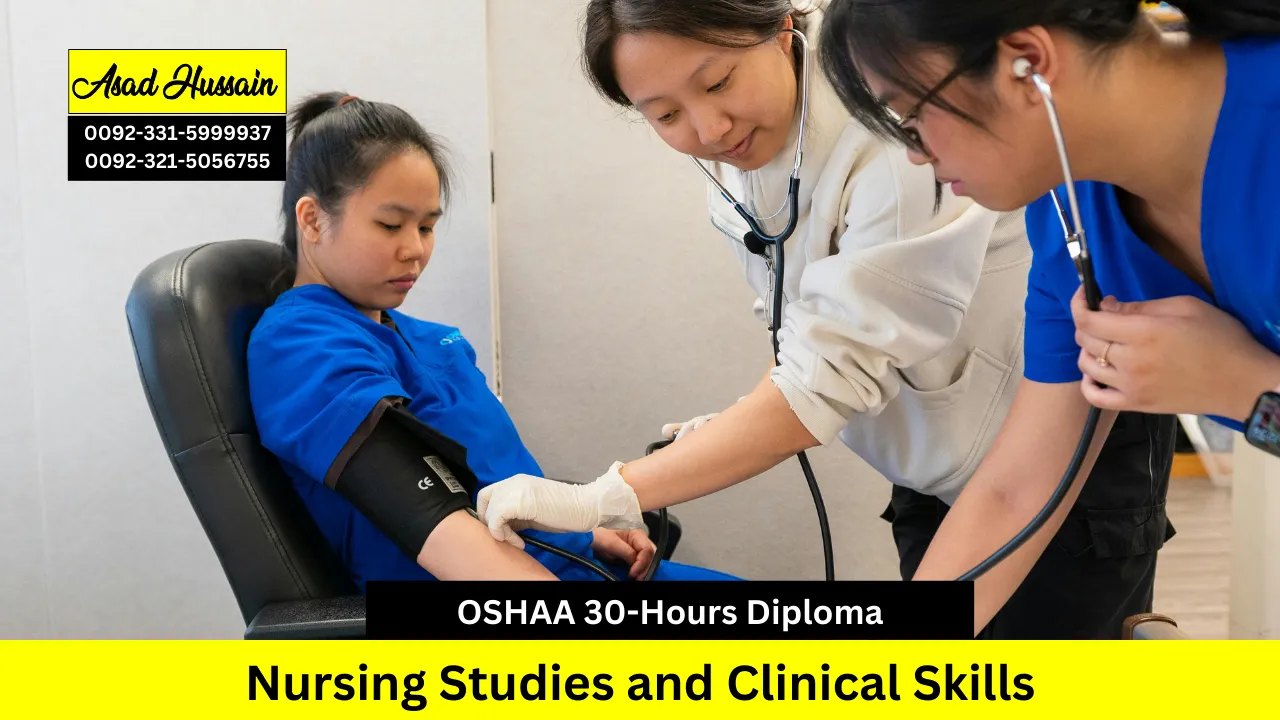
- Vital Signs Monitoring and Patient Assessment (3 Hours)
- Wound Care and Management (3 Hours)
- Clinical Procedures and Emergency Response (3 Hours)
To enrol in the OSHAA 30-Hours Diploma in Nursing Studies and Clinical Skills, candidates should meet the following basic entry criteria:
- Age Requirement: Participants must be at least 18 years old to ensure readiness for healthcare learning and clinical practice.
- Educational Background: A minimum of secondary education (high school diploma or equivalent) is required. Candidates with prior certifications in healthcare, such as First Aid, Health and Social Care, or Nursing Assistant diplomas, will have an advantage.
- Language Proficiency: Learners should have a proficient level of English, enabling them to understand course materials, communicate effectively, and complete assessments confidently.
- Work Experience (Optional): While no formal work experience is required, those with prior exposure to healthcare environments or volunteering in care settings will benefit from practical insights and application of clinical skills.
This course is designed to be accessible to motivated individuals aiming to build foundational knowledge in nursing and clinical practice. Learners with relevant diplomas or certificates in healthcare, patient care, or allied medical fields will find the course complements and enhances their existing skills.
Learning Outcomes
Fundamentals of Nursing and Patient Care (3 Hours)
- Understand the core principles of nursing and patient-centred care
- Demonstrate basic nursing skills required for daily patient support
- Apply hygiene and comfort measures to promote patient wellbeing
- Recognise the importance of empathy and professionalism in nursing practice
Anatomy and Physiology for Nursing Practice (4 Hours)
- Describe key anatomical structures and physiological systems relevant to nursing
- Explain how body systems interact to maintain health
- Identify common signs and symptoms related to system dysfunction
- Apply anatomical knowledge to inform safe and effective nursing interventions
Communication Skills in Healthcare Settings (3 Hours)
- Develop effective verbal and non-verbal communication techniques with patients and colleagues
- Demonstrate active listening and empathetic engagement
- Navigate challenging conversations with sensitivity and professionalism
- Utilise clear documentation and reporting methods in clinical practice
Infection Prevention and Control (5 Hours)
- Understand the principles of infection transmission and prevention
- Apply standard precautions and infection control protocols correctly
- Identify risks and implement measures to reduce healthcare-associated infections
- Promote patient safety through hygiene and environmental controls
Medication Administration and Safety (6 Hours)
- Demonstrate knowledge of common medication types, uses, and side effects
- Apply the ‘five rights’ of medication administration to ensure patient safety
- Recognise and respond to adverse drug reactions and errors
- Maintain accurate records and comply with legal and ethical standards
Vital Signs Monitoring and Patient Assessment (3 Hours)
- Accurately measure and interpret vital signs, including temperature, pulse, respiration, and blood pressure
- Conduct comprehensive patient assessments to identify changes in condition
- Use assessment findings to inform care planning and clinical decisions
- Document and communicate assessment outcomes effectively
Wound Care and Management (3 Hours)
- Identify different types of wounds and appropriate treatment methods
- Perform wound cleaning, dressing, and monitoring safely and effectively
- Recognise signs of infection and complications in wound healing
- Educate patients on wound care and prevention strategies
Clinical Procedures and Emergency Response (3 Hours)
- Apply critical thinking skills to ensure patient safety under pressure
- Perform basic clinical procedures with confidence and adherence to protocols
- Respond effectively to common medical emergencies and urgent care situations
- Understand the roles and responsibilities during emergency interventions
Target Audience
This course is designed for individuals who want to gain a deep understanding of speech, language, and communication support. It is ideal for professionals, caThis course is designed for individuals seeking to gain comprehensive knowledge and practical skills in nursing and clinical care. It is ideal for those aiming to enhance their competence in healthcare settings, improve patient outcomes, and develop a strong foundation in nursing practice.
Aspiring Healthcare Professionals
- Individuals starting a career in nursing or clinical care
- Students interested in gaining practical nursing knowledge
- Those looking to enter hospitals, clinics, or care facilities
- People seeking to build confidence in patient care techniques
- Individuals wanting a structured approach to healthcare fundamentals
Support Workers and Care Assistants
- Care assistants wishing to improve their clinical skills
- Home carers supporting patients with medical needs
- Staff in care homes or rehabilitation centres
- Individuals responsible for monitoring patient wellbeing
- Those needing to understand safe care practices and patient support
Educators and Trainers in Healthcare
- Teachers delivering basic healthcare or first aid courses
- Trainers developing curriculum for healthcare support programs
- Professionals wanting to expand teaching content in clinical skills
- Mentors guiding new nursing staff or healthcare trainees
- Individuals needing up-to-date clinical knowledge for educational purposes
Volunteers and Community Health Workers
- Volunteers working in hospitals, clinics, or emergency care
- Community support workers providing basic medical care
- Individuals assisting in health awareness campaigns
- People helping in first aid or patient support programs
- Those aiming to understand patient safety and wellbeing
Professionals Seeking Skill Enhancement
- Current healthcare workers looking to refresh knowledge
- Staff requiring updated skills in medication and infection control
- Practitioners seeking practical experience in vital signs and patient assessment
- Professionals aiming to improve emergency response capabilities
- Individuals wanting to strengthen multidisciplinary collaboration skills
This course equips participants with practical expertise and confidence, preparing them to deliver safe, efficient, and compassionate care in a variety of healthcare settings.