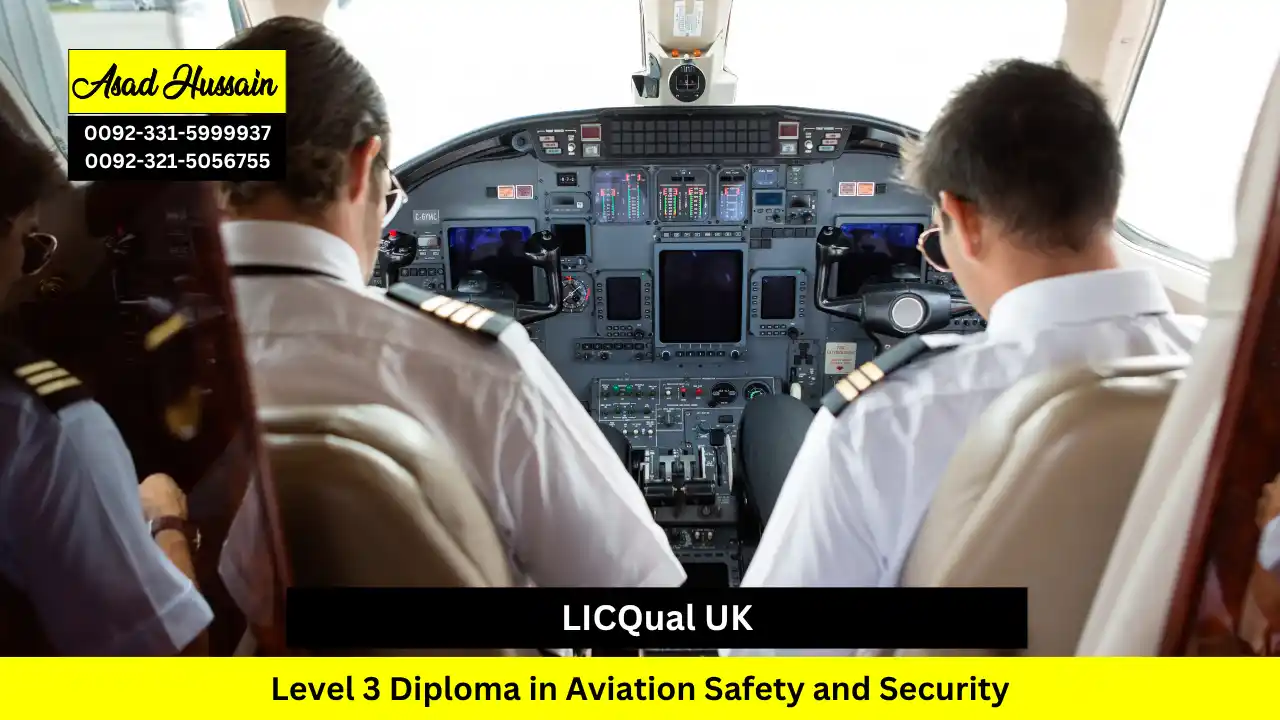
The LICQual UK Level 3 Diploma in Aviation Safety and Security is a comprehensive qualification designed to provide learners with the essential knowledge and practical understanding required to work safely and effectively within the aviation industry. The programme focuses on key areas of aviation safety, airport security, risk awareness, emergency response, regulatory compliance, and operational best practices, preparing learners for a wide range of roles across airports, airlines, and aviation service organisations.
As global air travel continues to grow, maintaining high standards of safety and security remains a top priority for aviation stakeholders worldwide. This diploma equips learners with a solid foundation in aviation safety procedures, security protocols, threat prevention, incident reporting, passenger protection, and airport operational requirements. Learners gain valuable insight into how aviation organisations manage risks, ensure regulatory compliance, and maintain secure environments for passengers, staff, and aircraft.
The qualification combines industry-relevant knowledge with practical applications, enabling learners to develop critical skills in communication, teamwork, problem-solving, situational awareness, and safety management. It is ideal for individuals seeking to begin a career in aviation, airport operations, airline services, or aviation security.
Program Highlights
Study Units
- Introduction to Aviation Safety and Security Principles
- Airport Security Procedures and Passenger Screening
- Aviation Safety Regulations and International Compliance
- Emergency Response and Crisis Management in Aviation
- Cargo Security, Dangerous Goods, and Risk Awareness
- Professionalism, Teamwork, and Service Standards in Aviation Security
Entry Requirements
The following entry requirements are recommended to ensure learners can successfully complete the program:
- Age Requirement: Learners must be at least 18 years of age
- Educational Background: Applicants should have successfully completed a secondary school qualification, high school certificate, GCSEs (or equivalent), or a recognised Level 2 qualification. A basic educational background is recommended to support successful completion of the programme.
- Professional Experience: No prior aviation, airport operations, or security experience is required. This qualification is suitable for beginners who wish to enter the aviation industry.
- English Proficiency: Learners should have a good understanding of English and strong communication skills.
Course Learning Outcome
By the end of this course, learners will be able to:
Introduction to Aviation Safety and Security Principles
Learners will be able to:
- Explain the fundamental principles of aviation safety and security.
- Identify key threats and risks that impact global aviation operations.
- Demonstrate awareness of ICAO and IATA safety and security frameworks.
- Apply basic safety and security measures in airport and airline contexts.
- Recognize the importance of safety culture in aviation organizations.
- Evaluate the role of safety and security in protecting passengers and assets.
Airport Security Procedures and Passenger Screening
Learners will be able to:
- Describe standard airport security procedures for passengers and baggage.
- Demonstrate knowledge of screening technologies and detection methods.
- Apply international standards for passenger identification and verification.
- Recognize prohibited items and dangerous goods during screening processes.
- Evaluate the importance of customer service in security interactions.
- Ensure compliance with ICAO Annex 17 and national aviation security policies.
Aviation Safety Regulations and International Compliance
Learners will be able to:
- Interpret international aviation safety regulations (ICAO, EASA, CAA).
- Apply compliance requirements to airport and airline operations.
- Demonstrate knowledge of safety management systems (SMS) in aviation.
- Evaluate the role of audits and inspections in maintaining compliance.
- Recognize the impact of non-compliance on aviation safety and reputation.
- Develop awareness of global harmonization in aviation safety standards.
Emergency Response and Crisis Management in Aviation
Learners will be able to:
- Explain emergency response procedures in aviation environments.
- Demonstrate knowledge of crisis management frameworks and protocols.
- Apply evacuation and passenger safety procedures during emergencies.
- Recognize the role of communication in effective crisis management.
- Evaluate case studies of aviation emergencies to identify best practices.
- Develop awareness of coordination between airlines, airports, and regulators.
Cargo Security, Dangerous Goods, and Risk Awareness
Learners will be able to:
- Identify dangerous goods and restricted cargo items under IATA DGR.
- Apply cargo acceptance and documentation procedures for compliance.
- Demonstrate knowledge of warehouse safety and cargo screening methods.
- Evaluate risks associated with cargo handling and storage.
- Recognize international cargo security standards and regulations.
- Apply preventive measures to reduce risks in cargo operations.
Professionalism, Teamwork, and Service Standards in Aviation Security
Learners will be able to:
- Demonstrate professional conduct in aviation safety and security roles.
- Apply teamwork and collaboration skills in airport and airline operations.
- Recognize the importance of ethical behavior in aviation security.
- Evaluate strategies for delivering service excellence in security contexts.
- Develop interpersonal skills to manage passengers during security checks.
- Promote a culture of safety, professionalism, and compliance in aviation
Target Audience
The LICQual UK Level 3 Diploma in Aviation Safety and Security is designed for individuals who want to develop a strong foundation in aviation safety, airport security, risk management, and regulatory compliance. The qualification is suitable for those seeking to start a career in the aviation industry or enhance their understanding of safety and security practices within airport and airline operations.
This course is ideal for:
- Individuals aspiring to begin a career in aviation safety and security.
- School leavers seeking a recognised qualification to enter the aviation industry.
- Airport staff looking to enhance their knowledge of safety and security procedures.
- Airline personnel seeking a better understanding of aviation safety and operational security requirements.
- Security officers who wish to specialise in aviation and airport security operations.
- Customer service and passenger service professionals working within airports and airlines.
- Aviation enthusiasts interested in learning about aviation safety, security, and regulatory compliance.
- Professionals from logistics, transportation, and related sectors seeking opportunities in aviation.
- Individuals preparing for higher-level qualifications in aviation safety, security, airport operations, or aviation management.
- Learners who want to gain practical knowledge of risk assessment, emergency response, incident reporting, and threat prevention in aviation environments.
This qualification provides learners with the essential skills and industry knowledge required to contribute to safe, secure, and efficient aviation operations while enhancing their employability within airports, airlines, aviation service providers, and related organisations worldwide.d sectors where safety, security, and regulatory compliance are critical to operational success.tor.orldwide.ng within the global aviation industry.