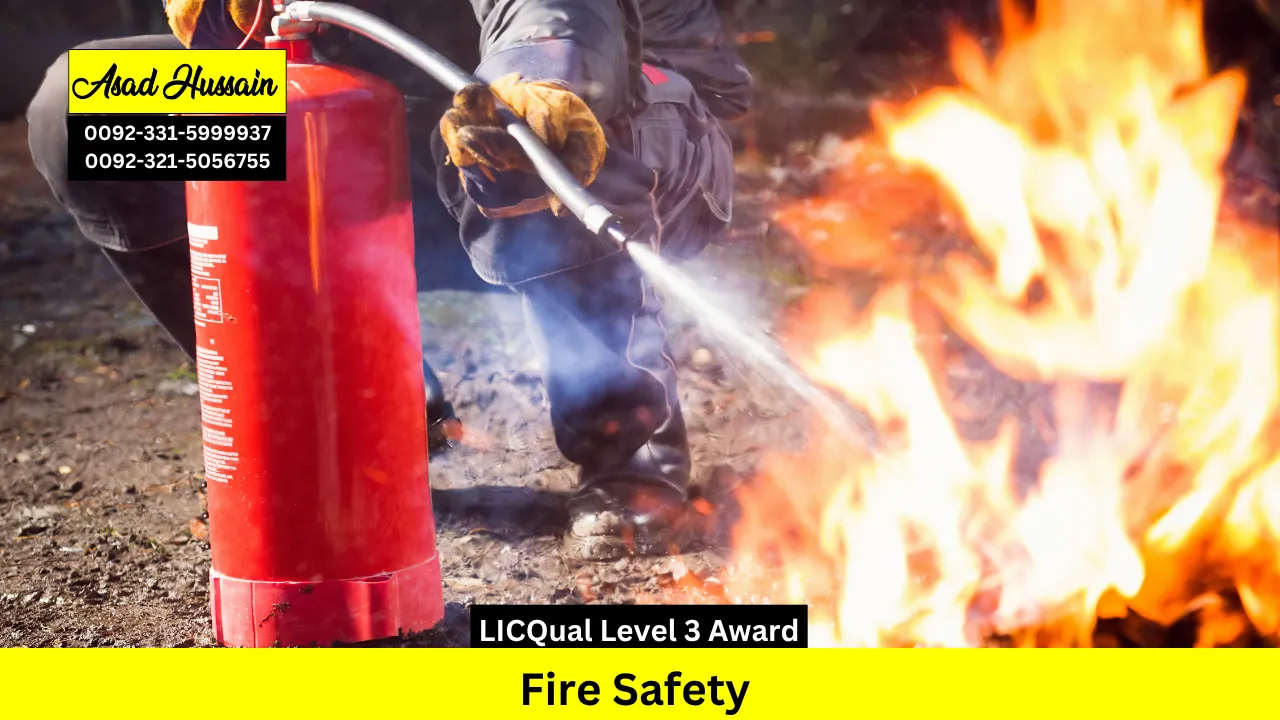
The LICQual Level 3 Award in Fire Safety is a comprehensive qualification designed for supervisors, managers, and health and safety professionals who are responsible for implementing and managing fire safety within the workplace. This course provides advanced knowledge of fire risk assessment, prevention strategies, emergency planning, and compliance with fire safety legislation, equipping learners with the skills required to maintain a safe working environment and lead fire safety initiatives effectively.
The programme covers in-depth topics such as the principles of fire, identifying potential fire hazards, fire detection and warning systems, emergency evacuation planning, fire-fighting equipment, and the legal responsibilities of employers and employees. Learners will develop the ability to conduct thorough fire risk assessments, implement control measures, and provide guidance and training to staff on fire safety procedures. The course also emphasises strategic planning, incident response, and leadership in emergency situations.
Ideal for fire wardens, safety officers, team leaders, and management personnel, the LICQual Level 3 Award in Fire Safety enhances career prospects by preparing learners for roles that require advanced fire safety knowledge and operational responsibility. Recognised nationally and internationally, this qualification provides the expertise needed to ensure compliance with fire safety legislation, improve organisational safety standards, and prepare for progression to higher-level fire safety and health and safety qualifications, making it essential for professionals aiming to lead fire safety management in any workplace.
Program Highlights
Study Units
To achieve,LICQual Level 3 Award in Fire Safety; Candidates must Complete the 6 Manadatory Units.
- Introduction to Fire Safety
- Fire Prevention and Risk Assessment
- Fire Safety Management
- Fire Detection and Suppression
- Evacuation and Emergency Response
- Fire Safety Legislation and Compliance
Entry Requirements
- Age Requirements: Candidates must be 16 years of age or older at the time of registration.
- Educational Background: Applicants should have a basic level of education, such as completion of secondary school or equivalent. No prior fire safety qualifications are required.
- Language Proficiency:Learners must demonstrate proficiency in English to understand course materials, complete assessments, and communicate effectively
- Work Experience:Applicants are expected to have relevant work experience in a supervisory or managerial role, or prior exposure to health and safety responsibilities in the workplace.
Please ensure all criteria are met to facilitate a smooth admission process into this professional program.
Learning Outcomes
By the end of this course, learners will be able to:
- Introduction to Fire Safety
- Upon completion of this unit, learners will be able to:
- Understand the fundamental principles of fire safety and its importance in the workplace.
- Identify common causes of fire and how they can be prevented.
- Recognize the role of fire safety in maintaining a safe working environment and its impact on business continuity.
- Fire Prevention and Risk Assessment
- After completing this unit, learners will be able to:
- Conduct a thorough fire risk assessment in the workplace.
- Identify potential fire hazards and evaluate the level of risk associated with them.
- Develop and implement effective fire prevention strategies to minimize risks and ensure a safe working environment.
- Fire Safety Management
- Upon finishing this unit, learners will be able to:
- Design and implement comprehensive fire safety management plans tailored to the needs of the organization.
- Understand the responsibilities of employers and employees in managing fire safety.
- Develop and monitor fire safety policies and procedures to ensure continuous compliance and safety.
- Fire Detection and Suppression
- After completing this unit, learners will be able to:
- Understand the different types of fire detection and suppression systems and their functions.
- Evaluate the suitability of fire detection and suppression systems for various workplace environments.
- Implement and maintain fire safety systems to ensure early detection and effective suppression of fires.
- Evacuation and Emergency Response
- Upon finishing this unit, learners will be able to:
- Develop and implement effective evacuation plans in line with fire safety regulations.
- Ensure that fire exits and escape routes are clearly marked, accessible, and properly maintained.
- Conduct and evaluate fire drills, ensuring that all employees are prepared and trained to respond effectively in case of an emergency.
- Fire Safety Legislation and Compliance
- After completing this unit, learners will be able to:
- Understand the key fire safety legislation and regulatory requirements governing fire safety in the workplace.
- Identify the legal responsibilities of employers and employees concerning fire safety.
- Ensure that the workplace is compliant with fire safety laws and regulations through regular audits and updates to fire safety procedures.
Target Audience
This diploma is ideal for:
- Individuals responsible for overseeing fire safety within an organization, including safety officers, managers, and supervisors.
- Health and safety professionals looking to deepen their understanding of fire safety management and enhance their qualifications.
- Business owners and employers seeking to ensure compliance with fire safety regulations and improve workplace safety.
- Employees in leadership roles who wish to take on more responsibility for fire risk assessments and fire safety planning.
- Those working in high-risk environments who want to gain a thorough understanding of fire safety measures and emergency response.
- Professionals aspiring to transition into fire safety management roles or those looking to further their careers in health and safety.