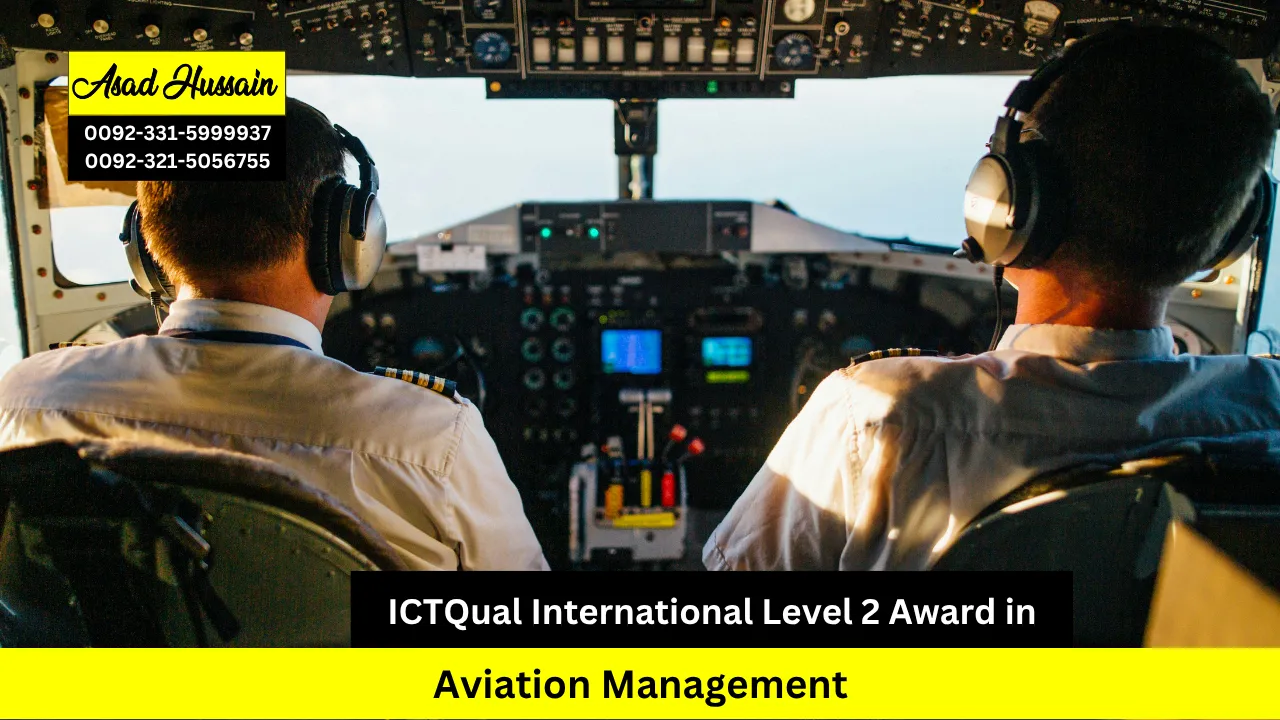
The ICTQual International Level 2 Award in Aviation Management is a globally recognized qualification designed to provide learners with a strong foundation in the aviation industry. As air travel continues to expand and airports evolve into complex hubs of connectivity, the demand for skilled professionals who understand the principles of aviation management has never been greater. This program introduces learners to the essential concepts of airport and airline operations, aviation safety, customer service, and regulatory compliance, making it an ideal entry point for those aspiring to build a career in this fast‑growing sector.
Unlike short introductory courses, the ICTQual Level 2 Award goes beyond the basics by combining theoretical knowledge with practical insights that are directly applicable to real‑world aviation environments. Learners gain exposure to key areas such as passenger handling, ground operations, aviation security, and communication effectiveness. The qualification is designed to strengthen both technical knowledge and transferable skills, ensuring graduates are well‑prepared to meet the challenges of modern aviation.
This award is particularly valuable for students, early‑career professionals, and individuals from related fields such as travel, tourism, and hospitality who want to specialize in aviation. It also serves as a stepping stone for those already working in entry‑level airport or airline roles who wish to expand their expertise and progress into more responsible positions. By completing this program, learners not only enhance their employability but also gain the confidence to pursue higher‑level qualifications in aviation management.
Ultimately, the ICTQual International Level 2 Award in Aviation Management is more than just a certificate—it is a gateway to exciting opportunities in one of the world’s most dynamic industries. With its international recognition and focus on both operational and service excellence, this qualification equips learners with the skills and knowledge to thrive in airports, airlines, and aviation service providers worldwide.
Program Highlights
Mandatory Units
This qualification, the ICTQual International Level 2 Award in Aviation Management, consists of 3 mandatory units.
- Airline Business Functions and Industry Roles
- Airport Operations and Passenger Flow Management
- Applied Aviation Safety and Service Standards
The ICTQual International Level 2 Award in Aviation Management has been designed to be accessible to a wide range of learners while ensuring they have the basic foundation to succeed in the program. Below are the typical entry requirements:
- Age Requirement: Learners should be 16 years of age or older at the time of enrollment.
- Educational Background: A secondary school qualification or equivalent (such as O‑Levels, GCSEs, or Matriculation) is generally expected.
- Language Proficiency: Since the course is delivered in English, learners should have a basic to intermediate level of English proficiency to understand aviation terminology, safety procedures, and customer service concepts.
- Work Experience: No prior aviation experience is required, making the award suitable for beginners. However, individuals already working in entry‑level roles within airports, airlines, or related industries may find it especially beneficial.
- Recommended Backgrounds:Learners with experience in travel, tourism, hospitality, logistics, or customer service may find the course particularly valuable, as it builds on transferable skills from these fields.
Learning Outcomes for the ICTQual International Level 2 Award in Aviation Management:
Airline Business Functions and Industry Roles
By the end of this unit, learners will be able to:
- Identify the main business functions within an airline organisation.
- Explain the roles of departments such as operations, marketing, finance, and customer service.
- Recognise how different functions contribute to overall airline performance.
- Describe the responsibilities of key personnel in airline management.
- Understand the interdependence between airlines, airports, and regulatory bodies.
- Demonstrate awareness of career roles available within airline business functions.
- Apply basic industry terminology to describe airline structures and roles.
- Outline how airline business functions support passenger experience and operational efficiency.
Airport Operations and Passenger Flow Management
By the end of this unit, learners will be able to:
- Describe the key operational areas of an airport.
- Explain the processes involved in passenger check‑in, security, boarding, and arrivals.
- Recognise the importance of efficient passenger flow for safety and service quality.
- Identify the roles of airport staff in managing passenger movement.
- Demonstrate understanding of baggage handling and related systems.
- Outline how technology supports airport operations and passenger flow.
- Understand the impact of delays and disruptions on airport operations.
- Apply knowledge of passenger flow management to improve service delivery.
Applied Aviation Safety and Service Standards
By the end of this unit, learners will be able to:
- Explain the importance of safety and security in aviation operations.
- Identify common safety procedures followed by airlines and airports.
- Recognise international service standards that enhance passenger experience.
- Demonstrate awareness of emergency procedures and staff responsibilities.
- Understand the relationship between safety, security, and customer care.
- Apply basic communication skills to support safe and efficient service delivery.
- Outline the role of staff in maintaining compliance with safety regulations.
- Appreciate the ethical and professional responsibilities linked to aviation safety and service.
The ICTQual International Level 2 Award in Aviation Management is designed for learners who want to build a strong foundation in the aviation industry. Whether you are just starting your career, already working in an airport or airline, or looking to transition from another field, this qualification provides the essential knowledge and practical skills needed to succeed. With its international recognition, the course is suitable for a wide range of learners who want to explore opportunities in one of the world’s fastest‑growing industries.
1. Aspiring Aviation Professionals
- Perfect for individuals new to the aviation sector.
- Provides a strong introduction to airport and airline operations.
- Covers essential topics like safety, passenger handling, and customer service.
- Builds confidence to enter the aviation workforce.
- Offers a direct pathway into higher‑level aviation qualifications.
2. Current Airport and Airline Staff
- Ideal for employees working in entry‑level roles at airports or airlines.
- Expands knowledge beyond specific tasks such as baggage handling or check‑in.
- Prepares staff for supervisory and team‑leading responsibilities.
- Enhances understanding of how different airport departments work together.
- Strengthens career progression opportunities within aviation.
3. Travel, Tourism, and Hospitality Graduates
- Suitable for graduates who want to specialize in aviation management.
- Adds a globally recognized aviation qualification to their profile.
- Bridges the gap between tourism, hospitality, and aviation industries.
- Opens doors to diverse career opportunities in airports and airlines.
- Increases employability in international service‑oriented sectors.
4. Career Changers and Professionals
- Designed for professionals from other industries passionate about aviation.
- Provides a structured pathway to transition into airport management.
- Equips learners with industry‑specific knowledge and practical skills.
- Suitable for those from business, logistics, or customer service backgrounds.
- Enables a smooth career shift into a high‑demand global industry.
5. Ambitious Learners Seeking Growth
- Positions graduates as valuable assets to the global aviation industry.
- Tailored for individuals motivated to develop leadership skills.
- Focuses on communication, teamwork, and problem‑solving abilities.
- Prepares learners for high‑responsibility roles in aviation operations.
- Builds confidence to manage fast‑paced and complex environments.