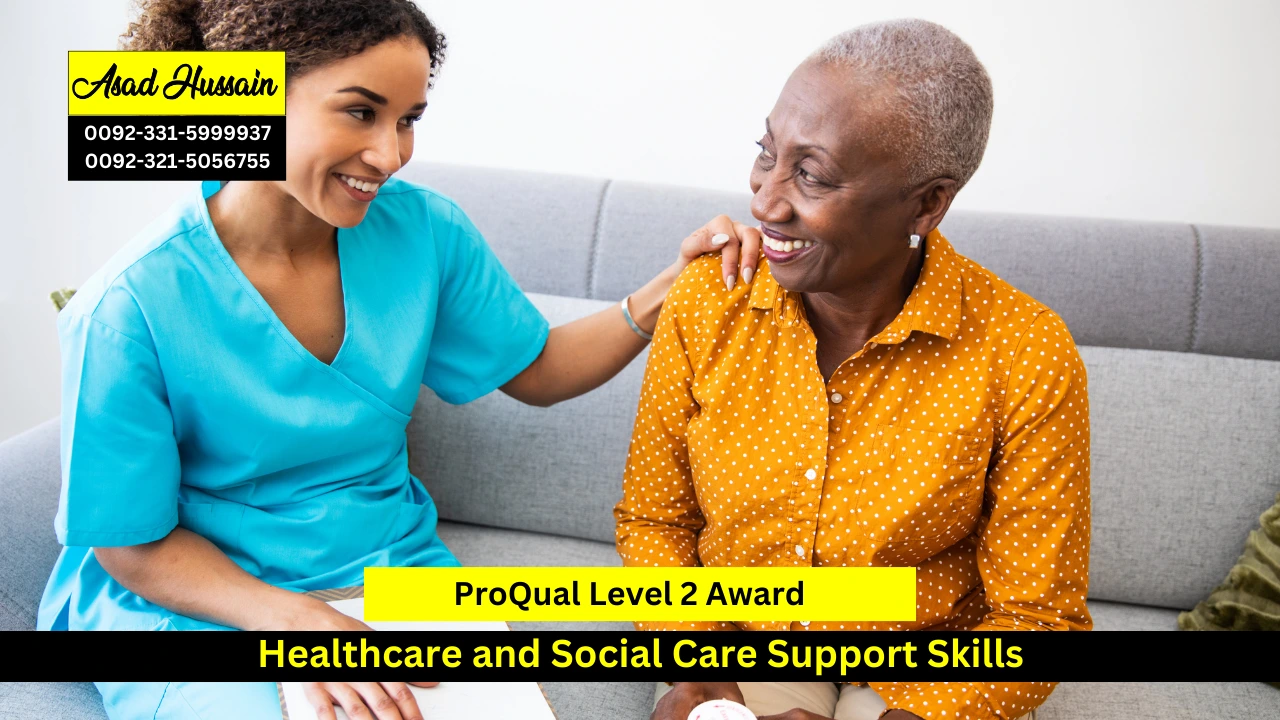
The ProQual Level 2 Award in Healthcare and Social Care Support Skills is therefore an ideal entry point for new entrants to the sector. Achieving this award demonstrates a foundational commitment to professional, values-based care, significantly enhancing employability. It is perfectly suited for care assistants, support workers, and volunteers seeking formal recognition of their core skills and understanding in this rewarding field.
This foundational award provides essential knowledge and introductory skills for individuals beginning or enhancing their career in care provision. It is designed to establish a solid understanding of the core principles, values, and standards required to support vulnerable individuals safely and compassionately in various settings. The course covers fundamental duties such as effective communication, safeguarding, infection prevention, and promoting dignity and respect, ensuring learners are prepared for the realities of care work. This is an industry award and is not regulated by Ofqual.
Learners will explore key legislation and ethical frameworks that underpin quality care, developing the practical awareness needed to assist with daily living activities while maintaining a person-centred approach. The curriculum emphasises the importance of recognising individual needs, reporting concerns appropriately, and working effectively as part of a multidisciplinary team. This qualification is vital for building the confidence and competence required to make a positive difference in the lives of service users.
Program Highlights
Study Units
To achieve the ProQual Level 2 Award in Healthcare and Social Care Support Skills qualification candidates must achieve 6 credits from any combination of units.
| Sr# | Unit Title | Credit Value | GLH |
|---|---|---|---|
| 1 | Implement person centred approaches in health and social care | 5 | 33 |
| 2 | Principles of safeguarding and protection in health and social care | 3 | 26 |
| 3 | Assist in the administration of medication | 4 | 25 |
| 4 | Carry out personal hygiene for individuals unable to care for themselves | 3 | 23 |
| 5 | Support individuals with speech and language disorders to develop their communication skills | 4 | 28 |
| 6 | Perform the non-scrubbed circulating role for perioperative procedures | 3 | 23 |
| 7 | Minimise the risk of infection when transporting and storing healthcare waste | 3 | 20 |
| 8 | Assist in the issuing of prescribed items | 3 | 15 |
| 9 | Assist in the manufacture and assembly of medicinal products | 7 | 20 |
| 10 | Assist in the preparation of documentation, materials and other items for manufacture and assembly of medicinal products | 10 | 40 |
| 11 | Support individuals to carry out their own health care procedures | 2 | 15 |
| 12 | Provide support for therapy sessions | 2 | 14 |
| 13 | Contribute to the discharge of individuals to carers | 2 | 14 |
| 14 | Paediatric Emergency First Aid | 1 | 10 |
| 15 | Introduction to communication in health, social care or children’s and young people’s settings | 3 | 23 |
| 16 | Support individuals to meet personal care needs | 2 | 16 |
| 17 | Contribute to the safe use of medical devices in the perioperative environment | 4 | 29 |
| 18 | Causes and Spread of Infection | 2 | 20 |
| 19 | Prepare documentation, materials, components and other items for the preparation of aseptic products | 6 | 10 |
| 20 | Introduction to duty of care in health, social care or children’s and young people’s settings | 1 | 9 |
| 21 | Provide support for mobility | 2 | 14 |
| 22 | Assist others to plan presentations | 2 | 16 |
| 23 | Order Routine Pharmaceutical Stock | 3 | 11 |
| 24 | Dementia Awareness | 2 | 17 |
| 25 | Move and position individuals in accordance with their plan of care | 4 | 26 |
| 26 | Support individuals to manage continence | 3 | 19 |
| 27 | Handle information in health and social care settings | 1 | 10 |
| 28 | The role of the health and social care worker | 2 | 14 |
| 29 | Obtain and test specimens from individuals | 2 | 12 |
| 30 | Prepare individuals for healthcare activities | 3 | 17 |
| 31 | Assist in planning and evaluating learning activities | 3 | 22 |
| 32 | Assist the practitioner to carry out health care activities | 2 | 13 |
| 33 | Minimise the risk of infection during the removal of used linen | 2 | 15 |
| 34 | Inform an individual of discharge arrangements | 2 | 13 |
| 35 | Understand the context of supporting individuals with learning disabilities | 4 | 35 |
| 36 | Select and wear appropriate personal protective equipment for work in health care settings | 2 | 15 |
| 37 | Monitor and maintain the environment and resources during and after clinical / therapeutic activities | 3 | 20 |
| 38 | Prepare and dress for scrubbed clinical roles | 4 | 28 |
| 39 | Care for individuals with naso-gastric tubes | 3 | 20 |
| 40 | The principles of Infection Prevention and Contro | 3 | 30 |
| 41 | Assist with the provision of a pharmacy service to meet individuals’ needs | 3 | 10 |
| 42 | Contribute to the effectiveness of teams | 3 | 5 |
| 43 | Introduction to personal development in health, social care or children’s and young people’s settings | 3 | 23 |
| 44 | Support individuals who are distressed | 3 | 21 |
| 45 | Support individuals undergoing healthcare activities | 3 | 22 |
| 46 | Prepare equipment for intraoperative cell salvage blood processing | 4 | 26 |
| 47 | Assist in receiving, handling and dispatching clinical specimens | 2 | 17 |
| 48 | Assist in the sale of medicines and products | 8 | 50 |
| 49 | Receive Pharmaceutical Stock | 3 | 9 |
| 50 | Prepare aseptic products | 10 | 40 |
| 51 | Prepare and apply dressings and drains to individuals in the perioperative environment | 2 | 18 |
| 52 | Planning and Monitoring Work | 2 | 8 |
| 53 | Cleaning, Decontamination and Waste Management | 2 | 20 |
| 54 | Ensure your own Actions Reduce risks to Health and Safety | 2 | 8 |
| 55 | Introduction to equality and inclusion in health, social care or children’s and young people’s settings | 2 | 20 |
| 56 | Provide agreed support for foot care | 3 | 23 |
| 57 | Contribute to health and safety in health and social care | 4 | 33 |
| 58 | Support independence in the tasks of daily living | 5 | 33 |
| 59 | Prepare equipment for intraoperative cell salvage blood collection | 2 | 17 |
| 60 | Maintaining quality standards in the health sector | 1 | 8 |
| 61 | Emergency First Aid Skills | 1 | 10 |
| 62 | Assemble prescribed items | 3 | 15 |
| 63 | Support participation in learning and development activities | 3 | 23 |
| 64 | Provide support for sleep | 2 | 13 |
| 65 | Remove wound closure materials | 3 | 24 |
| 66 | Support individuals to eat and drink | 2 | 15 |
| 67 | Undertake agreed pressure area care | 4 | 30 |
| 68 | Meet food safety requirements when providing food and drink for individuals | 2 | 15 |
| 69 | Understand loss and grief in end of life care | 3 | 22 |
| 70 | Understand how to work in end of life care | 3 | 28 |
Entry Requirements
To ensure learners are prepared for the values and responsibilities of the care sector, the following fundamental criteria are expected for enrolment.
- Age Requirement: Applicants must be at least 16 years of age.
- Educational Background: No formal qualifications are required, but prior achievement of a Level 1 Award in Preparing to Work in Adult Social Care or a similar introductory certificate is beneficial.
- Language Proficiency: A good standard of spoken and written English is essential for clear communication with service users, colleagues, and for accurate record-keeping.
No prior work experience is necessary, making this award an ideal starting point for anyone with a compassionate and professional attitude towards care. By meeting these requirements, you are taking the first step towards building the essential skills and knowledge for a meaningful career in healthcare and social care support.
Learning Outcomes
Upon completion of the ProQual Level 2 Award in Healthcare and Social Care Support Skills, learners will achieve the following learning outcomes:
- Knowledge of Healthcare and Social Care Environment: Gain a comprehensive understanding of the healthcare and social care sector, including its key principles, values, policies, and regulations. Develop insights into the roles and responsibilities of healthcare and social care professionals.
- Effective Communication: Enhance communication skills to establish positive and meaningful interactions with individuals receiving care, their families, and other healthcare professionals. Learn techniques to listen actively, convey information clearly, and adapt communication to different needs and preferences.
- Health and Safety Procedures: Acquire knowledge of health and safety protocols and practices in healthcare and social care settings. Understand the importance of maintaining a safe and secure environment for individuals and staff. Learn how to identify and respond to potential hazards and emergency situations effectively.
- Safeguarding Individuals: Gain an understanding of safeguarding principles and procedures to ensure the well-being and protection of vulnerable individuals. Learn how to recognize signs of abuse or neglect and take appropriate action, including reporting concerns and supporting individuals in crisis.
- Person-Centered Care: Develop skills in providing person-centered care, focusing on the individual’s unique needs, preferences, and aspirations. Learn how to promote dignity, respect, and independence while supporting individuals with personal care, mobility, and daily activities.
- Promoting Equality and Inclusion: Gain awareness of the importance of equality, diversity, and inclusion in healthcare and social care. Learn how to promote and uphold these principles while providing support, ensuring that individuals’ rights and choices are respected.
- Collaboration and Teamwork: Understand the significance of collaborative working within the healthcare and social care sector. Learn how to effectively communicate and work as part of a team, maintaining positive relationships with colleagues, professionals from other disciplines, and external stakeholders.
- Reflective Practice and Continuous Learning: Develop the skills of self-reflection and self-evaluation to continuously improve personal practice and enhance professional development. Learn how to seek feedback, identify areas for improvement, and engage in lifelong learning to stay updated with industry advancements.
These learning outcomes are designed to equip learners with the necessary knowledge, skills, and attitudes to provide high-quality support and care in healthcare and social care settings. Successful completion of the course will enable individuals to contribute effectively to the well-being and welfare of individuals receiving care, while adhering to industry standards and best practices.
Target Audiences
This award is designed for compassionate individuals entering or working in support roles within health and social care settings, providing the foundational skills and knowledge needed to deliver safe, effective, and person-centred support.
- New Care Assistants & Support Workers: Individuals starting their first role in residential care homes, domiciliary care, or supported living who need essential, certified training.
- Volunteers in Care Settings: People offering their time in hospitals, hospices, or community centres who seek a formal understanding of care principles and safeguarding.
- Career Changers & Returners to Work: Those moving into the care sector from other industries who require a recognised qualification to demonstrate core competency and values.
- Further Education Students: Learners studying related subjects who wish to gain practical, employability-focused skills to complement their academic studies.
By completing this award, you establish a vital professional foundation, building the confidence and core competencies required to provide high-quality, compassionate care and support to individuals in need.