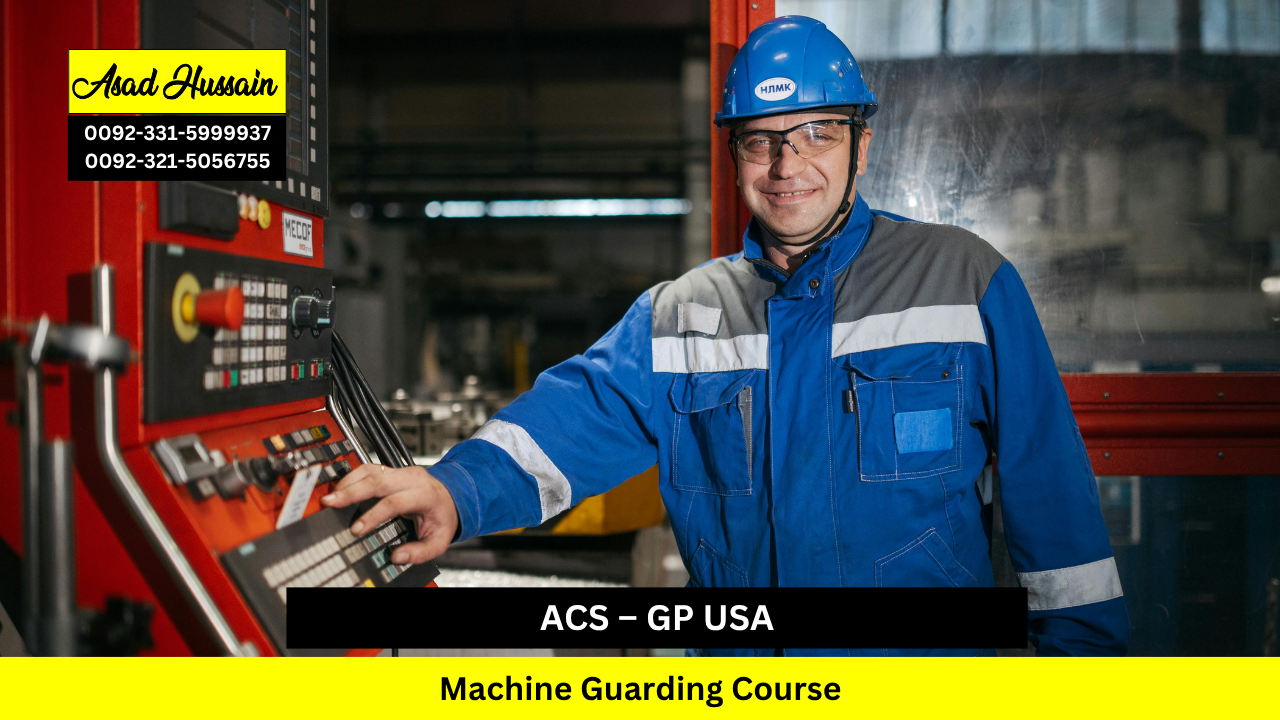
The ACS – GP USA Machine Guarding Course is designed to provide Learners with the knowledge and practical awareness required to identify machine hazards, implement effective safeguarding measures, and maintain a safer workplace. Machine-related incidents can result in serious injuries such as amputations, crushing injuries, lacerations, burns, and entanglement accidents when hazardous moving parts are not adequately guarded. Proper machine guarding plays a critical role in preventing these incidents and protecting workers from exposure to dangerous machinery.
This course covers the fundamental principles of machine guarding, including hazard identification, risk assessment, point-of-operation protection, safeguarding methods, guard types, interlocking systems, emergency stop devices, and safe operating procedures. Learners will develop an understanding of mechanical hazards such as rotating parts, nip points, reciprocating motions, flying particles, and power transmission components commonly found in industrial environments.
The programme also explores employer and employee responsibilities, inspection requirements, maintenance considerations, lockout/tagout awareness, and best practices for ensuring machinery remains safe throughout its operational lifecycle. Learners will gain valuable knowledge of how machine guards contribute to accident prevention, regulatory compliance, operational efficiency, and workplace safety culture.
This course is particularly beneficial for individuals working in manufacturing, construction, engineering, warehousing, maintenance, fabrication, processing plants, utilities, and other industries where machinery and equipment are regularly operated, maintained, or supervised. It provides essential skills to help reduce workplace risks, prevent injuries, and promote safe machine operation in accordance with recognised safety standards and industry best practices.
Program Highlights
Course Objective
- Understand OSHA’s machine guarding standards and their workplace applications.
- Identify machine hazards, such as pinch points, rotating parts, and flying debris.
- Learn to select and install appropriate machine guards and safety devices.
- Develop skills to conduct machine safety inspections and identify guarding deficiencies.
- Explore the use of personal protective equipment (PPE) for machine operation safety.
- Gain knowledge of safe work practices for machine maintenance and operation.
- Understand the importance of machine safety training and communication.
- Learn to document machine inspections and incidents for compliance.
Entry Requirements
The following entry requirements are recommended to ensure learners can successfully complete the program:
- Age Requirement: Learners must be at least 18 years of age.
- Educational Background: No formal academic qualifications are required..
- Professional Experience: No previous machine guarding experience is required.
- English Proficiency: Learners should have a good understanding of English and strong communication skills.
Course Learning Outcomes
- Demonstrate compliance with OSHA machine guarding standards in workplace operations.
- Identify, assess, and control hazards associated with machinery and equipment.
- Select, apply, and maintain appropriate machine guards and safety devices.
- Conduct detailed machine safety inspections to ensure operational compliance.
- Apply PPE and safe work practices during machine operation and maintenance activities.
- Promote machine safety awareness through effective communication and training.
- Maintain accurate documentation of machine inspections, safety checks, and incident reports.
Target Audience
The ACS – GP USA Machine Guarding Course is designed for individuals who operate, maintain, supervise, inspect, or work around machinery and equipment in the workplace. It is suitable for both new and experienced personnel seeking to improve workplace safety, reduce machinery-related risks, and develop a thorough understanding of machine guarding principles and safeguarding requirements.
This course is particularly suitable for:
- Machine Operators
- Production Operators
- Manufacturing Workers
- Factory Personnel
- Assembly Line Workers
- Plant Operators
- Maintenance Technicians
- Mechanical Technicians
- Electrical Technicians
- Instrumentation Technicians
- Maintenance Supervisors
- Maintenance Managers
- Engineering Technicians
- Mechanical Engineers
- Electrical Engineers
- Industrial Engineers
- Production Engineers
- Process Engineers
- Manufacturing Engineers
- Construction Workers
- Site Supervisors
- Construction Managers
- Warehouse Personnel
- Logistics Workers
- Material Handling Personnel
- Fabrication Workers
- Welders
- Machine Set-Up Personnel
- Tool and Die Technicians
- Quality Assurance Personnel
- Quality Control Inspectors
- Operations Personnel
- Operations Supervisors
- Operations Managers
- Facility Management Personnel
- Plant Managers
- Workshop Supervisors
- Workshop Managers
- Health and Safety Officers
- HSE Professionals
- Safety Coordinators
- Safety Advisors
- Risk Management Professionals
- Compliance Officers
- Occupational Health and Safety Practitioners
- Utility Workers
- Oil and Gas Personnel
- Mining Personnel
- Processing Plant Personnel
- Food Processing Workers
- Packaging Personnel
- Contractors and Subcontractors
- Equipment Installers
- Machinery Inspectors
- Safety Committee Members
- Employers and Business Owners
- Individuals Responsible for Machinery Safety Programmes
- Personnel Involved in Equipment Inspection and Maintenance Activities
- Professionals Seeking Careers in Occupational Health and Safety
- Anyone Working Around Industrial Machinery, Equipment, or Mechanical Systems
This course is highly beneficial for organisations operating machinery in manufacturing, construction, engineering, utilities, warehousing, logistics, mining, oil and gas, processing, and industrial environments where effective machine guarding is essential for preventing injuries, ensuring compliance, and maintaining a safe workplace.