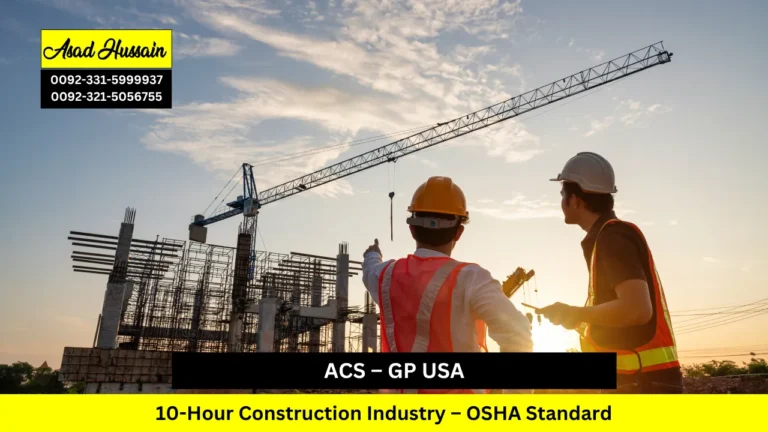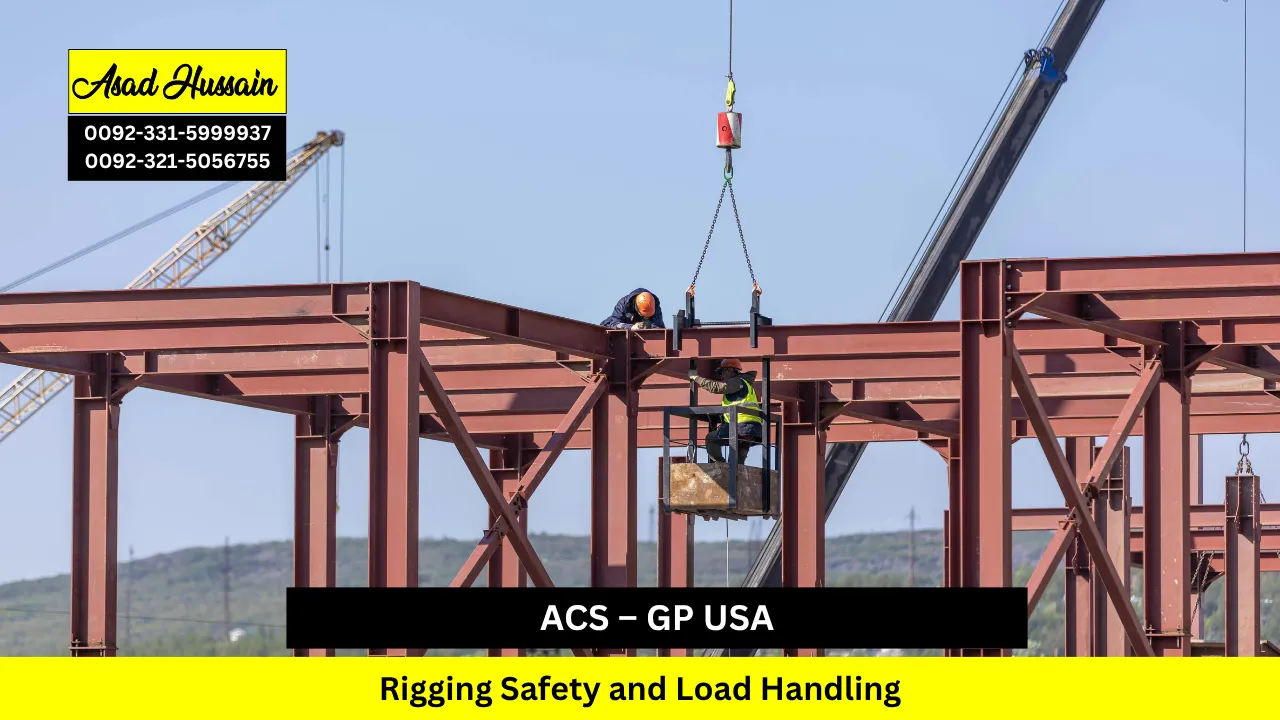
The ACS – GP USA Rigging Safety and Load Handling course is designed to provide essential knowledge and practical awareness for individuals involved in lifting operations, rigging activities, and material handling tasks. Improper rigging and unsafe load handling practices can lead to serious workplace accidents, equipment damage, property loss, and injuries. This course helps Learners understand the principles of safe lifting, load control, hazard identification, and risk management to ensure safer and more efficient operations.
Throughout the course, Learners will explore key topics including rigging equipment inspection, load weight estimation, sling selection, lifting techniques, communication methods, load stability, and safe handling procedures. The training also covers pre-lift planning, hazard assessment, load securing methods, and emergency response considerations associated with lifting operations.
Ideal for construction, manufacturing, oil and gas, logistics, warehousing, and industrial environments, this course supports the development of safe working practices when handling suspended loads and lifting equipment. By completing this training, Learners will gain the knowledge needed to minimise risks, improve operational safety, maintain compliance with workplace safety requirements, and contribute to a stronger safety culture during rigging and load handling activities.
Program Highlights
Course Objective
- Understand OSHA and ASME standards for rigging safety and load handling.
- Identify rigging hazards, such as sling failures and improper load attachments.
- Learn to select and inspect rigging equipment, including slings, shackles, and hooks.
- Develop skills to calculate load weights and determine safe rigging configurations.
- Explore safe load handling techniques and center-of-gravity principles.
- Gain knowledge of communication signals and coordination during rigging operations.
- Understand emergency procedures for rigging incidents and equipment failures.
- Learn to document rigging inspections and maintain compliance records.
Entry Requirements
The following entry requirements are recommended to ensure learners can successfully complete the program:
- Age Requirement: Learners must be at least 18 years of age.
- Educational Background: Basic secondary education is recommended to support understanding of workplace safety concepts and lifting operations.
- Professional Experience: No prior rigging or load handling experience is required.
- English Proficiency: Learners should have a good understanding of English and strong communication skills.
Course Learning Outcomes
- Participants will demonstrate an understanding of OSHA and ASME requirements for safe rigging and lifting operations.
- Learners will identify rigging hazards and implement appropriate risk control measures.
- Attendees will select, inspect, and maintain rigging equipment in accordance with safety standards.
- Graduates will assess load characteristics and apply safe rigging configurations for lifting tasks.
- Participants will perform load handling activities using effective communication and signaling techniques.
- Learners will respond appropriately to rigging incidents, equipment failures, and emergency situations.
- Attendees will complete rigging inspections, documentation, and incident records accurately and effectively.
Target Audience
The ACS – GP USA Rigging Safety and Load Handling course is suitable for individuals involved in lifting operations, material handling activities, and workplace safety management. It is particularly beneficial for:
- Riggers and Rigging Personnel
- Crane Operators
- Signalers and Banksmen
- Construction Workers
- Site Supervisors and Foremen
- Construction Managers
- Project Managers
- Health and Safety Officers
- HSE Professionals
- Safety Coordinators
- Material Handling Personnel
- Warehouse Workers
- Logistics and Supply Chain Personnel
- Maintenance Technicians
- Mechanical Technicians
- Industrial Plant Workers
- Manufacturing Personnel
- Oil and Gas Industry Workers
- Port and Marine Operations Personnel
- Heavy Equipment Operators
- Facility Maintenance Teams
- Utility Workers
- Engineering Technicians
- Civil Engineers
- Mechanical Engineers
- Site Engineers
- Inspection and Quality Control Personnel
- Contractors and Subcontractors
- Risk Management Professionals
- Compliance Officers
- Safety Committee Members
- Employers and Business Owners
- Individuals Seeking Careers in Construction, Industrial Operations, Logistics, or Occupational Health and Safety
This course is ideal for anyone responsible for planning, supervising, supporting, or performing lifting and load handling operations and who wishes to improve workplace safety, reduce lifting-related risks, and enhance operational efficiency.