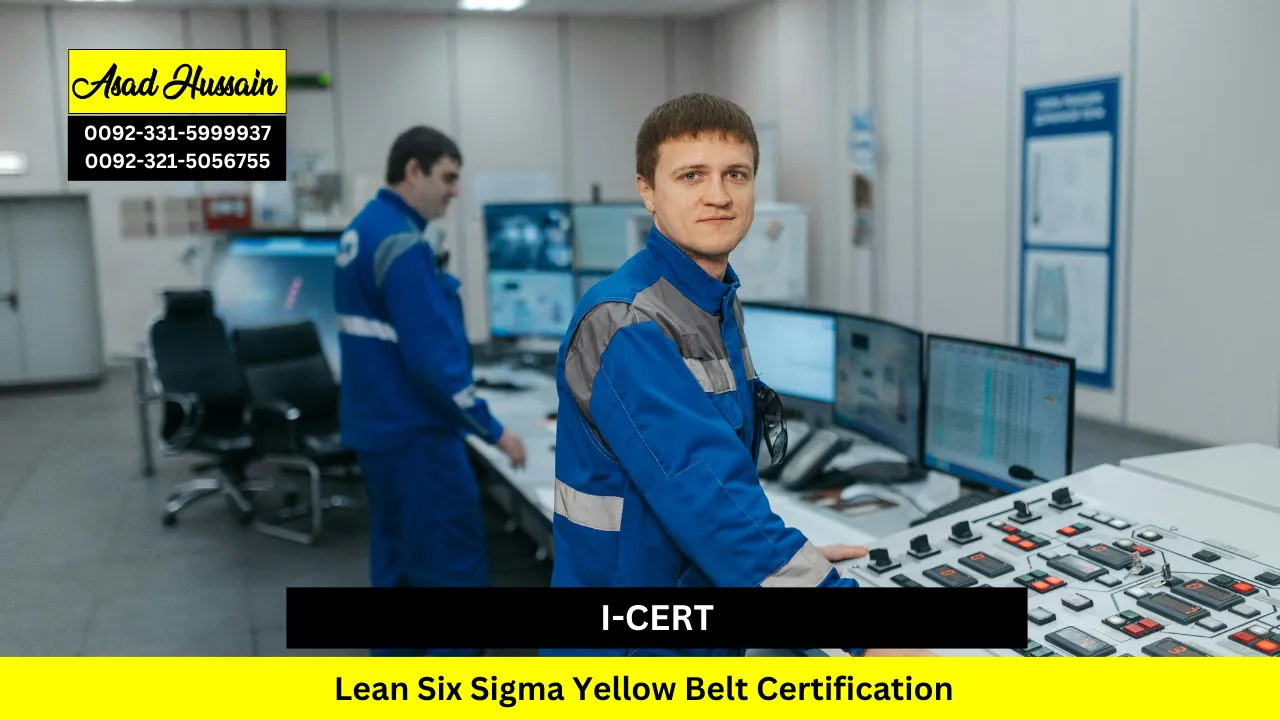
I-CERT Lean Six Sigma Yellow Belt Certification is a foundational professional qualification designed to introduce Learners to the combined principles of Lean and Six Sigma for improving business processes, reducing waste, and enhancing operational efficiency. It provides essential knowledge of quality improvement methodologies used by organisations worldwide.
This certification helps Learners understand key concepts such as process mapping, problem identification, root cause analysis, continuous improvement, and the importance of data-driven decision-making. It enables individuals to support Lean Six Sigma projects and contribute effectively to workplace improvement initiatives.
The course is suitable for beginners, professionals, team members, and employees from various industries who want to develop practical process improvement skills. It also provides a strong foundation for progressing to higher-level certifications such as Lean Six Sigma Green Belt and Black Belt.
By completing the I-CERT Lean Six Sigma Yellow Belt Certification, Learners gain valuable skills to improve efficiency, enhance quality standards, and support a culture of continuous improvement within organisations.
Program Highlights
Study Units
The I-CERT Lean Six Sigma Yellow Belt Certification includes 11 study units over 24–32 hours, delivered online or via instructor-led workshops. The program provides foundational training in Lean Six Sigma principles and process improvement tools to help professionals support projects and enhance operational efficiency.
- What Is Six Sigma?
- Six Sigma History and Application
- Other Process Improvement and Quality Methods
- Lean Concepts
- Basic Six Sigma Concepts
- Approaching the Problem
- What is a Process?
- Quality
- Selecting the Right Projects
- Basic Six Sigma Team Management
- Introduction to DMAIC and DMADV
Entry Requirements
The I-CERT Lean Six Sigma Master Black Belt Certification is an advanced-level qualification designed for professionals who already have experience in Lean Six Sigma, quality management, process improvement, or operational excellence.
- Age Requirement:Learners should generally be 16 years or above
- Educational Background:No formal qualification is required; basic secondary education is recommended
- Professional Experience:Extensive experience in senior management, quality leadership, or process improvement roles is essential
- English Proficiency: Learners should have a good understanding of English and strong communication skills.
Learning Outcomes
This program provides a thorough understanding of Six Sigma principles, Lean concepts, and process improvement strategies, enabling learners to lead projects that enhance efficiency, quality, and business performance.
What Is Six Sigma?
- Understand the definition and purpose of Six Sigma
- Learn how Six Sigma improves process efficiency and reduces defects
- Recognize the strategic importance of Six Sigma in organizations
Six Sigma History and Application
- Explore the evolution of Six Sigma methodologies
- Understand real-world applications across industries
- Identify how Six Sigma drives operational and business success
Other Process Improvement and Quality Methods
- Compare Six Sigma with Lean, TQM, Kaizen, and other quality approaches
- Learn how to integrate multiple methodologies for optimal outcomes
- Understand the advantages of a combined process improvement strategy
Lean Concepts
- Apply Lean principles to eliminate waste and streamline processes
- Enhance workflow efficiency and productivity
- Integrate Lean strategies with Six Sigma for maximum impact
Basic Six Sigma Concepts
- Learn core Six Sigma terminology and methodology
- Understand process variation, defects, and control principles
- Build foundational knowledge for advanced process improvement
Approaching the Problem
- Apply structured problem-solving methods to process challenges
- Identify critical issues affecting performance and quality
- Develop strategies to implement effective improvements
What is a Process?
- Define organizational processes and their key components
- Understand process inputs, outputs, and flow
- Identify areas for improvement and optimization
Quality
- Understand quality concepts, standards, and metrics
- Learn methods to measure, monitor, and maintain process quality
- Apply quality principles to enhance customer satisfaction and compliance
Selecting the Right Projects
- Identify projects with the highest business impact
- Align project selection with organizational strategy and goals
- Prioritize initiatives based on feasibility, ROI, and potential improvements
Basic Six Sigma Team Management
- Understand team roles and responsibilities in Six Sigma projects
- Apply effective communication and collaboration strategies
- Lead teams to achieve project objectives efficiently
Introduction to DMAIC and DMADV
- Learn DMAIC and DMADV methodologies for process and product improvement
- Apply structured frameworks to solve problems and optimize performance
- Establish a systematic approach for measurable and sustainable results
Target Audience
The I-CERT Lean Six Sigma Yellow Belt Certification is ideal for individuals who want to gain practical knowledge of Lean Six Sigma principles and understand how organisations improve quality, efficiency, and processes.
• Students and fresh graduates seeking foundational skills in process improvement and quality management
• Beginners who want to start their Lean Six Sigma certification journey
• Employees involved in operational, administrative, manufacturing, or service activities
• Team members who support quality improvement and continuous improvement projects
• Supervisors and junior managers looking to improve workplace efficiency and reduce process issues
• Professionals who want to develop problem-solving and analytical thinking skills
• Individuals planning to progress towards Lean Six Sigma Green Belt and Black Belt certifications
• Anyone interested in improving organisational performance through waste reduction and process optimisation