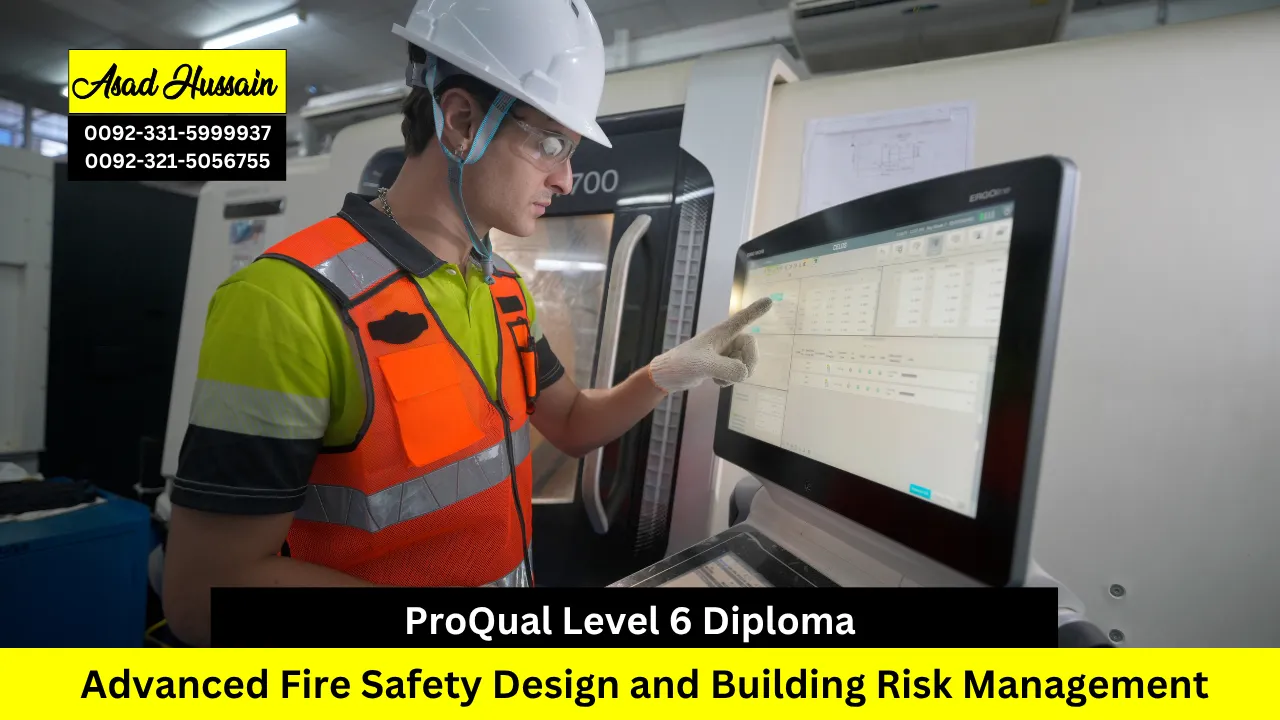
The ProQual Level 6 Diploma in Advanced Fire Safety Design and Building Risk Management is a comprehensive qualification designed for professionals seeking to develop advanced knowledge and practical expertise in fire safety engineering and risk management. This course focuses on the principles of fire safety design, regulatory compliance, and the application of modern techniques to ensure the safety of occupants and property in a wide range of building environments.
Throughout the programme, learners gain a deep understanding of fire risk assessment, fire safety strategies, and both internal and external fire spread in complex and higher-risk buildings. The diploma emphasizes performance based design approaches, enabling learners to evaluate fire safety systems, interpret design intent, and apply effective solutions to real-world challenges. It also covers critical areas such as façade fire risks, evacuation planning, and the integration of fire safety into building design.
This qualification is ideal for fire safety professionals, engineers, building control officers, and construction specialists aiming to enhance their competencies and career prospects. It also promotes professional practice, ethical responsibility, and continuous professional development, ensuring learners are well equipped to meet industry standards and contribute to safer built environments.
Program Highlights
Study Units
- Produce Fire Safety Strategy Reports in Accordance with Design Intent
- Review Fire Risk Assessments and Fire Strategy Outputs to Ensure Fire Safety Performance
- Evaluate Fire Safety Design Intent and Internal Fire Spread Performance in Complex Buildings
- Critically Appraise External Fire Spread Risk in External Wall Systems
- Evaluate Fire Safety Design in Higher-Risk Buildings
- Analyse Fire Safety Risk Using Performance-Based and Process Safety Principles
- Professional Practice, Ethics and Continuing Professional Development in Fire Safety Design and Building Risk Management
Entry Requirements
To enroll in the ProQual Level 6 Diploma in Advanced Fire Safety Design and Building Risk Management, applicants are expected to meet the following criteria:
- Age Requirement: Learners should typically be 18 years or above at the time of registration.
- Educational Background: A Level 5 qualification or equivalent in a relevant field is recommended. Suitable backgrounds may include diplomas or certificates in Fire Safety, Occupational Health and Safety, Building Construction, Civil Engineering, or Environmental Health.
- Language Proficiency: Candidates should have a good command of English (reading, writing, and communication) to understand course materials and complete assessments effectively.
- Work Experience (Preferred): Prior experience in fire safety, construction, engineering, or risk management is beneficial but not always mandatory.
Learning Outcomes
Produce Fire Safety Strategy Reports in Accordance with Design Intent
- Identify and establish fire safety design intent for buildings.
- Assess and develop fire safety strategy solutions for buildings.
- Produce fire safety strategy reports suitable for stakeholders and regulators.
- Review and manage fire safety strategy outputs throughout the design and construction process.
Review Fire Risk Assessments and Fire Strategy Outputs to Ensure Fire Safety Performance
- Review and evaluate fire risk assessments to ensure their accuracy and suitability.
- Assess the alignment between fire risk assessments, fire strategy, and actual building conditions.
- Assure fire safety performance through verification and evidence-based review.
- Provide assurance, recommendations, and reporting to support effective fire safety risk management.
Evaluate Fire Safety Design Intent and Internal Fire Spread Performance in Complex Buildings
- Critically evaluate the role of compartmentation and design intent in fire safety and building safety systems.
- Assess compartmentation performance and verify design intent through surveys and inspections.
- Evaluate and verify compartmentation performance against design intent using evidence-based assessment.
- Manage compartmentation risk by identifying fire safety defects and addressing relevant regulatory implication.
Critically Appraise External Fire Spread Risk in External Wall Systems
- Analyse mechanisms and consequences of external fire spread.
- Apply PAS 9980-style risk-based methodology and manage uncertainty
- Verify design intent and evaluate façade construction, defects, and interfaces during survey
- Communicate and manage external wall fire risks and implement effective mitigation strategies.
Evaluate Fire Safety Design in Higher-Risk Buildings
- Critically analyse the applicable framework, including defect concepts and regulatory expectations.
- Evaluate building design intent and delivery outcomes, and identify relevant fire safety defects in Higher Risk Buildings (HRBs).
- Manage Gateways and Golden Thread information, ensuring traceability of defects and control measures.
- Support accountable persons in managing defect risks, safety case adequacy, and liability exposure, including Building Liability Orders.
Analyse Fire Safety Risk Using Performance-Based and Process Safety Principles
- Apply process safety principles to fire risk management.
- Develop, critique, and strengthen safety case arguments and supporting evidence sets.
- Assess cumulative and systemic risks in buildings and Higher-Risk Buildings.
- Apply barrier models and define performance standards for fire safety control measures.
- Apply the HAZID process to systematically identify and manage fire safety risks in Higher-Risk Buildings.
Professional practice, ethics, and continuing professional development in fire safety design and building risk management.
- Maintain and evaluate professional competence in fire safety practice.
- Plan and implement continuing professional development (CPD).
- Reflect on professional practice and learning.
- Apply professional ethics and judgement in fire safety practice
- Promote inclusive and responsible professional practice.
- Contribute to professional dialogue and knowledge sharing.
Target Audience
This course is designed for professionals who are involved in fire safety, building design, and risk management, or those looking to advance their careers in these critical areas. It provides the knowledge and skills required to effectively manage fire risks and implement advanced safety strategies in modern building environments.
- Fire safety professionals seeking advanced knowledge and certification
- Fire risk assessors and fire safety consultants
- Building control officers and inspectors
- Civil, structural, and fire protection engineers
- Construction and project management professionals
- Health and safety officers and managers
- Architects and building design professionals
- Facilities and property managers responsible for safety compliance
- Professionals working with higher-risk or complex buildings
- Individuals aiming to progress into senior roles in fire safety and risk management
This qualification is also suitable for individuals who wish to enhance their expertise, improve career opportunities, and contribute to creating safer and more compliant built environments.