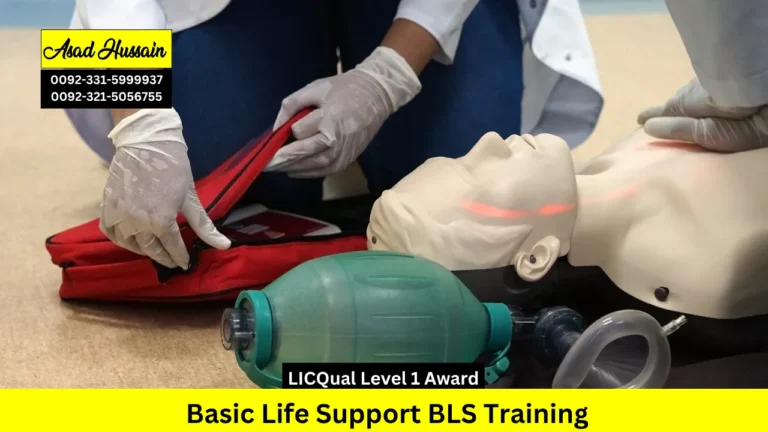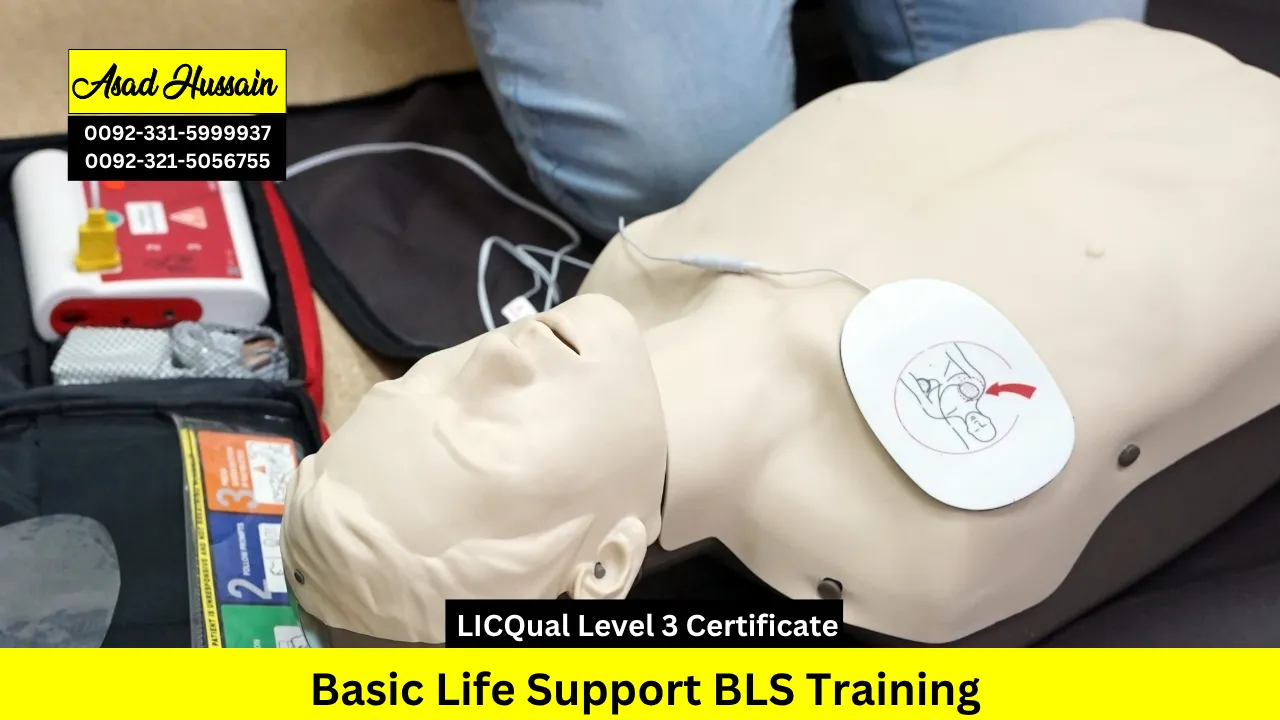
The LICQual Level 3 Certificate in Basic Life Support (BLS) Training is an advanced-level qualification designed to provide learners with in-depth knowledge and practical skills in life-saving emergency response. This course is ideal for healthcare professionals, emergency responders, caregivers, and individuals who require a higher level of competence in managing critical medical situations.
This comprehensive training covers advanced cardiopulmonary resuscitation (CPR) techniques, use of automated external defibrillators (AED), airway management, patient assessment, recovery procedures, and effective response to cardiac and respiratory emergencies. Learners also develop strong decision-making skills and the ability to act confidently in high-pressure, life-threatening situations.
The LICQual Level 3 BLS course combines theoretical knowledge with practical application to ensure learners can perform effectively in real-world emergencies. It is particularly suitable for individuals working in hospitals, clinics, care homes, emergency services, and other healthcare or safety-related environments.
Upon completion, learners will have enhanced emergency response capabilities and can progress to advanced first aid, pre-hospital care, or professional healthcare qualifications. This certification significantly improves employability and professional credibility in healthcare and safety sectors.
Program Highlights
Study Units
To achieve,LICQual Level 3 Certificate in Basic Life Support BLS Training; Candidates must Complete the 6 Manadatory Units.
- Advanced CPR Techniques
- Managing Severe Airway Obstruction
- Use of AED in Different Scenarios
- Scene Assessment and Immediate Care
- Managing Medical Emergencies in a Workplace or Public Setting
- Post-Emergency Management and Care
Entry Requirements
- Age Requirements:Applicants must be at least 18 years old.
- Educational Background:A basic secondary school qualification or equivalent is required. Learners with prior studies in health sciences, biology, or related subjects will benefit most from the course.
- Language Proficiency:Learners must have a basic level of English proficiency to understand technical terminology, follow instructions, and complete practical assessments.
- Work Experience:No prior experience in Basic Life Support is necessary. However, the course is best suited for healthcare professionals, first responders, or individuals working in high-risk environments who want to enhance their life-saving skills.
Please ensure all criteria are met to facilitate a smooth admission process into this professional program.
Learning Outcomes
By the end of this course, learners will be able to:
- Advanced CPR Techniques
- Demonstrate advanced CPR techniques for adults, children, and infants, including modifications for different age groups and conditions.
- Apply effective chest compressions, rescue breaths, and coordinated CPR interventions in a variety of emergency situations.
- Recognize when advanced CPR measures should be initiated and how to modify your approach based on the casualty’s response.
- Understand the importance of high-quality CPR in improving the survival rate of victims of cardiac arrest.
- Managing Severe Airway Obstruction
- Identify signs of severe airway obstruction in both conscious and unconscious individuals.
- Perform advanced techniques to relieve airway obstructions, including abdominal thrusts, back blows, and the proper use of medical devices when applicable.
- Safely manage and treat severe airway blockages in adults, children, and infants.
- Understand the priority of airway management and the appropriate interventions required in different emergency scenarios.
- Use of AED in Different Scenarios
- Understand the role and functionality of an Automated External Defibrillator (AED) in treating victims of cardiac arrest.
- Demonstrate the correct usage of AEDs, including how to position electrodes and interpret the device’s analysis.
- Respond appropriately to different cardiac arrest scenarios, determining when and how to use an AED effectively.
- Integrate AED use with CPR to provide continuous, life-saving care during a medical emergency.
- Scene Assessment and Immediate Care
- Conduct an effective scene assessment to ensure safety for both the casualty and the rescuer in an emergency situation.
- Recognize potential hazards at the scene of an emergency and take immediate steps to mitigate risks.
- Prioritize immediate care needs by evaluating the severity of the casualty’s condition and determining the most appropriate first aid intervention.
- Communicate effectively with bystanders and emergency services during the initial stages of an emergency.
- Managing Medical Emergencies in a Workplace or Public Setting
- Identify common medical emergencies that can occur in the workplace or public settings, including heart attacks, strokes, severe allergic reactions, and injuries.
- Apply appropriate first aid protocols and life-saving techniques in response to a range of medical emergencies.
- Understand the importance of first aid and BLS procedures in ensuring workplace safety and compliance with health regulations.
- Maintain a calm, clear approach when managing medical emergencies in public or work environments, ensuring swift and effective care.
- Post-Emergency Management and Care
- Understand the importance of post-emergency care to prevent complications and provide continuous support until medical professionals arrive.
- Monitor the casualty’s condition after initial first aid or life-saving interventions and make adjustments as needed.
- Provide psychological support to casualties, offering reassurance and comfort after an emergency situation.
- Be familiar with the procedures for handing over the casualty to emergency medical services (EMS) with clear and accurate information.
Target Audience
This diploma is ideal for:
- Healthcare professionals, including doctors, nurses, and paramedics, who need advanced life-saving skills to respond effectively in emergency situations.
- First responders, including emergency medical technicians (EMTs), fire fighters, and rescue personnel, looking to enhance their skills in managing severe medical emergencies.
- Workplace safety officers, supervisors, and safety personnel who are responsible for implementing emergency response protocols in high-risk environments.
- Individuals working in public venues such as shopping malls, entertainment venues, or sports facilities, where quick emergency response could save lives.
- Occupational health personnel who require advanced life support training to manage medical emergencies in the workplace.
- Fitness instructors, coaches, and other professionals who work with physically active individuals and need to be prepared for potential health emergencies.
- People with a professional interest in improving their emergency care skills to handle complex situations with confidence and efficiency.
- Those who need to fulfill workplace health and safety requirements by becoming certified in advanced life support techniques.