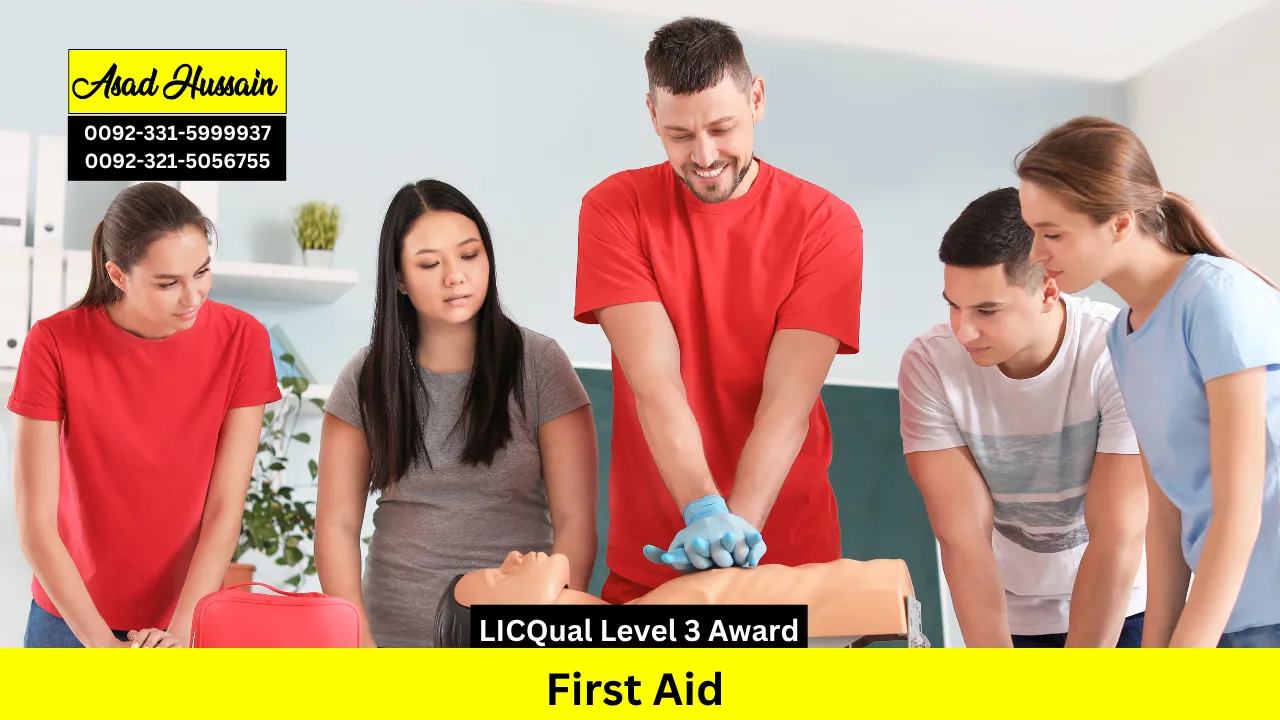
The LICQual Level 3 Award in First Aid is a comprehensive qualification designed to equip learners with advanced first aid skills and the confidence to manage a wide range of emergency situations. This course is ideal for individuals who wish to take on a responsible role in workplace safety, community care, or healthcare support environments. It focuses on developing practical, hands-on competencies in assessing incidents, providing immediate care, and effectively responding to life-threatening conditions until professional medical help arrives.
Throughout the course, learners gain in-depth knowledge of emergency procedures, including CPR techniques, wound management, treatment of burns, fractures, and medical emergencies such as shock and choking. The training also enhances decision-making skills under pressure, ensuring quick and accurate responses in critical situations.
The LICQual Level 3 Award in First Aid is suitable for workplace first aiders, supervisors, and individuals seeking career progression in health and safety or emergency response roles. By completing this qualification, learners improve their employability and contribute significantly to safer working environments.
This internationally recognized qualification not only strengthens professional credibility but also provides a solid foundation for further study in advanced health and safety or medical training pathways.
Program Highlights
Study Units
To achieve,LICQual Level 3 Award in First Aid; Candidates must Complete the 6 Manadatory Units.
- The Role and Responsibilities of a First Aider
- Managing a Casualty Who is Unresponsive and Not Breathing
- Advanced Management of Bleeding and Wounds
- Managing Medical Emergencies and Life-Threatening Conditions
- Handling Musculoskeletal Injuries, Burns, and Environmental Emergencies
- Managing Trauma, Head Injuries, and Spinal Injuries
Entry Requirements
- Age Requirements:Applicants must be at least 16 years of age at the time of enrolment.
- Educational Background: A basic secondary education or equivalent qualification is recommended to support understanding of course materials.
- Language Proficiency:Learners should have a good command of the English language in reading, writing, speaking, and understanding to effectively participate in training, assessments, and practical activities.
- Work Experience: No prior first aid experience is required; however, a basic awareness of workplace health and safety is advantageous.
Please ensure all criteria are met to facilitate a smooth admission process into this professional program.
Learning Outcomes
By the end of this course, learners will be able to:
- The Role and Responsibilities of a First Aider
- Understand the legal, ethical, and professional responsibilities of a first aider.
- Demonstrate knowledge of the key principles of risk assessment and how to maintain personal safety in emergency situations.
- Recognize the importance of communication, documentation, and providing accurate reports during an emergency.
- Apply the use of personal protective equipment (PPE) and infection control measures during first aid interventions.
- Managing a Casualty Who is Unresponsive and Not Breathing
- Identify the signs and symptoms of an unresponsive casualty and perform a primary survey.
- Perform effective CPR on a casualty who is not breathing, ensuring the correct depth and rate of chest compressions.
- Demonstrate the safe and appropriate use of an Automated External Defibrillator (AED) in a cardiac arrest situation.
- Understand the importance of continuing CPR until emergency services arrive or the casualty becomes responsive.
- Advanced Management of Bleeding and Wounds
- Recognize and manage severe external bleeding, using techniques such as pressure, bandaging, and hemostatic dressings.
- Demonstrate advanced wound care, including dressing and preventing infection in open wounds.
- Identify signs of internal bleeding and provide immediate care while awaiting professional medical help.
- Recognize and treat shock resulting from blood loss, ensuring stabilization of the casualty.
- Managing Medical Emergencies and Life-Threatening Conditions
- Recognize the signs and symptoms of life-threatening conditions such as heart attacks, strokes, and seizures.
- Provide appropriate first aid for medical emergencies, including diabetic crises, asthma attacks, and anaphylaxis.
- Manage respiratory and circulatory emergencies by stabilizing the casualty and providing necessary support.
- Understand the principles of advanced first aid for conditions like hypoglycemia, hyperglycemia, and anaphylactic shock.
- Handling Musculoskeletal Injuries, Burns, and Environmental Emergencies
- Assess and provide first aid for fractures, sprains, strains, and dislocations, including techniques for immobilization and splinting.
- Demonstrate effective first aid for burns and scalds, including cooling, dressing, and preventing infection.
- Provide first aid for environmental injuries such as heatstroke, hypothermia, and frostbite, understanding the necessary steps for each.
- Recognize and manage soft tissue injuries and pain relief techniques.
- Managing Trauma, Head Injuries, and Spinal Injuries
- Identify and assess trauma-related injuries, including head and spinal injuries.
- Demonstrate proper techniques for immobilizing casualties with head, neck, or spinal injuries to prevent further harm.
- Perform head-to-toe assessments for trauma victims, providing first aid for signs of concussion or brain injury.
- Understand the critical role of early intervention in managing head and spinal injuries to minimize long-term damage.
Target Audience
This diploma is ideal for:
- Individuals who want to enhance their first aid skills and take on a more advanced role in emergency care.
- Workplace first aiders or health and safety officers seeking to meet regulatory requirements and ensure a safe working environment.
- Healthcare professionals looking to refresh or expand their first aid knowledge with a more advanced qualification.
- Emergency responders, community volunteers, or sports coaches who need to be equipped to handle complex medical emergencies.
- Individuals involved in high-risk industries or activities, such as construction, manufacturing, or outdoor adventure, who need advanced first aid training.
- Anyone interested in becoming highly skilled in managing life-threatening situations, trauma, and medical emergencies in both professional and personal settings.