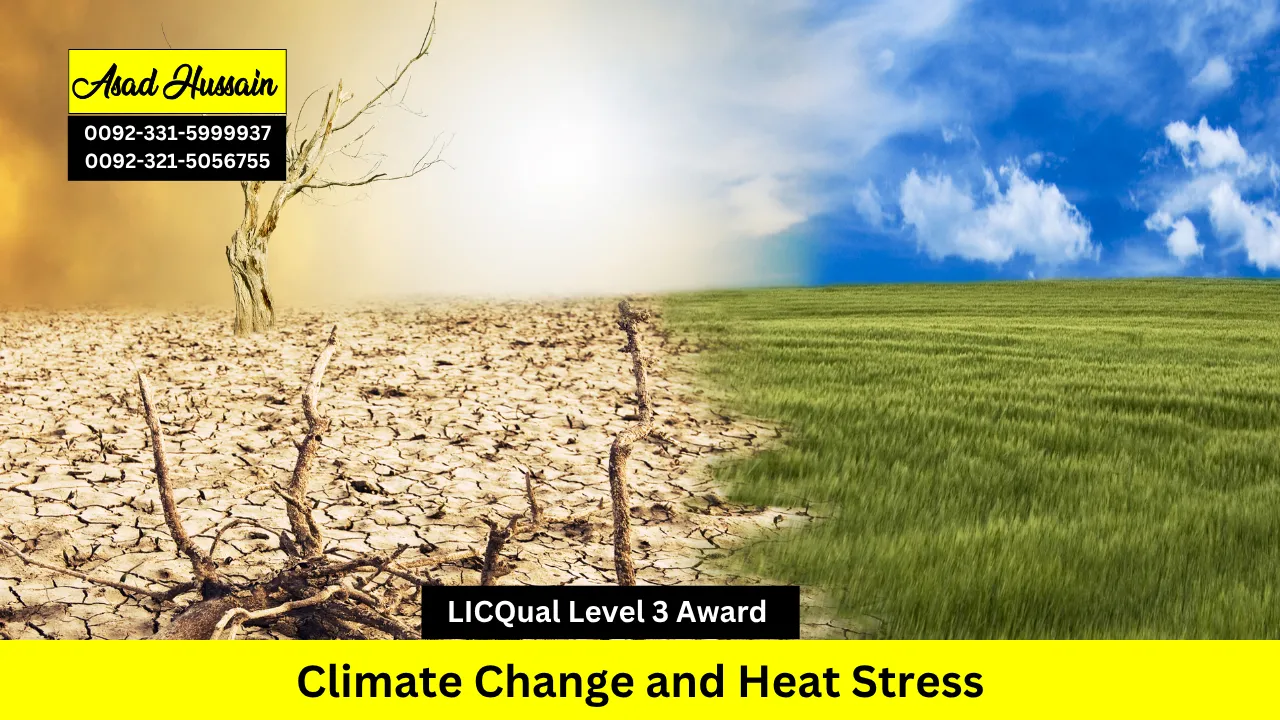
The LICQual Level 3 Award in Climate Change and Heat Stress is a specialised qualification designed for professionals seeking to understand the impact of climate change on workplace health and safety, particularly regarding heat-related risks. This award equips learners with the knowledge and skills required to assess, manage, and mitigate the effects of heat stress in various working environments, ensuring the safety, wellbeing, and productivity of employees.
The course covers essential topics such as the science of climate change, environmental factors contributing to heat stress, recognising symptoms of heat-related illnesses, implementing effective risk management strategies, and complying with health and safety regulations. Learners gain the ability to evaluate workplace conditions, develop preventative measures, and provide guidance to colleagues and teams on managing heat stress effectively.
This qualification is ideal for health and safety officers, occupational safety professionals, site managers, supervisors, and employees working in industries exposed to high temperatures or outdoor environments. It is also suitable for organisations seeking to strengthen their health and safety policies in response to global climate challenges.
Upon completion, learners achieve a recognised Level 3 award that enhances professional credibility, supports compliance with workplace safety regulations, and provides practical skills to address climate change and heat stress risks. This award positions learners to contribute effectively to safer, healthier, and more resilient work environments.
Program Highlights
Study Units
To achieve,LICQual Level 3 Award in Climate Change and Heat Stress; Candidates must Complete the 6 Manadatory Units.
- Introduction to Climate Change
- Heat Stress and Its Effects
- Risk Assessment and Management
- Workplace Adaptations
- Emergency Response and First Aid
- Legal and Regulatory Compliance
Entry Requirements
- Age Requirements: Applicants must be at least 18 years old at the time of enrollment.
- Educational Background: A minimum of a high school diploma (or equivalent qualification) is required..
- Language Proficiency: Learners should have basic to intermediate English skills (reading, writing, listening, and speaking) to understand course materials, complete assessments.
- Work Experience:No extensive experience is mandatory; however, basic exposure to environmental management, occupational health, or related fields is recommended to help learners connect theory with practice.
Please ensure all criteria are met to facilitate a smooth admission process into this professional program.
Learning Outcomes
- Introduction to Climate Change
- Understand the scientific principles behind climate change and global warming.
- Identify the key drivers, trends, and global impacts of climate change.
- Analyze the role of human activity in accelerating environmental change.
- Heat and Its Effects
- Explain what heat stress is and how it affects the human body and performance.
- Recognize the signs, symptoms, and health risks associated with heat exposure.
- Identify vulnerable populations and high-risk environments for heat stress.
- Risk Assessment and Management
- Conduct basic risk assessments related to climate change and heat stress.
- Apply hazard identification and risk control techniques in different settings.
- Develop strategies to minimize risks and promote safe, sustainable environments.
- Workplace Adaptations
- Recommend practical workplace modifications to reduce heat-related risks.
- Evaluate the effectiveness of ventilation, hydration, scheduling, and PPE.
- Implement climate-resilient solutions tailored to specific industries or job roles.
- Emergency Response and First Aid
- Describe the correct first aid procedures for heat exhaustion and heat stroke.
- Understand the components of an effective emergency response plan.
- Demonstrate readiness to respond promptly to heat-related incidents.
- Legal and Regulatory Compliance
- Identify relevant international and national laws related to climate and workplace safety.
- Interpret regulatory requirements concerning heat exposure and worker protection.
- Ensure compliance with legal standards and contribute to policy development.
Target Audience
This diploma is ideal for:
- Professionals working in environmental management, health and safety, or sustainability roles.
- Individuals involved in occupational health, industrial hygiene, or workplace safety oversight.
- Public health practitioners and emergency responders seeking to understand heat-related risks.
- Urban planners, civil engineers, and infrastructure specialists concerned with climate adaptation.
- NGO workers, humanitarian aid personnel, and disaster risk reduction teams.
- Educators, trainers, and academic professionals teaching climate science or environmental studies.
- Students and recent graduates aiming to build foundational knowledge in climate change and heat stress.
- Policy makers, government employees, and regulatory officers dealing with climate and labor standards.
- Business leaders and HR managers implementing environmental or employee wellness strategies.
- Anyone with a strong interest in sustainability, climate resilience, and global environmental issues.