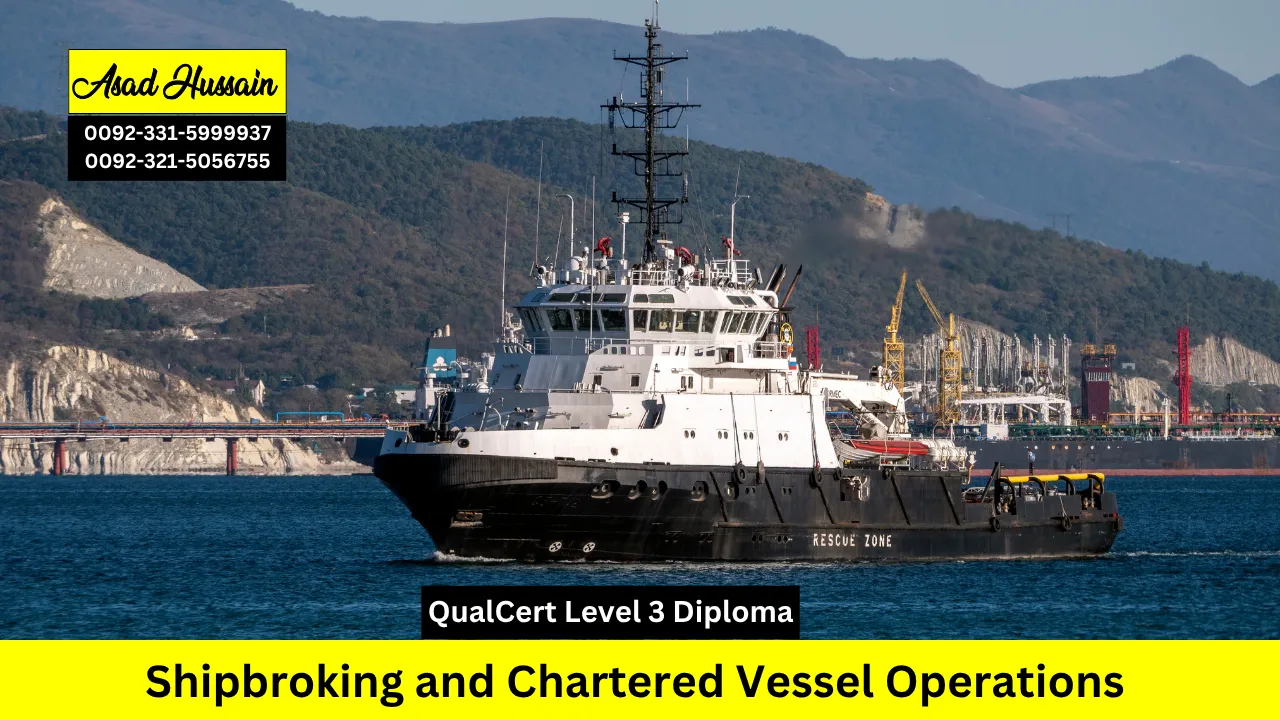
The QualCert Level 3 Diploma in Shipbroking and Chartered Vessel Operations is a professional qualification designed for individuals seeking foundational knowledge and practical skills in shipbroking, vessel chartering, and maritime operations. This course provides a comprehensive understanding of shipping markets, chartering principles, freight management, and operational procedures, enabling learners to operate effectively within the global maritime industry.
Participants will explore key topics such as ship types and trading routes, voyage and time charters, freight rate calculations, charterparty agreements, and the responsibilities of shipbrokers and chartering professionals. The course also covers essential aspects of risk management, legal frameworks, and operational compliance, providing learners with the skills to support safe, efficient, and commercially successful vessel operations.
The QualCert Level 3 Diploma in Shipbroking and Chartered Vessel Operations is ideal for aspiring shipbrokers, shipping assistants, logistics coordinators, port staff, and maritime professionals seeking career development in shipbroking and chartering. Upon completion, learners will possess the practical and theoretical competencies required to manage chartering transactions, negotiate freight contracts, and support shipping operations. This qualification enhances professional credibility, prepares learners for industry challenges, and serves as a stepping stone for further advanced studies or career progression within the global shipping and maritime sector.
Program Highlights
Study Units
To achieve,QualCert Level 3 Diploma Shipbroking and Chartered Vessel Operations; Candidates must Complete the 6 Manadatory Units.
- Introduction to Shipbroking and Maritime Trade
- Principles of Vessel Chartering
- Vessel Operations and Cargo Management
- Shipping Documentation and Trade Compliance
- Maritime Law and Commercial Contracts
- Professional Development in Shipbroking
Entry Requirements
- Age Requirements: Learners must be at least 18 years old at the time of enrolment.
- Educational Background: A high school diploma or equivalent qualification is required. Background in business, logistics, or maritime studies is helpful but not essential.
- Language Proficiency: Participants should have a basic to intermediate level of English proficiency to understand course materials, follow instructions, and complete assessments successfully.
- Work Experience:Prior experience in shipping, freight forwarding, maritime operations, or logistics is advantageous but not compulsory.
Please ensure all criteria are met to facilitate a smooth admission process into this professional program.
Learning Outcomes
- Introduction to Shipbroking and Maritime Trade
- Understand the role of shipbrokers in global shipping and trade
- Identify the main stakeholders in maritime trade, including shipowners, charterers, and traders
- Explain the structure and functions of international shipping markets
- Recognise the importance of shipbroking in facilitating global commerce
- Demonstrate awareness of different types of shipping services and trade routes
- Apply basic commercial knowledge to shipbroking scenarios
- Explore career opportunities within shipbroking and maritime services
- Principles of Vessel Chartering
- Understand the different types of charter agreements: voyage, time, and bareboat
- Explain the key stages of the chartering process from negotiation to fixture
- Interpret the main terms and clauses of a charter party contract
- Recognise the commercial and operational factors influencing chartering decisions
- Apply knowledge of freight markets and rate fluctuations to chartering practice
- Demonstrate awareness of the broker’s role in negotiations between owners and charterers
- Evaluate the impact of chartering practices on vessel employment and profitability
- Vessel Operations and Cargo Management
- Understand the operational requirements of vessel management and scheduling
- Identify different types of cargo and their handling requirements
- Explain the role of shipbrokers in coordinating vessel operations and cargo logistics
- Recognise the importance of efficiency in vessel turnaround and cargo flow
- Apply knowledge of cargo stowage, loading, and discharge procedures
- Demonstrate awareness of safety and environmental considerations in cargo operations
- Evaluate the impact of effective operations on client satisfaction and trade performance
- Shipping Documentation and Trade Compliance
- Identify and explain the purpose of key shipping documents such as bills of lading, charter parties, and invoices
- Understand the role of documentation in ensuring smooth international trade transactions
- Recognise the importance of accuracy and compliance in shipping paperwork
- Apply knowledge of customs and trade regulations to shipping documentation
- Demonstrate awareness of international compliance frameworks affecting shipping
- Analyse the consequences of errors or non-compliance in trade documentation
- Develop practical skills in preparing and reviewing shipping documents
- Maritime Law and Commercial Contracts
- Understand the basic principles of maritime law and its application to shipping
- Identify the key legal frameworks governing international shipping and trade
- Interpret the main clauses of commercial contracts in shipbroking and chartering
- Recognise the rights and responsibilities of shipowners, charterers, and brokers
- Apply knowledge of dispute resolution methods such as arbitration and mediation
- Demonstrate awareness of liabilities, risks, and insurance in maritime contracts
- Evaluate the impact of legal compliance on commercial shipping operations
- Professional Development in Shipbroking
- Recognise the importance of professionalism and ethical conduct in shipbroking
- Develop effective communication and negotiation skills for client interactions
- Apply teamwork and leadership skills in a maritime business context
- Build personal confidence in handling commercial discussions and agreements
- Create a personal development plan for career progression in shipbroking
- Demonstrate awareness of industry expectations and professional standards
- Evaluate long-term career opportunities and progression pathways in shipbroking and chartering
Target Audience
The QualCert Level 3 Diploma in Shipbroking and Chartered Vessel Operations is designed for individuals who are beginning their journey in the maritime and shipping industry.
- School Leavers and College Graduates
- Learners completing secondary education with an interest in maritime services
- Students who want a vocational pathway into shipbroking and chartering
- Individuals motivated by practical, industry-focused learning
- Those seeking to progress into higher-level qualifications in shipping or logistics
- Learners aiming to build employability skills for the maritime sector
- Students interested in international trade and shipping markets
- Young learners looking for structured entry into professional shipbroking roles
- Aspiring Shipbrokers and Chartering Assistants
- Individuals aiming to work in shipbroking firms or chartering departments
- Learners interested in the commercial side of shipping and vessel operations
- Those seeking to understand the fundamentals of chartering agreements
- Candidates preparing for recruitment and selection processes in shipping companies
- Learners who want to gain an industry-recognised qualification
- Individuals motivated by international career opportunities in shipbroking
- Those aspiring to long-term careers in chartering and vessel operations
- Career Changers and Mature Learners
- Adults seeking a new career in shipbroking, chartering, or maritime trade
- Individuals with transferable skills from business, logistics, or transport
- Learners without formal maritime qualifications but with strong motivation
- Those wishing to formalise prior experience in customer-facing or operational roles
- Candidates motivated by international career opportunities in shipping
- Individuals seeking a structured re-entry into education and training
- Mature learners aiming to progress into specialised shipbroking roles
- International Learners
- Students from outside the UK seeking globally recognised qualifications
- Learners aiming to meet international shipping and trade standards
- Candidates preparing for careers in global shipbroking and chartering services
- Individuals seeking qualifications that support global mobility
- Learners motivated by opportunities in international shipping companies
- Students wishing to progress to higher-level maritime diplomas abroad
- Those seeking a qualification aligned with international frameworks
- Business, Trade and Logistics Professionals
- Individuals working in import/export, warehousing, or logistics services
- Learners seeking to transition into the shipbroking and maritime sector
- Professionals motivated by enhancing trade and operational skills
- Those wishing to expand career opportunities into chartering and vessel operations
- Candidates aiming to apply business or logistics skills to maritime roles
- Learners interested in combining trade knowledge with shipbroking practices
- Professionals seeking to strengthen their CV with a shipping-focused qualification
- Maritime and Shipping Enthusiasts
- Individuals passionate about ships, trade, and global commerce
- Learners seeking structured knowledge of shipbroking and chartering
- Hobbyists interested in maritime services beyond recreational learning
- Those motivated by curiosity about shipping markets and vessel operations
- Individuals considering shipbroking as a future career option
- Learners wishing to combine passion with professional study
- Enthusiasts aiming to gain a recognised qualification in maritime services
- Industry Entrants and Apprentices
- Learners preparing for apprenticeships in shipbroking and chartering services
- Candidates seeking entry-level roles in shipping companies or brokerage firms
- Individuals aiming to work in vessel operations, documentation, or trade support
- Learners motivated by structured technical and service training
- Those seeking to meet employer expectations for shipbroking knowledge
- Apprentices requiring a recognised qualification for progression
- Candidates preparing for advanced maritime and logistics certifications