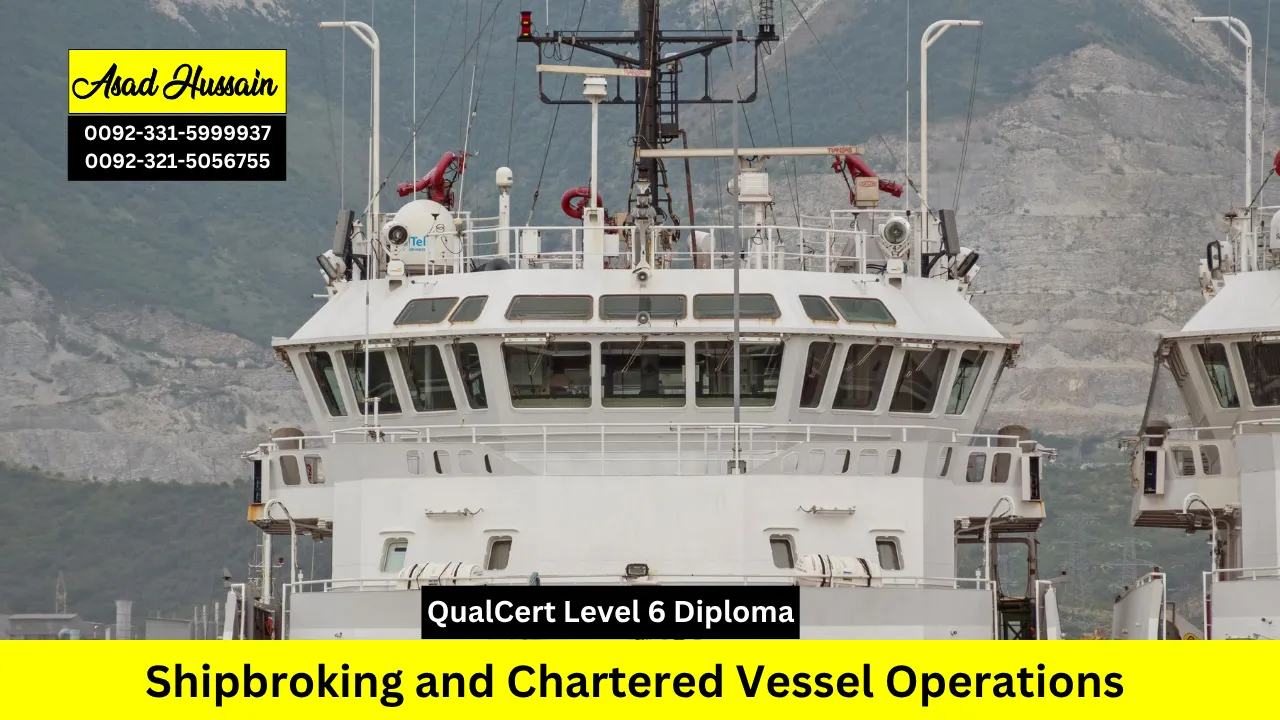
The QualCert Level 6 Diploma in Shipbroking and Chartered Vessel Operations is a professional qualification designed for individuals seeking advanced knowledge and practical expertise in shipbroking, chartering, and vessel operations within the global maritime industry. This course provides an in-depth understanding of commercial shipping practices, market analysis, charterparty agreements, freight negotiation, risk management, and legal frameworks governing vessel operations. Learners gain the skills necessary to operate effectively in the competitive shipping and chartering sector while ensuring compliance with international maritime regulations.
Participants will explore key areas including ship types and markets, voyage and time chartering, freight rate calculations, contract negotiation, operational risk assessment, and maritime finance. The course emphasizes both theoretical foundations and practical applications, enabling learners to make informed decisions, optimize vessel operations, and strengthen commercial relationships in the maritime supply chain.
The QualCert Level 6 Diploma in Shipbroking and Chartered Vessel Operations is ideal for shipbrokers, chartering managers, shipping executives, maritime consultants, and logistics professionals looking to advance their careers. Upon completion, learners will possess the competencies to manage complex chartering transactions, advise clients on vessel operations, and drive business growth in shipping markets. This internationally recognised qualification enhances professional credibility and opens pathways to senior roles in shipbroking, chartering, and maritime operations globally.
Program Highlights
Study Units
To achieve,QualCert Level 6 Diploma in Shipbroking and Chartered Vessel Operations; Candidates must Complete the 6 Manadatory Units.
- Advanced Shipbroking Practices and Chartering Strategies
- International Maritime Law, Risk Management and Arbitration
- Vessel Operations Management and Voyage Optimisation
- Shipping Economics, Market Analysis and Trade Patterns
- Strategic Negotiation, Client Management and Ethics
- Research Project in Shipbroking and Vessel Operations
Entry Requirements
- Age Requirements: Learners must be at least 18 years old at the time of enrolment.
- Educational Background: A bachelor’s degree or equivalent qualification is required. Background in maritime studies, business, law, or logistics is advantageous.
- Language Proficiency: Participants should have a good command of English (intermediate to advanced level) to comprehend complex course materials, engage in negotiations, and complete assessments effectively.
- Work Experience:Prior experience in shipbroking, chartering, maritime operations, shipping management, or related roles is highly recommended to ensure learners can fully engage with advanced course content.
Please ensure all criteria are met to facilitate a smooth admission process into this professional program.
Learning Outcomes
- Advanced Shipbroking Practices and Chartering Strategies
By the end of this unit, learners will be able to:
- Critically evaluate the role of shipbrokers in global trade and chartering.
- Apply advanced chartering strategies to different vessel types and cargoes.
- Analyse the impact of market conditions on chartering decisions.
- Develop effective documentation and contracts for chartering agreements.
- Demonstrate professional competence in managing complex shipbroking transactions.
- International Maritime Law, Risk Management and Arbitration
By the end of this unit, learners will be able to:
- Interpret and apply key principles of international maritime law.
- Assess the legal implications of charter parties, bills of lading, and shipping contracts.
- Evaluate risk management strategies in maritime operations.
- Analyse dispute resolution mechanisms, including arbitration and mediation.
- Apply legal and regulatory frameworks to real-world shipping scenarios.
- Vessel Operations Management and Voyage Optimisation
By the end of this unit, learners will be able to:
- Plan and manage vessel operations in compliance with international standards.
- Optimise voyage planning to maximise efficiency and profitability.
- Evaluate the impact of fuel consumption, weather, and routing on operations.
- Apply operational risk assessment techniques to vessel management.
- Demonstrate effective use of digital tools and technologies in voyage optimisation.
- Shipping Economics, Market Analysis and Trade Patterns
By the end of this unit, learners will be able to:
- Analyse global shipping markets and their economic drivers.
- Evaluate trade patterns and their influence on shipping demand and supply.
- Apply economic models to forecast freight rates and market trends.
- Assess the impact of geopolitical, environmental, and technological factors on shipping.
- Develop strategic insights to support decision-making in maritime trade.
- Strategic Negotiation, Client Management and Ethics
By the end of this unit, learners will be able to:
- Apply advanced negotiation strategies in shipbroking and chartering contexts.
- Manage client relationships with professionalism and cultural awareness.
- Evaluate ethical considerations in maritime business practices.
- Demonstrate effective communication and persuasion skills in commercial settings.
- Develop strategies to build long-term trust and partnerships in the shipping industry.
- Research Project in Shipbroking and Vessel Operations
By the end of this unit, learners will be able to:
- Formulate a research question relevant to shipbroking or vessel operations.
- Apply appropriate research methodologies to investigate maritime issues.
- Critically analyse data and present evidence-based conclusions.
- Evaluate the implications of research findings for industry practice.
- Produce a professional research report demonstrating academic and industry relevance.
Target Audience
The QualCert Level 6 Diploma in Shipbroking and Chartered Vessel Operations is designed for ambitious professionals who want to advance their careers in the global maritime industry. This programme is tailored to meet the needs of individuals already working in shipping, logistics, or trade, as well as those seeking to transition into senior roles within shipbroking and vessel operations.
- Aspiring Senior Shipbrokers
This diploma is ideal for professionals who already have experience in shipbroking and want to progress into senior positions. It equips them with advanced chartering strategies, negotiation skills, and market analysis expertise to handle complex transactions and high-value contracts.
- Maritime Operations Managers
For those managing vessel operations, this qualification provides the tools to optimise voyages, improve efficiency, and ensure compliance with international regulations. It is particularly valuable for professionals seeking to strengthen their operational decision-making and leadership skills.
- Logistics and Trade Professionals
Individuals working in logistics, freight forwarding, or international trade can benefit from this diploma by gaining a deeper understanding of shipping economics, vessel operations, and global trade patterns. It helps them expand their expertise and transition into specialised maritime roles.
- Legal and Compliance Specialists in Shipping
Professionals focusing on maritime law, contracts, and compliance will find this programme highly relevant. It covers international maritime law, arbitration, and risk management, enabling learners to handle disputes and regulatory challenges with confidence.
- Business Development and Client Managers
Those responsible for building client relationships in the shipping industry can enhance their negotiation, communication, and ethical decision-making skills. The diploma prepares them to manage high-level client portfolios and foster long-term partnerships.
- Career Changers with Maritime Experience
Professionals from related fields such as port management, naval architecture, or marine engineering who wish to move into shipbroking and chartering will find this qualification a structured pathway into the commercial side of the industry.
- Future Maritime Consultants and Researchers
Learners aiming to pursue consultancy or research roles in the maritime sector will benefit from the research project component of this diploma. It develops critical thinking, analytical skills, and the ability to provide evidence-based insights for industry challenges.