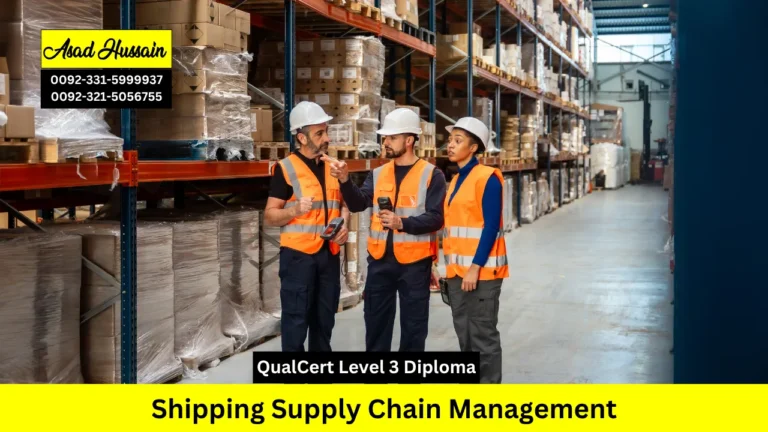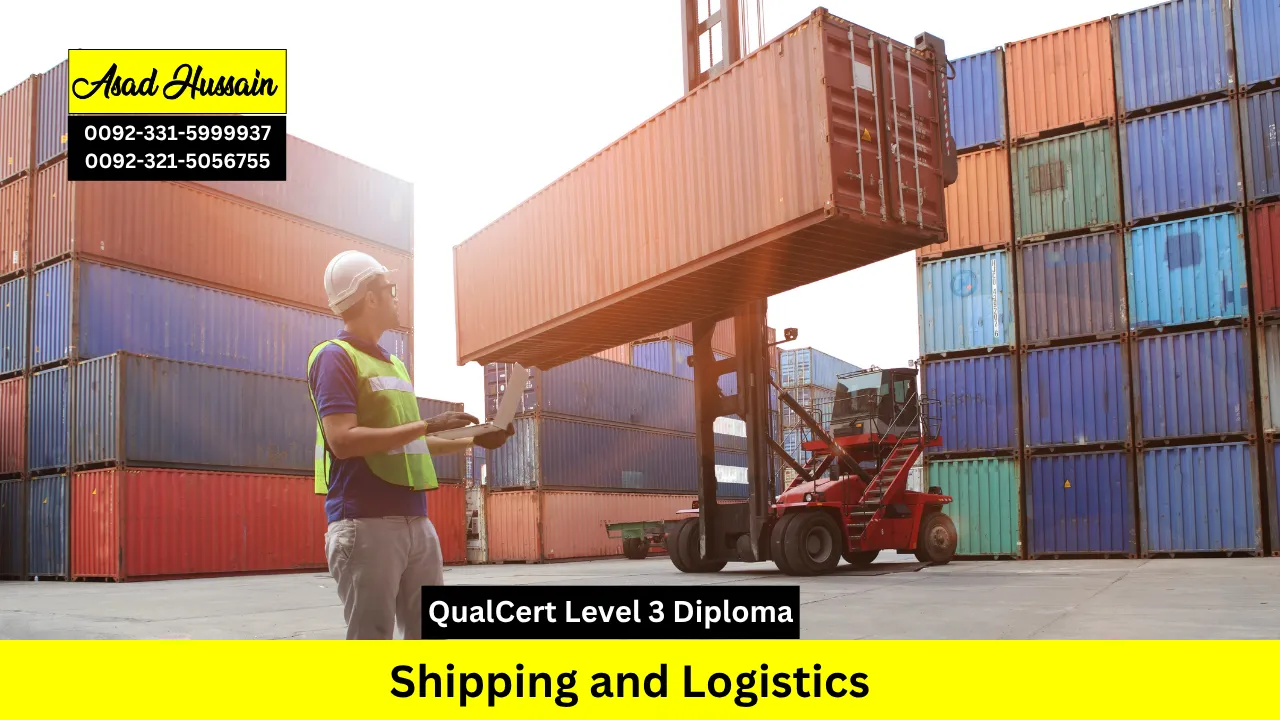
The QualCert Level 3 Diploma in Ship Management and Logistics is a professional entry-level qualification designed to provide learners with essential knowledge and practical skills in maritime operations, shipping management, and logistics. This course offers a strong foundation for understanding how vessels are managed, cargo is handled, and supply chains are coordinated in the global shipping industry.
Participants will gain insights into key areas such as shipping operations, port procedures, cargo documentation, inventory management, logistics planning, and basic risk assessment. The programme also emphasises professional skills like teamwork, communication, problem-solving, and decision-making, which are crucial for supporting operational efficiency in maritime and logistics organisations.
Ideal for school leavers, entry-level maritime staff, logistics assistants, and individuals aiming to start a career in shipping or supply chain management, this diploma equips learners with practical knowledge to contribute effectively in operational roles. By combining theoretical instruction with real-world applications, learners develop confidence in managing cargo, supporting vessel operations, and understanding shipping regulations.
Completing the QualCert Level 3 Diploma in Ship Management and Logistics enhances employability in maritime and logistics sectors, provides a pathway for higher-level qualifications, and prepares learners for career growth in shipping companies, ports, freight forwarding firms, and international trade organisations. It is a vital first step for anyone aspiring to a professional career in global shipping and logistics.
Program Highlights
Study Units
To achieve,QualCert Level 3 Diploma in Ship Management and Logistics; Candidates must Complete the 6 Manadatory Units.
- Introduction to the Global Shipping Industry and Logistics
- Fundamentals of Ship Management and Crew Operations
- Cargo Handling, Port Operations and Safety Standards
- Principles of Supply Chain and Maritime Logistics
- International Trade Documentation and Compliance
- Professional Communication and Customer Service in Shipping
Entry Requirements
- Age Requirements: Candidates must be 16 years of age or older at the time of enrolment.
- Educational Background: Applicants should have at least a secondary school certificate (High School / Matriculation or equivalent).
- Language Proficiency: Since the course is delivered in English, learners must demonstrate intermediate proficiency in reading, writing, and communication.
- Work Experience:While this is an entry‑level diploma, prior exposure to shipping, logistics, or supply chain operations is beneficial.
Please ensure all criteria are met to facilitate a smooth admission process into this professional program.
Learning Outcomes
- Introduction to the Global Shipping Industry and Logistics
- Understand the role of shipping in supporting international trade and commerce
- Identify the main types of ships and their functions in cargo transportation
- Recognise the importance of ports, terminals, and shipping routes in global logistics
- Explain how shipping integrates with wider supply chain and logistics systems
- Analyse the impact of globalisation on shipping and logistics operations
- Demonstrate awareness of current trends, challenges, and opportunities in the maritime sector
- Understand the contribution of shipping to economic development and global connectivity
- Fundamentals of Ship Management and Crew Operations
- Explain the key responsibilities of ship management companies
- Understand the role of crew management in safe and efficient vessel operations
- Identify international standards governing crew welfare, training, and certification
- Recognise the importance of compliance with maritime labour conventions
- Describe the functions of technical, operational, and commercial ship management
- Apply knowledge of crew operations to practical shipping scenarios
- Demonstrate awareness of leadership, teamwork, and communication in shipboard operations
- Cargo Handling, Port Operations and Safety Standards
- Identify the main methods of cargo handling in ports and terminals
- Understand the role of port authorities and terminal operators in global trade
- Explain the importance of safety standards in cargo operations and handling
- Recognise the risks associated with different types of cargo, including hazardous goods
- Apply knowledge of international safety regulations to port and cargo operations
- Analyse the impact of technology and automation on cargo handling efficiency
- Demonstrate awareness of environmental, health, and security considerations in ports
- Principles of Supply Chain and Maritime Logistics
- Understand the role of maritime logistics in global supply chains
- Explain the relationship between shipping, warehousing, and distribution systems
- Identify the key stages of supply chain management in maritime trade
- Recognise the importance of coordination between stakeholders in logistics networks
- Apply knowledge of logistics principles to shipping and transport operations
- Analyse the impact of digitalisation and innovation on supply chain efficiency
- Demonstrate awareness of sustainability and green logistics in maritime operations
- International Trade Documentation and Compliance
- Identify the key documents used in international trade and shipping
- Explain the purpose and function of bills of lading, invoices, and certificates of origin
- Recognise the importance of accurate documentation for compliance and efficiency
- Apply knowledge of trade documentation to practical shipping and logistics scenarios
- Understand the role of customs, port authorities, and regulatory bodies
- Analyse the risks of non-compliance in international trade and shipping operations
- Demonstrate awareness of digital documentation and electronic data exchange in logistics
- Professional Communication and Customer Service in Shipping
- Understand the importance of effective communication in shipping and logistics operations
- Apply professional communication skills in written, verbal, and digital contexts
- Recognise the role of customer service in building client trust and satisfaction
- Develop strategies for managing client relationships effectively in international trade
- Apply conflict resolution techniques in customer service situations
- Demonstrate awareness of cultural sensitivity and diversity in global business communication
- Strengthen teamwork, interpersonal, and problem-solving skills for professional growth
Target Audience
The QualCert Level 3 Diploma in Ship Management and Logistics is designed for individuals who are beginning their journey in the maritime and logistics sectors.
- Aspiring Maritime Professionals
- Gain a structured introduction to the shipping and logistics industry
- Understand the fundamentals of ship management and operations
- Learn about the global importance of maritime trade
- Build confidence to enter the maritime workforce
- Acquire essential knowledge of safety and compliance standards
- Develop awareness of international shipping practices
- Prepare for progression to advanced maritime qualifications
- Logistics and Supply Chain Staff
- Strengthen knowledge of maritime logistics and supply chain systems
- Understand the role of shipping in global supply chains
- Learn how cargo handling and port operations support logistics
- Gain insight into documentation and compliance requirements
- Improve awareness of efficiency and optimisation in logistics
- Enhance career prospects in shipping and supply chain management
- Bridge the gap between logistics practice and maritime knowledge
- Port and Terminal Employees
- Understand the functions of ports and terminals in global trade
- Learn about cargo handling methods and safety standards
- Gain awareness of environmental and security considerations in ports
- Strengthen knowledge of compliance with international regulations
- Improve communication with shipping companies and logistics providers
- Develop a legal and operational perspective on port activities
- Enhance career opportunities within port and terminal management
- Business and Trade Students
- Gain an introduction to maritime logistics alongside business studies
- Understand the role of shipping in international commerce
- Learn about trade documentation and compliance requirements
- Explore the connection between supply chains and shipping operations
- Build transferable skills for global business careers
- Strengthen academic knowledge with practical case studies
- Prepare for advanced study in trade, logistics, or maritime management
- Career Changers
- Access a pathway into the maritime and logistics sector
- Gain essential knowledge without prior industry experience
- Learn the fundamentals of ship management and logistics
- Understand the global importance of sea transport
- Acquire skills relevant to shipping and trade careers
- Build confidence to transition into a new profession
- Use the qualification as a stepping stone to advanced study
- International Learners Seeking UK-Recognised Qualifications
- Obtain a qualification aligned with UK and international standards
- Gain knowledge applicable to global shipping practices
- Learn about international conventions shaping maritime logistics
- Strengthen career prospects in home or overseas markets
- Access structured learning with professional recognition
- Build a foundation for further international qualifications
- Enhance employability in the global maritime sector
- Young Professionals Entering the Workforce
- Gain practical knowledge to support entry-level employment
- Understand the basics of customer service in shipping
- Learn how to communicate effectively in professional contexts
- Develop teamwork and interpersonal skills for the workplace
- Acquire awareness of cultural sensitivity in global trade
- Strengthen employability through industry-relevant learning
- Prepare for long-term career development in shipping and logistics