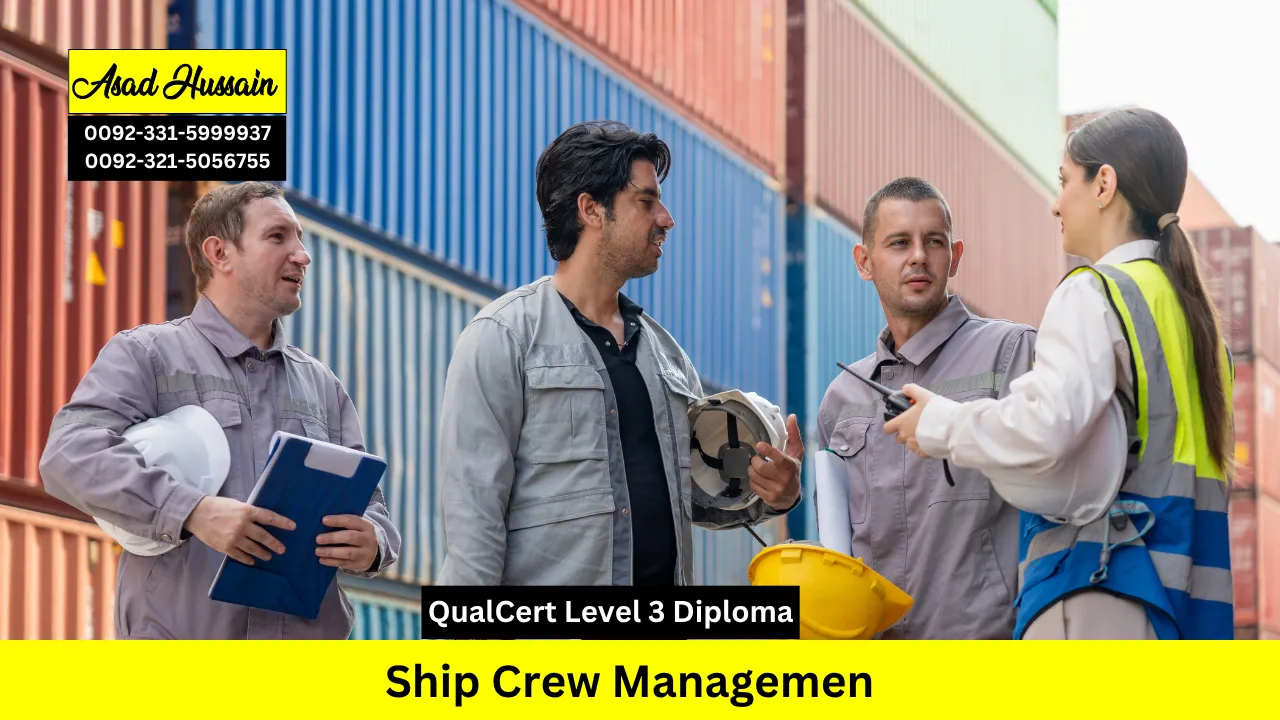
The QualCert Level 3 Diploma in Ship Crew Management is a professionally designed qualification developed to equip learners with the essential knowledge and practical skills required to manage maritime personnel efficiently and comply with modern shipping industry standards. As global maritime operations continue to expand, effective crew management has become a critical component of safe, compliant, and efficient vessel operations. This diploma provides a strong foundation in crew administration, maritime regulations, crew welfare, recruitment procedures, training coordination, and international compliance requirements aligned with current industry practices.
This SEO-focused programme is ideal for individuals seeking to build or enhance careers in maritime operations, ship management companies, and crew administration departments. Learners gain a comprehensive understanding of crew planning, documentation control, safety responsibilities, communication protocols, and human resource management within the shipping sector. The course combines theoretical learning with industry-relevant case studies to ensure participants develop practical competencies demanded by employers worldwide.
The QualCert Level 3 Diploma in Ship Crew Management supports professional growth by preparing learners to handle real-world crew management challenges while improving operational efficiency and regulatory compliance. Upon completion, participants will possess the confidence and technical expertise required to contribute effectively to ship operations and maritime workforce management, making this qualification an excellent starting point for a successful career in the global maritime industry.
Program Highlights
Study Units
To achieve,QualCert Level 3 Diploma in Ship Crew Management; Candidates must Complete the 6 Manadatory Units.
- Introduction to Ship Crew Management
- Maritime Safety and Security Awareness
- International Labour Standards and Crew Welfare
- Crew Training and Development Practices
- Workplace Communication and Technical Reporting
- Compliance with International Maritime Conventions
Entry Requirements
- Age Requirements: Candidates must be 18 years of age or older at the time of registration.
- Educational Background: A minimum of secondary school education (high school level) or equivalent is required.
- Language Proficiency: Since the program is delivered entirely in English, applicants must demonstrate competence in English.
- Work Experience:While not compulsory, prior industry experience in shipping, crew administration, or logistics is highly recommended.
Please ensure all criteria are met to facilitate a smooth admission process into this professional program.
Learning Outcomes
- Introduction to Ship Crew Management
- Explain the purpose and scope of ship crew management.
- Identify the roles and responsibilities of crew management teams.
- Describe the relationship between ship owners, managers, and crew.
- Recognise the importance of compliance with international crew standards.
- Demonstrate awareness of the operational lifecycle of crew deployment.
- Apply basic terminology used in crew management.
- Relate crew management to global shipping operations.
- Maritime Safety and Security Awareness
- Identify common hazards in shipboard operations.
- Explain the principles of maritime safety management.
- Recognise the role of international conventions such as SOLAS and ISPS.
- Apply safe working practices in ship operations.
- Demonstrate awareness of shipboard security measures.
- Describe pollution prevention and environmental protection measures.
- Contribute to a positive safety and security culture.
- International Labour Standards and Crew Welfare
- Identify key international labour conventions affecting seafarers.
- Explain the role of the Maritime Labour Convention (MLC).
- Recognise the importance of crew welfare and wellbeing.
- Describe working and living conditions on board ships.
- Apply knowledge of crew rights and entitlements.
- Demonstrate awareness of fair recruitment and placement practices.
- Relate labour standards to effective crew management.
- Crew Training and Development Practices
- Explain the importance of training in maritime operations.
- Identify mandatory crew training requirements under STCW.
- Recognise the role of continuous professional development.
- Apply basic principles of training delivery and assessment.
- Demonstrate awareness of competency-based training systems.
- Describe methods for monitoring crew performance.
- Relate training to safety and operational efficiency.
- Workplace Communication and Technical Reporting
- Demonstrate effective oral and written communication in maritime contexts.
- Use technical terminology accurately in reports and discussions.
- Prepare clear and concise crew-related reports.
- Apply appropriate formats for incident and operational reporting.
- Recognise the importance of accurate record-keeping.
- Demonstrate teamwork and interpersonal communication skills.
- Use digital tools to support workplace communication.
- Compliance with International Maritime Conventions
- Identify key international maritime organisations and conventions.
- Explain the role of flag states, port states, and classification societies.
- Recognise the importance of compliance in crew management.
- Describe the certification and inspection process for seafarers.
- Apply knowledge of ISM, ISPS, and MLC codes in practical contexts.
- Demonstrate awareness of crew certification requirements.
- Relate compliance to safe and efficient ship operations.
Target Audience
The QualCert Level 3 Diploma in Ship Crew Management is designed for individuals who are beginning their journey into the maritime industry. It provides a strong foundation in crew management, safety, and compliance, making it suitable for learners with little or no prior experience.
- School Leavers and Aspiring Seafarers
- Individuals completing secondary education with an interest in shipping.
- Learners seeking a vocational pathway into the maritime sector.
- Students motivated by practical, applied learning.
- Young people aiming for entry-level roles in ship operations.
- Candidates who want to explore ship crew management as a career.
- Learners interested in logistics, HR, or global trade.
- Those preparing for further maritime or technical study.
- Entry-Level Maritime Professionals
- Individuals working in ports, shipping agencies, or logistics.
- Candidates seeking to formalise their knowledge with a qualification.
- Learners aiming to progress from support roles into crew management.
- Professionals motivated by career development in shipping.
- Those who want to strengthen their understanding of crew systems.
- Learners preparing for technical or operational responsibilities.
- Candidates seeking to improve employability in international shipping.
- Career Changers and New Entrants
- Professionals from other industries seeking a new career path.
- Individuals motivated by opportunities in global trade.
- Candidates retraining for roles in shipping or logistics.
- Learners aiming to transfer technical or HR skills into maritime contexts.
- Professionals seeking a recognised qualification to support transition.
- Those interested in practical, industry-focused training.
- Candidates who want to enter a high-demand global sector.