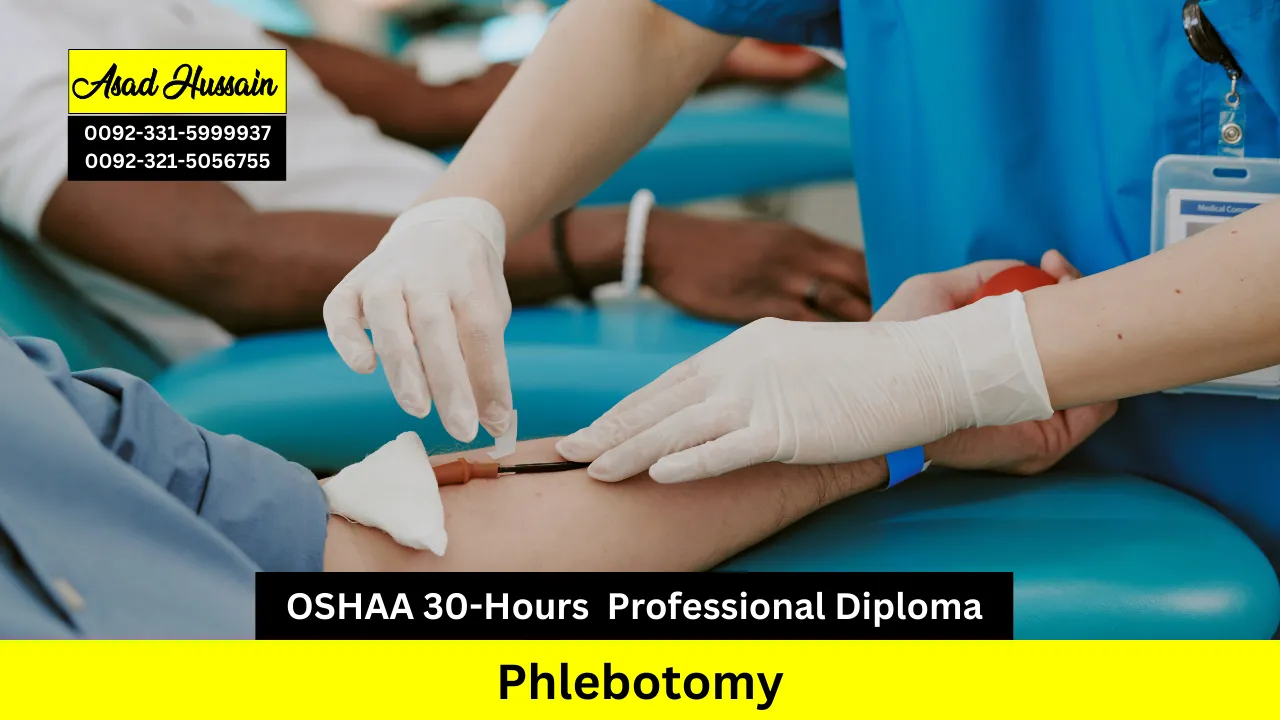
The Definitive Professional Diploma for Phlebotomy Specialists
The OSHAA 30-Hours Professional Diploma in Phlebotomy is an elite clinical training program meticulously designed to equip healthcare practitioners with the precision and technical expertise required for high-standard blood collection. This curriculum masterfully integrates advanced venipuncture techniques with essential clinical safety and occupational health protocols. Participants explore the nuances of vascular anatomy, specimen integrity, and infection control while learning to maintain a sterile therapeutic environment. By mastering these specialized procedures, professionals ensure that blood sampling is delivered within a secure, compliant, and highly structured framework that prioritizes patient comfort and the clinical accuracy of diagnostic results in medical facilities.
This comprehensive program bridges the gap between hematological theory and the practical safety requirements of modern laboratories and hospitals. You will gain deep insights into hazard identification during needle procedures, the proper maintenance of collection equipment, and the ethical management of sensitive patient data. While this course is not Ofqual regulated, it delivers the high-level technical expertise necessary to lead phlebotomy initiatives effectively within a professional setting. The training emphasizes a proactive culture of safety, empowering you to design and oversee robust clinical frameworks that meet international expectations. You will emerge with the specialized skills needed to handle complex venipuncture scenarios.
OSHAA 30-Hours Professional Diploma in Phlebotomy graduates are exceptionally well-positioned to pursue advanced career paths and prestigious professional recognitions in the global healthcare and diagnostic sectors. Completing this diploma serves as a powerful validation of your expertise, opening doors to specialized roles such as Phlebotomy Team Lead or Clinical Laboratory Consultant. Your comprehensive understanding of these safety standards acts as a vital foundation for those pursuing additional professional certifications and diplomas in laboratory management or hematology. By building this world-class foundation, you significantly enhance your professional portfolio, making you a top-tier candidate for leadership positions and specialized consultancy roles in the medical industry.
Program Highlights
Study Units
- Introduction to Phlebotomy and the Role of a Phlebotomist (3 hours)
- Anatomy and Physiology for Phlebotomy (4 hours)
- Blood Collection Techniques and Equipment (4 hours)
- Infection Control and Safety Procedures (4 hours)
- Patient Care and Communication in Phlebotomy (5 hours)
- Legal and Ethical Considerations in Phlebotomy (3 hours)
- Blood Sample Handling and Laboratory Procedures (4 hours)
- Venipuncture and Capillary Collection Techniques (4 hours)
Entry Requirements
To enroll in the OSHAA 30-Hours Professional Diploma in Phlebotomy, candidates must demonstrate a high level of academic readiness and professional commitment to ensure the safe and precise execution of clinical venipuncture procedures:
- Age and Educational Foundation: Applicants must be at least 18 years of age and hold a secondary education certificate. Preference is given to those holding a Diploma in Medical Laboratory Technology, a Certificate in Nursing Assistantship, or a Level 3 Diploma in Health and Social Care.
- Language Proficiency: A professional level of English is mandatory to accurately interpret laboratory requisition forms, follow complex infection control manuals, and communicate clearly with patients during invasive procedures.
- Work Experience: While this course is open to aspiring medical staff, 6–12 months of experience in a clinical, laboratory, or nursing environment—or possessing a Professional Certificate in First Aid and Basic Life Support—is highly recommended to provide a practical context for the training.
These requirements ensure that every participant possesses the foundational maturity and technical background necessary to operate within a clinical setting while maintaining the highest standards of patient safety and diagnostic integrity.
Learning Outcomes
Introduction to Phlebotomy and the Role of a Phlebotomist
- Understand the fundamental role and core responsibilities of a phlebotomist within the modern healthcare system.
- Identify the essential clinical skills required for high-precision blood collection and laboratory procedures.
- Learn about the diverse professional settings for phlebotomists, including hospitals, private clinics, and donation centers.
- Explore the critical impact of accurate specimen collection on diagnostic medicine and patient outcomes.
Anatomy and Physiology for Phlebotomy
- Gain comprehensive knowledge of the human circulatory system and the specific anatomy of veins used in collection.
- Understand the physiology behind blood circulation and its direct relevance to professional phlebotomy techniques.
- Learn to distinguish between various types of veins and arteries to ensure safe and accurate site selection.
- Identify physiological factors that may affect blood flow or vessel accessibility during clinical procedures.
Blood Collection Techniques and Equipment
- Familiarize yourself with various blood collection methods, including advanced venipuncture and capillary collection.
- Learn about the specialized equipment used in phlebotomy, such as multi-sample needles, vacutainers, and lancets.
- Understand the proper mechanics of using and maintaining phlebotomy tools to ensure clinical safety and effectiveness.
- Master the “order of draw” to prevent cross-contamination of additives between different specimen tubes.
Infection Control and Safety Procedures
- Understand the rigorous principles of infection control, including medical sterilization and sanitation protocols.
- Learn the vital importance of Personal Protective Equipment (PPE) in preventing cross-contamination and biohazard exposure.
- Gain expert knowledge on handling sharps and disposing of them safely to prevent needle-stick injuries.
- Implement workplace safety standards to safeguard both the patient and the healthcare practitioner during invasive procedures.
Patient Care and Communication in Phlebotomy
- Learn effective communication techniques to reassure, educate, and prepare patients for the blood collection process.
- Understand how to manage patient anxiety and vasovagal responses to create a calm and comfortable environment.
- Develop professional skills in providing clear pre-procedure instructions to ensure high-quality specimen results.
- Master the art of patient identification and verification to maintain absolute clinical accuracy and safety.
Legal and Ethical Considerations in Phlebotomy
- Understand the legal requirements and ethical principles surrounding blood collection, including informed patient consent.
- Learn the critical importance of maintaining professional conduct and adhering to international healthcare regulations.
- Gain a deep understanding of the phlebotomist’s role in respecting patient rights and data confidentiality.
- Analyze the legal implications of procedural errors and the necessity of meticulous clinical documentation.
Blood Sample Handling and Laboratory Procedures
- Learn how to properly label, store, and transport blood samples to ensure absolute diagnostic accuracy and integrity.
- Understand the specific procedures for handling different types of blood samples based on their testing requirements.
- Gain knowledge of the phlebotomist’s integral role in the pre-analytical phase of the laboratory process.
- Identify factors that lead to sample hemolysis or contamination and learn strategies to mitigate these risks.
Venipuncture and Capillary Collection Techniques
- Master the correct technical steps for performing venipuncture, ensuring a smooth and effective collection process.
- Learn specialized capillary blood collection methods and identify the clinical scenarios where they are most appropriate.
- Understand how to assess a patient’s physical condition to select the most suitable collection technique.
- Practice post-procedure care, including site dressing and monitoring the patient for adverse reactions.
Target Audience
The OSHAA 30-Hours Professional Diploma in Phlebotomy is a high-level clinical program designed for healthcare professionals, aspiring medical technicians, and laboratory staff who seek to achieve technical mastery in venipuncture while upholding the highest standards of patient safety and specimen integrity.
Aspiring Phlebotomists and Lab Technicians
- Individuals seeking to enter the healthcare sector as specialized phlebotomy technicians.
- Laboratory assistants aiming to expand their clinical role into direct patient blood collection.
- Science graduates looking for a practical, clinical credential to enter diagnostic medicine.
- Medical students requiring a formal certification in venipuncture and capillary techniques.
- Research assistants who need to collect high-quality blood samples for clinical trials.
- Aspiring pathology collectors wanting to master the “order of draw” and sample integrity.
Nursing and Allied Health Professionals
- Registered nurses (RNs) and licensed practical nurses (LPNs) refreshing their venipuncture skills.
- Medical assistants (MAs) looking to become more versatile within busy clinical practices.
- Paramedics and emergency medical technicians (EMTs) requiring rapid, safe access techniques.
- Certified Nursing Assistants (CNAs) aiming to transition into specialized clinical roles.
- Midwives and maternity staff who perform routine blood screening for prenatal care.
- Dialysis technicians focusing on safe and effective needle placement for vascular access.
Clinical Support and Healthcare Staff
- Healthcare support workers in geriatric care facilities performing routine health checks.
- Pediatric clinic staff needing specialized training in comforting and treating young patients.
- Home health aides providing mobile blood collection services for homebound individuals.
- Military medics preparing for field-based clinical environments and emergency collection.
- Phlebotomy supervisors managing the safety and compliance of large collection teams.
- Occupational health staff performing workplace health screenings and drug testing.
Healthcare Management and Quality Officers
- Clinical laboratory managers overseeing the pre-analytical phase of diagnostic testing.
- Health and safety officers (HSE) auditing infection control protocols in medical settings.
- Hospital quality assurance leads focusing on reducing pre-analytical errors and hemolysis.
- Risk management consultants specializing in needle-stick prevention and sharps safety.
- Training coordinators responsible for the clinical competency of newly hired medical staff.
- Public health administrators designing standardized protocols for community health drives.
Career Changers and Specialized Candidates
- Professionals holding a Diploma in Medical Laboratory Technology seeking niche expertise.
- Healthcare workers with a Level 3 Diploma in Health and Social Care moving into clinical roles.
- Individuals possessing a Professional Certificate in First Aid and Basic Life Support.
- Administrative staff in medical centers transitioning into the clinical side of patient care.
- International medical graduates (IMGs) seeking to familiarize themselves with local clinical standards.
- Dental assistants moving into aesthetics or specialized medical practices involving blood work.
Public Health and Donation Center Personnel
- Staff at blood donation centers managing high volumes of voluntary donor collections.
- Mobile blood drive coordinators ensuring the safety and integrity of transported units.
- Public health researchers collecting biological data for large-scale epidemiological studies.
- Screening technicians at plasma centers specialized in high-frequency venipuncture.
- Health educators promoting safe blood collection practices in community clinics.
- Volunteers in emergency response organizations preparing for clinical support roles.
By enrolling in this diploma, you secure the advanced technical training and professional confidence required to excel in the fast-paced world of diagnostic healthcare, ensuring that every procedure is conducted with clinical precision and absolute patient safety.