Professional Compliance Mastery: Subcutaneous Injection Course
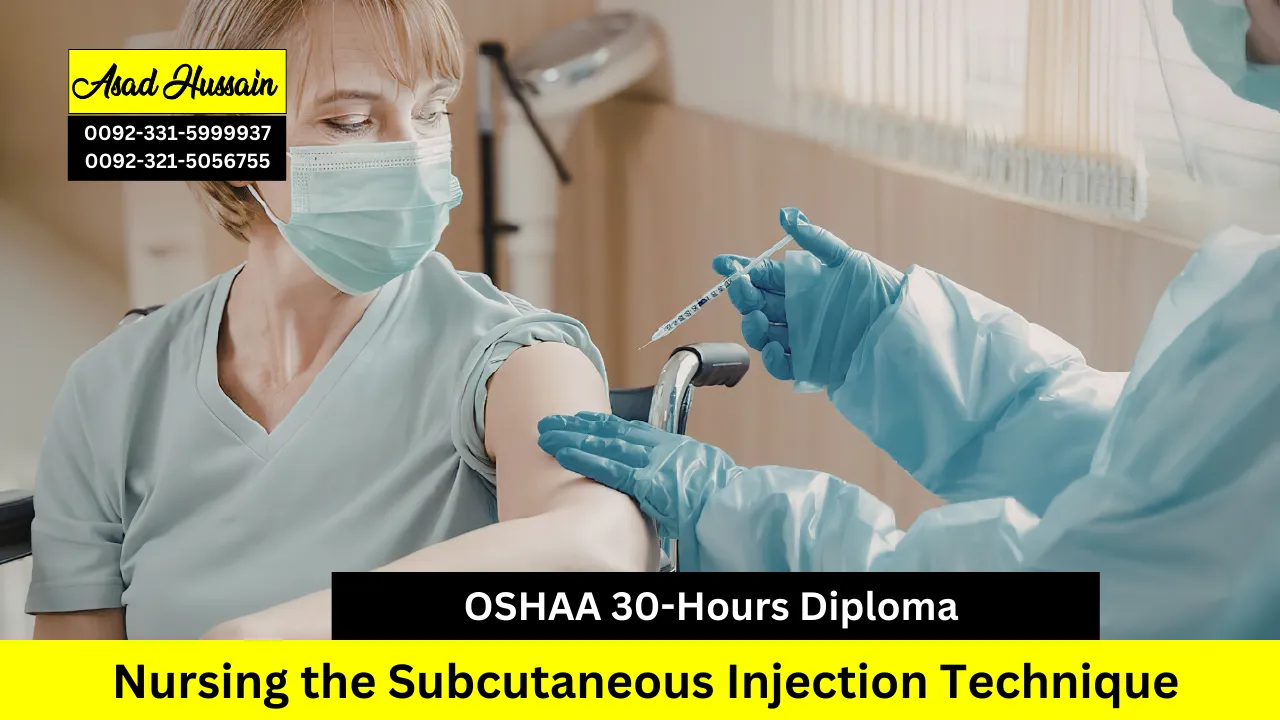
OSHAA 30-Hours Diploma in Nursing the Subcutaneous Injection Technique provides a specialized clinical framework designed for healthcare professionals who want to master the complexities of medication administration without the rigid constraints of traditional academic routes. By focusing on the practical application of needle safety and precise anatomical site selection, this course empowers you to lead patient care initiatives and manage treatment plans with absolute precision and professional confidence. It is a focused, non-Ofqual regulated program tailored for those seeking to sharpen their clinical insights and command respect within the modern healthcare sector. You will explore advanced methods for minimizing patient discomfort and implementing infection control protocols, ensuring you possess a robust toolkit to solve real-world nursing challenges effectively.
Stepping into this technical training means committing to a journey of professional development and specialized skill acquisition. The syllabus focuses on the strategic management of injectable therapies within clinical environments, bridging the gap between everyday nursing duties and the high-level demands of global patient safety standards. Throughout the comprehensive modules, you will refine your ability to analyze medication dosages, evaluate skin integrity, and provide expert advice that drives both therapeutic and operational success. This is a premier opportunity to distinguish yourself as a knowledgeable practitioner, gaining the specialized insights necessary to protect patient interests and uphold the highest standards of clinical efficiency within your specific medical jurisdiction or nursing department.
OSHAA 30-Hours Diploma in Nursing the Subcutaneous Injection Technique serves as a powerful catalyst for those aiming to achieve significant professional standing. Upon completion, you will be well-positioned to pursue prestigious industry certifications and specialized diplomas that further validate your expertise in wound care and advanced clinical nursing. By focusing on vocational mastery, this program ensures your credentials remain relevant and highly sought after by top-tier employers in the hospital and private healthcare sectors. You are not just gaining a qualification; you are securing a competitive edge that opens doors to supervisory roles, providing the specialized authority required to lead clinical teams and manage sophisticated treatment portfolios with unmatched technical precision.
Program Highlights
Study Units
- Anatomy and Physiology Relevant to Subcutaneous Injections (3 Hours)
- Overview of Subcutaneous Injection: Purpose and Applications (3 Hours)
- Infection Prevention and Aseptic Techniques (4 Hours)
- Equipment Selection and Preparation (3 Hours)
- Medication Types, Dosage Calculation, and Administration Guidelines (4 Hours)
- Identification and Preparation of Injection Sites (3 Hours)
- Step-by-Step Subcutaneous Injection Technique (5 Hours)
- Monitoring and Managing Adverse Reactions (5 Hours)
Entry Requirements
To enroll in the OSHAA 30-Hours Diploma in Nursing the Subcutaneous Injection Technique, candidates must demonstrate the clinical foundational knowledge and professional maturity required for specialized medical practice.
- Age & Education: Applicants must be 18+ years old and hold a relevant background, such as a Certificate in Nursing Assistantship or a Diploma in Health and Social Care.
- Language & Experience: A professional command of English is mandatory, along with current work experience in a healthcare setting to apply practical clinical skills.
- Professional Standing: Candidates possessing industry certifications in Basic Life Support or vocational diplomas in clinical pharmacy are ideally suited for this technical diploma.
Meeting these entry standards ensures you have the necessary healthcare background to master advanced injection techniques and uphold the highest levels of patient safety.
Learning Outcomes
The OSHAA 30-Hours Diploma in Nursing the Subcutaneous Injection Technique is a specialized clinical program designed for healthcare professionals who aim to master the precise administration of medication into the hypodermis, ensuring patient safety and therapeutic efficacy.
Anatomy and Physiology Relevant to Subcutaneous Injections
- Master the structural layers and functions of the skin and subcutaneous tissue to ensure needle precision.
- Identify critical anatomical landmarks to select safe and effective injection sites across the body.
- Recognize how physiological variations in tissue depth affect medication absorption and clinical outcomes.
- Understand the vascular and nerve distribution within the hypodermis to avoid procedural complications.
- Evaluate how individual patient anatomy dictates the appropriate needle length and insertion angle.
Overview of Subcutaneous Injection: Purpose and Applications
- Define the clinical purpose and therapeutic benefits of utilizing the subcutaneous administration route.
- Identify common medications, such as insulin and anticoagulants, that require this specific delivery method.
- Analyze clinical indications and contraindications to determine the suitability of the subcutaneous route.
- Understand the pharmacological advantages of slow, sustained medication release provided by this technique.
- Review the professional responsibilities and legal frameworks governing injectable medication delivery.
Infection Prevention and Aseptic Techniques
- Implement rigorous principles of infection control and Aseptic Non-Touch Technique (ANTT) during procedures.
- Demonstrate mastery in hand hygiene protocols and the sterilization of clinical equipment.
- Apply advanced prevention methods to eliminate the risk of cross-contamination and site infections.
- Manage clinical waste and sharps disposal according to global healthcare safety and OSHAA standards.
- Maintain a sterile field throughout the preparation and administration of the injectable medication.
Equipment Selection and Preparation
- Identify the correct syringes, needles, and specialized delivery devices for diverse patient demographics.
- Prepare clinical equipment with high accuracy, ensuring all components remain sterile before use.
- Master the protocols for correct medication storage, handling, and maintaining the cold chain.
- Evaluate needle gauge and length requirements based on the patient’s body mass index (BMI).
- Perform pre-administration safety checks to ensure equipment functionality and medication integrity.
Medication Types, Dosage Calculation, and Administration Guidelines
- Categorize different medication types suitable for the subcutaneous route, including vaccines and hormones.
- Perform high-precision dosage calculations tailored to specific patient prescriptions and needs.
- Adhere to strict administration protocols and international safety guidelines to prevent clinical errors.
- Verify the “Five Rights” of medication administration: right patient, drug, dose, route, and time.
- Document the procedure accurately within professional healthcare records to ensure continuity of care.
Identification and Preparation of Injection Sites
- Locate clinically approved injection sites, including the abdomen, thigh, and upper arm areas.
- Prepare the skin surface effectively to minimize patient discomfort and post-procedure bruising.
- Implement site rotation principles to prevent complications like lipohypertrophy or tissue scarring.
- Assess site viability by identifying signs of inflammation, edema, or existing skin lesions.
- Educate patients on the importance of rotation and site care for long-term injectable therapies.
Step-by-Step Subcutaneous Injection Technique
- Execute subcutaneous injections using a systematic, evidence-based process to ensure clinical excellence.
- Demonstrate expert needle insertion at the correct 45-degree or 90-degree angles as required.
- Maintain patient psychological safety and physical comfort throughout the entire clinical procedure.
- Master the “pinch-up” technique to isolate subcutaneous tissue from the underlying muscle layer.
- Perform post-injection site care to promote healing and prevent medication leakage from the site.
Monitoring and Managing Adverse Reactions
- Identify common and rare adverse reactions ranging from local redness to systemic anaphylaxis.
- Monitor patients closely post-injection for immediate or delayed signs of clinical complications.
- Implement rapid-response interventions for allergic reactions, hematomas, or needle-stick injuries.
- Report adverse events promptly through official clinical governance and OSHAA reporting channels.
- Develop patient-specific monitoring plans to ensure long-term safety for chronic medication users.
This intensive 30-hour diploma ensures that every practitioner emerges with the technical mastery and clinical confidence required to uphold the highest standards of patient care in subcutaneous therapy.
Target Audience
The OSHAA 30-Hours Diploma in Nursing the Subcutaneous Injection Technique is a specialized clinical program designed for healthcare practitioners, nursing students, and medical assistants who seek to master the precise administration of injectable therapies while adhering to global safety standards.
Registered Nurses and Licensed Practical Nurses
- Experienced nurses aiming to refine their technical precision in medication delivery.
- Practitioners who require a formal diploma to validate their specialized clinical competencies.
- Healthcare professionals moving into specialized roles such as diabetes management or immunizations.
- Staff members responsible for training junior nurses on standardized injection protocols.
- Nurses seeking to update their knowledge on the latest needle safety and infection control technologies.
Nursing Students and Medical Interns
- Students looking to gain a competitive edge by mastering clinical skills outside their core curriculum.
- Interns who need to build confidence in performing invasive procedures under professional guidelines.
- Individuals preparing for clinical placements in high-intensity medical or surgical wards.
- Learners seeking to document their hours of specialized clinical training for professional portfolios.
- Aspiring healthcare workers who want to understand the pharmacological impact of different injection routes.
Healthcare Assistants and Patient Care Technicians
- Clinical assistants who support senior medical staff in the administration of routine medications.
- Technicians working in long-term care facilities where subcutaneous therapy is a daily requirement.
- Staff members looking to transition into more technical roles within the nursing hierarchy.
- Professionals aiming to secure vocational diplomas that reflect their specialized healthcare skills.
- Caregivers who require a deep understanding of site rotation and tissue health for chronic patients.
Pharmacy Technicians and Clinical Researchers
- Technicians involved in clinical trials requiring the precise administration of experimental drugs.
- Research staff who must monitor and document adverse reactions to injectable therapies accurately.
- Professionals who manage the storage and preparation of high-value biological medications.
- Individuals seeking to bridge the gap between pharmacological theory and practical patient application.
- Staff members responsible for ensuring that all injectable equipment meets OSHAA safety standards.
Home Health Care and Community Practitioners
- Private nurses and home carers managing long-term treatment plans for patients with chronic illnesses.
- Community health workers who educate patients and families on self-administration techniques.
- Practitioners who operate in remote areas and must maintain high clinical standards independently.
- Health visitors focused on providing vaccinations and hormone therapies in a community setting.
- Professionals seeking the specialized authority to manage injectable medication portfolios for home-bound patients.
By achieving this diploma, you position yourself as a highly skilled and safety-conscious practitioner, ready to deliver exceptional patient care with technical mastery and professional clinical authority.