Elite Air Quality Management: Professional Control Diploma
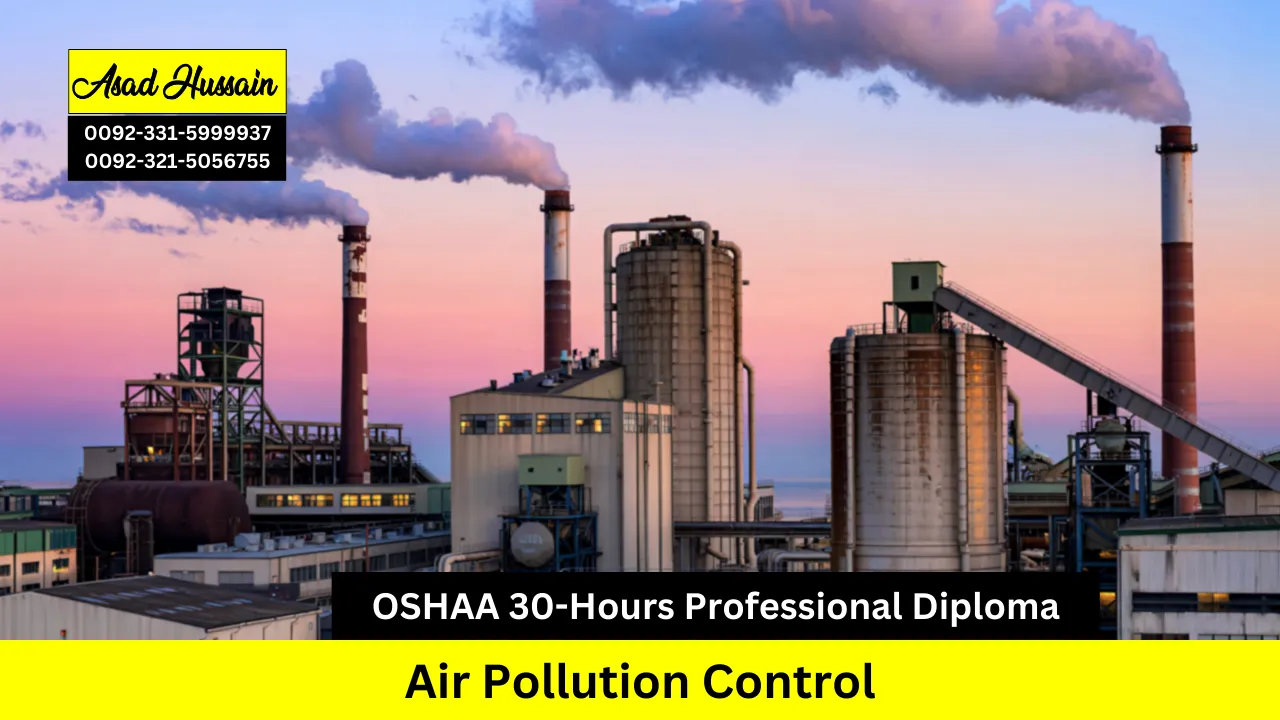
The OSHAA 30-Hours Professional Diploma in Air Pollution Control offers a comprehensive technical exploration into the identification, monitoring, and mitigation of atmospheric contaminants in industrial and urban environments. This course provides environmental engineers and safety officers with the essential tools to analyze emission sources and evaluate the efficacy of various filtration and scrubbing technologies. By examining the chemical composition of pollutants and their dispersion patterns, learners develop a sophisticated understanding of how industrial activities impact air quality and public health. The curriculum emphasizes proactive engineering solutions and rigorous monitoring protocols, ensuring that practitioners can implement effective strategies that minimize environmental footprints and ensure safe breathing zones.
Developing expert knowledge in atmospheric protection is a vital asset that enhances your professional standing in the engineering, manufacturing, and environmental consultancy sectors. While this program establishes a robust foundation in emission monitoring and control systems, it also serves as a strategic pathway toward attaining more specialized industry recognitions. You may choose to diversify your professional expertise by pursuing various technical certifications in carbon footprint auditing or specialized diplomas in industrial waste management and renewable energy integration. These additional credentials allow you to build a sophisticated professional portfolio that reflects a deep commitment to global sustainability and corporate social responsibility.
OSHAA 30-Hours Professional Diploma in Air Pollution Control empowers you to lead with a focused and principled approach to environmental stewardship and industrial efficiency. The curriculum covers essential topics such as particulate matter filtration, gaseous emission neutralization, and the operation of continuous emission monitoring systems. By mastering these core diagnostic and control techniques, you gain the practical skills needed to implement successful pollution reduction strategies in chemical, energy, or manufacturing settings. This achievement often leads to the pursuit of specialized diplomas in environmental law and professional certifications in greenhouse gas verification and climate risk management.
Program Highlights
Study Units
- Introduction to Air Pollution and Environmental Impact (3 hours)
- Classification and Sources of Air Pollutants (5 hours)
- Atmospheric Chemistry and Pollution Dispersion (3 hours)
- Air Quality Monitoring and Sampling Techniques (4 hours)
- Indoor Air Quality Management and Assessment (5 hours)
- Emission Control Technologies and Systems (5 hours)
- Legal Frameworks and Regulatory Compliance (3 hours)
- Health and Ecological Effects of Air Pollution (2 hours)
Entry Requirements
To ensure your success in the OSHAA 30-Hours Professional Diploma in Air Pollution Control, we have established the following entry criteria:
- Age and Educational Background: Candidates must be at least 18 years old and hold a secondary school certificate or foundational credentials such as a Level 3 Diploma in Environmental Studies or a Certificate in Occupational Health and Safety.
- Language Proficiency: A solid command of English is required, such as a Certificate in Technical English for Engineers, to understand complex atmospheric chemistry and produce accurate emission reports.
- Work Experience: While not mandatory, experience in industrial operations or holding a Diploma in Waste Management provides valuable context for the air sampling techniques and filtration systems discussed.
By meeting these prerequisites, you ensure you have the necessary foundation to excel in this specialized program and effectively manage industrial emissions and atmospheric protection.
Learning Outcomes
The OSHAA 30-Hours Professional Diploma in Air Pollution Control is structured to provide a high-level technical understanding of atmospheric preservation. The following modules bridge the gap between environmental theory and industrial application, ensuring you can lead complex mitigation projects.
Introduction to Air Pollution and Environmental Impact
- Define the modern scope of air pollution and its global environmental consequences.
- Recognise the critical relationship between deteriorating air quality and accelerated climate change.
- Explain the role of air pollution control within the framework of sustainable industrial development.
- Analyze the socio-economic costs associated with unmitigated atmospheric contamination.
Classification and Sources of Air Pollutants
- Classify major primary and secondary air pollutants, including particulate matter and nitrogen oxides.
- Identify the diverse natural and anthropogenic sources of hazardous air emissions.
- Distinguish between stationary industrial stacks, mobile transport sources, and indoor pollution.
- Evaluate sector-specific contributions, focusing on high-impact industries like energy and manufacturing.
Atmospheric Chemistry and Pollution Dispersion
- Understand the fundamental principles of atmospheric chemistry and chemical reactions in the troposphere.
- Explain the complex formation of secondary pollutants such as ground-level ozone and smog.
- Describe the physical mechanisms of pollutant dispersion, including wind patterns and thermal inversions.
- Interpret environmental factors that influence how pollutants travel and deposit in local ecosystems.
Air Quality Monitoring and Sampling Techniques
- Identify key air quality indicators (AQI) and technical parameters for precise pollutant measurement.
- Use professional equipment for active and passive air sampling and real-time data collection.
- Interpret monitoring results against international regulatory standards and exposure limits.
- Apply specialized monitoring techniques tailored for both outdoor ambient air and indoor environments.
Indoor Air Quality Management and Assessment
- Define the specific factors influencing indoor air quality (IAQ) in commercial and industrial facilities.
- Identify common indoor biological and chemical pollutants and their direct impact on occupant health.
- Assess the efficiency of HVAC and ventilation systems in maintaining safe breathing zones.
- Implement robust engineering strategies to improve air exchange rates and reduce indoor contaminants.
Emission Control Technologies and Systems
- Understand the mechanical operation of key control devices, including baghouses, cyclones, and scrubbers.
- Evaluate the technical effectiveness of different filtration technologies for specific pollutant types.
- Design basic control strategies for both large-scale industrial stacks and mobile emission sources.
- Integrate advanced control systems into existing operational frameworks to maximize efficiency.
Legal Frameworks and Regulatory Compliance
- Interpret national and international air quality legislation and statutory emission limits.
- Understand the oversight roles of environmental regulatory bodies and the permitting process.
- Identify the legal liabilities and ethical responsibilities of businesses and environmental officers.
- Ensure organizational compliance through meticulous reporting, auditing, and emission verification.
Health and Ecological Effects of Air Pollution
- Recognise the acute and chronic health effects of specific pollutants on the human respiratory system.
- Understand the devastating impact of acid rain and heavy metals on ecosystems, wildlife, and agriculture.
- Link specific pollutant concentrations to long-term public health outcomes and environmental degradation.
- Advocate for evidence-based pollution prevention as a core component of global health strategies.
Target Audience
The OSHAA 30-Hours Professional Diploma in Air Pollution Control is an essential program designed for technical professionals, environmental stewards, and industrial leaders who are committed to mitigating the impact of atmospheric contaminants.
Environmental Engineers and Consultants
- Professionals holding a Diploma in Environmental Engineering looking to specialize in air quality.
- Consultants providing atmospheric dispersion modeling services for industrial clients.
- Technical advisors tasked with designing and implementing complex gas scrubbing systems.
- Specialists holding a Certificate in Carbon Auditing aiming to expand into criteria pollutant control.
- Engineering leads responsible for the selection and maintenance of particulate filtration units.
- Environmental auditors focused on verifying stack emission data and site compliance.
Industrial Health and Safety Officers
- Health and safety managers holding a Level 3 Diploma in Occupational Health and Safety.
- Professionals responsible for monitoring workplace exposure limits to hazardous gases and dust.
- Site officers tasked with implementing indoor air quality (IAQ) assessments for worker protection.
- Compliance managers who oversee the integration of air control systems into safety protocols.
- Safety leads holding a Certificate in Industrial Hygiene or chemical safety management.
- Coordinators managing respiratory protection programs and environmental hazard mitigation.
Facility and Plant Operations Managers
- Plant managers in the chemical, power generation, or manufacturing sectors.
- Facility directors holding a Diploma in Operations Management or industrial maintenance.
- Technicians responsible for the daily operation of continuous emission monitoring systems (CEMS).
- Maintenance leads focused on the efficiency of baghouses, cyclones, and electrostatic precipitators.
- Operational leads seeking to reduce industrial odors and fugitive emissions in residential areas.
- Site supervisors holding a Certificate in Facilities Management or infrastructure oversight.
Regulatory and Compliance Specialists
- Environmental health officers holding a Diploma in Public Health or local government regulation.
- Legal compliance officers responsible for air discharge permitting and statutory reporting.
- Government inspectors tasked with enforcing national and international air quality standards.
- Sustainability leads holding a Professional Certificate in ESG (Environmental, Social, and Governance).
- Policy advisors helping industrial sectors align with the latest atmospheric protection laws.
- Corporate risk managers focused on mitigating the legal and financial liabilities of pollution.
Urban Planners and Public Health Advocates
- Urban designers focused on reducing the heat island effect and localized air pollution.
- Public health researchers holding a Diploma in Epidemiology or environmental health.
- Transport planners aiming to mitigate mobile source emissions in high-density areas.
- Community advocates focused on environmental justice and air quality in industrial zones.
- Sustainability consultants holding a Certificate in Green Building Standards (LEED/BREEAM).
- Policy researchers analyzing the link between air quality and long-term community health.
By enrolling in this diploma, you transition into a highly specialized role, equipped with the technical expertise and regulatory insight necessary to protect the atmosphere while ensuring the sustainable and compliant operation of modern industrial facilities.