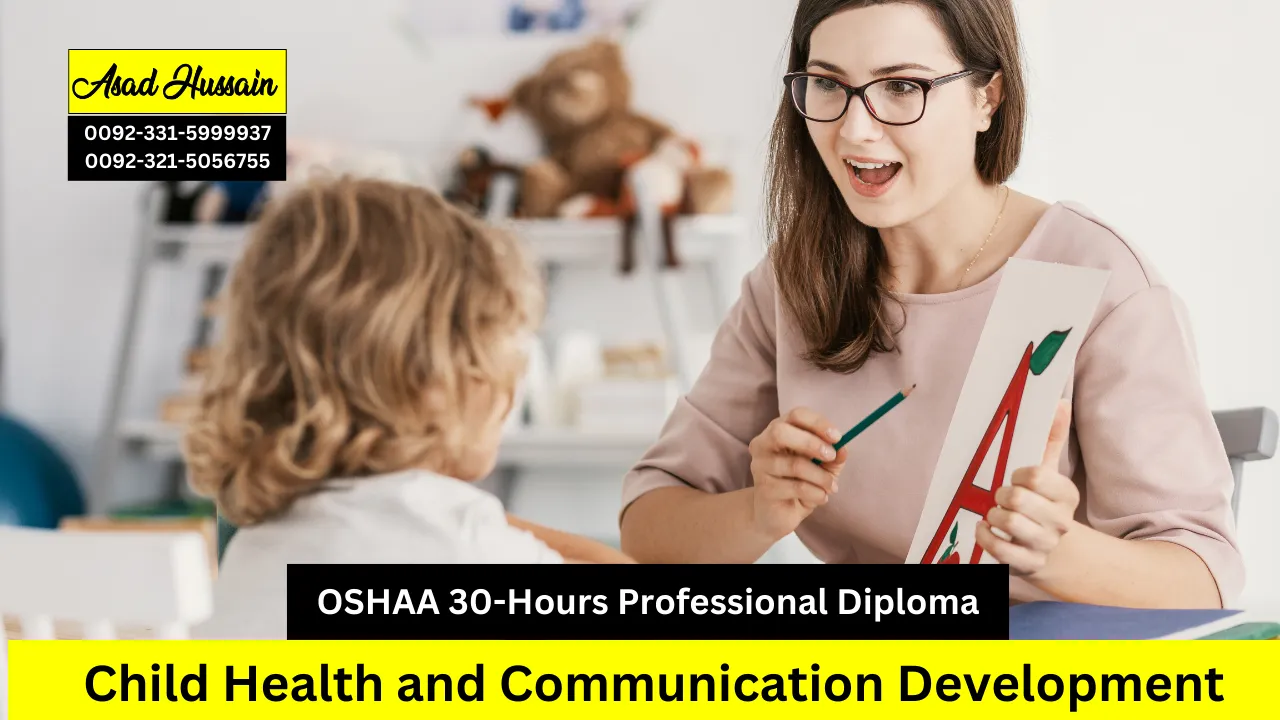
OSHAA 30-Hours Diploma: Champion Child Health & Communication
Supporting the health and communication development of children requires a unique blend of knowledge, patience, and practical skill. The OSHAA 30-Hours Professional Diploma in Child Health and Communication Development provides learners with a comprehensive understanding of how children grow, learn, and express themselves from infancy through to adolescence. This programme explores the physical, emotional, and social factors that influence child wellbeing, alongside the developmental milestones that shape effective communication skills essential for lifelong success.
Participants will delve into key topics including childhood nutrition, common childhood illnesses, immunisation schedules, and the identification of developmental delays. The curriculum also covers the fundamentals of language acquisition, non-verbal communication, and strategies for supporting children with speech and communication challenges. Learners will gain insight into creating nurturing environments that promote both physical health and positive communication development, whether at home, in educational settings, or within healthcare contexts.
Building upon this foundation, the OSHAA 30-Hours Professional Diploma in Child Health and Communication Development concludes with an assessment that validates your expertise in supporting children’s holistic development. Upon successful completion, you will be prepared to pursue further certifications and diplomas to deepen your knowledge in specialised areas of child health or early years education. This course represents a meaningful step in your professional journey, positioning you as a knowledgeable advocate for children’s wellbeing and developmental needs.
Program Highlights
Study Units
- Foundations of Child Health and Development (3 Hours)
- Physical Growth and Nutritional Needs in Childhood (3 Hours)
- Immunisation and Common Childhood Illnesses (3 Hours)
- Cognitive and Emotional Development in Early Years (3 Hours)
- Speech and Language Development Milestones (4 Hours)
- Identifying and Supporting Communication Disorders (3 Hours)
- Creating Communication-Friendly Environments (3 Hours)
- Safeguarding and Promoting Child Welfare (3 Hours)
Entry Requirements
To enroll in the OSHAA 30-Hours Professional Diploma in Child Health and Communication Development, candidates must meet the following minimum entry criteria:
- Age: 16 years or older.
- Education: Basic literacy and numeracy required. Previous qualifications such as a Level 2 Certificate in Childcare and Education, a Diploma in Early Years Foundation Stage (EYFS) , GCSEs in Child Development or Health and Social Care, or a Certificate in Supporting Teaching and Learning are beneficial but not mandatory.
- Language: Competency in English (written and spoken); non-native speakers should have an IELTS 5.5 or equivalent.
- Experience: No prior work experience required; suitable for beginners, parents, and those already in childcare or education roles.
These criteria ensure you have the foundational skills to succeed. Candidates with relevant childcare experience or prior certifications are encouraged to apply.
Learning Outcomes
Foundations of Child Health and Development (3 Hours)
- Understand the key principles of child development across physical, emotional, and social domains
- Recognise the factors that influence healthy development in early childhood
- Identify developmental milestones and their significance in monitoring child progress
- Appreciate the importance of early intervention in supporting child well-being
Physical Growth and Nutritional Needs in Childhood (3 Hours)
- Describe stages of physical growth in infants and children
- Understand essential nutritional requirements for healthy development
- Identify the impact of malnutrition and poor dietary habits on child health
- Promote healthy eating practices in early years settings
Immunisation and Common Childhood Illnesses (3 Hours)
- Understand the UK childhood immunisation schedule and its importance
- Recognise symptoms and treatment approaches for common childhood illnesses
- Identify measures to prevent the spread of infectious diseases in children
- Support families with accurate health information and guidance
Cognitive and Emotional Development in Early Years (3 Hours)
- Explain key stages of cognitive and emotional growth in children
- Understand how play and interaction influence development
- Recognise early signs of developmental delays or emotional difficulties
- Apply strategies to support learning and emotional regulation
Speech and Language Development Milestones (4 Hours)
- Identify typical speech and language development stages in young children
- Understand how communication skills evolve with age and experience
- Recognise indicators of potential speech or language concerns
- Support children’s communication through developmentally appropriate activities
Identifying and Supporting Communication Disorders (3 Hours)
- Recognise different types of communication disorders in children
- Understand the causes and implications of delayed communication development
- Apply early identification techniques and referral pathways
- Use supportive approaches to aid children with speech and language needs
Creating Communication-Friendly Environments (3 Hours)
- Design inclusive environments that promote interaction and language development
- Use visual aids, gestures, and sensory tools to enhance communication
- Encourage peer interaction and adult-child engagement
- Evaluate and adapt spaces to support diverse communication needs
Safeguarding and Promoting Child Welfare (3 Hours)
- Understand legal responsibilities and safeguarding procedures
- Recognise signs of abuse, neglect, and developmental harm
- Follow reporting and referral protocols to ensure child safety
- Promote a culture of protection and advocacy within child-focused settings
Target Audience
The OSHAA 30-Hours Professional Diploma in Child Health and Communication Development is designed for anyone committed to understanding and supporting the holistic development of children.
Aspiring Early Years Practitioners
Individuals preparing for careers in nurseries, preschools, or childcare settings will build a strong foundation in child development principles.
- Gain comprehensive understanding of physical, cognitive, and emotional development stages
- Learn to identify and support developmental milestones in young children
- Understand nutritional requirements and health needs during early childhood
- Develop strategies for creating communication-rich environments
- Prepare for entry-level roles in early years education and childcare
- Build confidence in supporting children’s holistic wellbeing from day one
Teaching Assistants and Classroom Support Staff
Those working in educational settings will enhance their ability to support children’s learning and communication needs.
- Understand speech and language development milestones across different ages
- Learn to recognise early indicators of communication difficulties or delays
- Apply strategies to support children with diverse communication needs
- Create inclusive classroom environments that promote interaction
- Work effectively with teachers and specialists to implement support plans
- Contribute to early identification and intervention efforts within schools
Childminders and Nannies
Home-based childcare providers will gain valuable insights to enhance their daily practice and developmental support.
- Understand how to monitor and track developmental progress in individual children
- Learn to design age-appropriate activities that promote communication skills
- Recognise signs of common childhood illnesses and know when to seek advice
- Implement safeguarding procedures within home-based settings
- Create nurturing environments that support emotional regulation
- Offer parents informed observations about their child’s development
Parents and Caregivers
Families seeking deeper understanding of child development will gain knowledge to support their own children’s growth.
- Understand what to expect during different stages of child development
- Learn how to support speech and language development at home
- Recognise potential developmental concerns and know when to seek help
- Gain insight into nutritional needs and healthy eating habits for children
- Discover strategies for supporting emotional wellbeing and resilience
- Build confidence in advocating for children’s health and developmental needs
Healthcare Support Workers
Those working in paediatric or community health settings will enhance their understanding of child development.
- Understand the UK immunisation schedule and its importance for child health
- Recognise symptoms of common childhood illnesses and appropriate responses
- Learn to identify developmental delays and support referral pathways
- Appreciate the connection between physical health and communication development
- Support families with accurate, evidence-based health information
- Contribute effectively to multidisciplinary teams supporting children
Early Intervention and Family Support Workers
Professionals dedicated to supporting vulnerable children and families will deepen their developmental knowledge.
- Understand early signs of developmental delays and communication disorders
- Learn strategies for supporting children with identified communication needs
- Gain insight into safeguarding procedures and child welfare responsibilities
- Recognise the impact of adverse experiences on child development
- Apply knowledge to support families in promoting healthy development
- Enhance ability to work collaboratively with healthcare and education professionals
This diploma equips learners from all backgrounds with the knowledge and confidence to make a genuine difference in children’s lives. Whether you are caring for your own child, supporting families, or building a career in early years, the insights gained will help you nurture healthy development and meaningful communication in every child you encounter.