Lead with Confidence: 9001:2026 QMS Transition Foundation Training Course
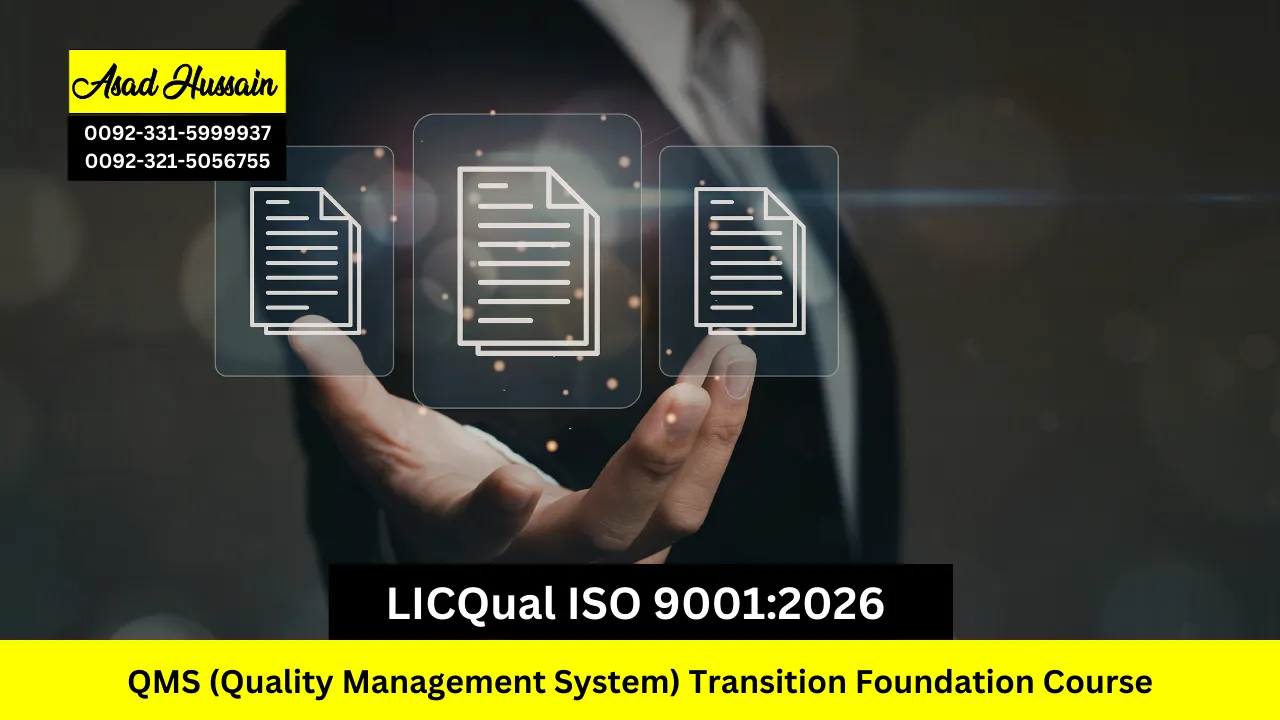
The LICQual ISO 9001:2026 QMS Transition Foundation Course is designed to introduce participants to the updated requirements of ISO 9001:2026 and provide a strong foundation in quality management principles. This program focuses on helping learners understand the transition process, ensuring organizations can adapt smoothly to the latest standards. With a balance of theory and practical insights, the course empowers professionals to build confidence in applying QMS concepts effectively.
This course emphasizes the importance of quality management in driving organizational success. Participants will explore the fundamentals of ISO 9001:2026, including risk‑based thinking, process improvement, and compliance strategies. Through interactive learning and practical examples, learners gain the ability to identify gaps, implement corrective actions, and support continuous improvement initiatives within their workplace.
The LICQual ISO 9001:2026 QMS Transition Foundation Course also provides recognition through certifications and diplomas that validate professional competence in quality management. These credentials highlight expertise in managing transitions and demonstrate readiness to contribute to organizational excellence. Completing this course positions participants as capable professionals who can support compliance, efficiency, and long‑term sustainability in quality systems.
Program Highlights
Study Units
- Strategic Drivers Behind ISO 9001:2026 Revision
- Transition Readiness & Gap Assessment Methodology
- Evolving Organizational Context & Stakeholder Expectations
- Enhanced Risk-Based Thinking & Process Performance
- Digital QMS Platforms & AI-Enabled Quality Monitoring
- Compliance Assurance & Continual Improvement Post-Transition
Entry Requirements
- Age Requirement: Applicants must be at least 18 years old to enroll, ensuring they have the maturity and responsibility required for professional training.
- Educational Background: A minimum of a high school diploma or equivalent is required. Candidates with related diplomas or certificates in Quality Management, Environmental Management, Business Administration, or Occupational Health & Safety will find the course particularly beneficial.
- Language Proficiency: Learners should have a good command of English, as all course materials, discussions, and assessments are delivered in English.
- Work Experience: Prior experience in auditing or management systems is not mandatory, but exposure to organizational processes, compliance, or quality management practices will be advantageous.
This course is structured to be accessible yet professional, ensuring that participants with the right foundation can successfully build their skills. Meeting these entry requirements helps learners maximize the value of the LICQual ISO 9001:2026 QMS Transition Foundation Course and achieve recognized certification in quality management implementation.
Learning Outcomes
Strategic Drivers Behind ISO 9001:2026 Revision
- Understand the key factors that led to the revision of ISO 9001:2026 and its strategic objectives.
- Identify how global quality trends and sustainability considerations influence ISO standards.
- Analyze the impact of organizational performance requirements on QMS updates.
- Recognize the role of AI and digital technologies in shaping modern quality management frameworks.
- Explore how regulatory changes and international guidelines drive standard evolution.
- Evaluate the benefits of adopting ISO 9001:2026 for enhanced organizational competitiveness.
Transition Readiness & Gap Assessment Methodology
- Learn to conduct a comprehensive gap analysis between ISO 9001:2015 and ISO 9001:2026 requirements.
- Understand the principles of transition readiness and planning for QMS updates.
- Identify critical areas requiring change for successful standard adoption.
- Apply AI tools to automate data collection and gap assessment processes.
- Develop actionable transition plans to minimize operational disruptions.
- Assess organizational capabilities to implement changes efficiently and effectively.
Evolving Organizational Context & Stakeholder Expectations
- Understand the importance of organizational context in ISO 9001:2026 compliance.
- Identify internal and external factors affecting quality and environmental management.
- Analyze stakeholder needs, expectations, and their impact on strategic decision-making.
- Apply digital monitoring tools to track stakeholder engagement and satisfaction.
- Evaluate how organizational objectives align with evolving quality and sustainability goals.
- Integrate AI-enabled insights to enhance decision-making and stakeholder responsiveness.
Enhanced Risk-Based Thinking & Process Performance
- Understand risk-based thinking principles in ISO 9001:2026.
- Identify potential risks and opportunities within organizational processes.
- Apply AI and analytics to predict and mitigate quality or environmental risks.
- Monitor process performance using digital QMS dashboards and tools.
- Evaluate the effectiveness of risk mitigation strategies in achieving organizational goals.
- Promote a culture of proactive quality and environmental management.
Digital QMS Platforms & AI-Enabled Quality Monitoring
- Explore the role of digital QMS platforms in modern quality management systems.
- Learn how AI-enabled tools support real-time monitoring of process performance.
- Understand integration of digital workflows for improved compliance and reporting.
- Evaluate data-driven insights for continuous quality improvement.
- Apply AI analytics for predictive maintenance, audit readiness, and corrective actions.
- Optimize resource allocation and operational efficiency through digital technologies.
Compliance Assurance & Continual Improvement Post-Transition
- Understand the mechanisms for ensuring compliance with ISO 9001:2026 standards.
- Develop processes for ongoing monitoring and evaluation of QMS effectiveness.
- Identify corrective and preventive actions to address non-conformities.
- Apply AI tools to track compliance trends and performance metrics.
- Promote a culture of continual improvement aligned with digital transformation.
- Evaluate the impact of QMS changes on organizational sustainability and efficiency.
Target Audience
The LICQual ISO 9001:2026 QMS Transition Foundation Course is designed for professionals and organizations aiming to strengthen their knowledge of updated ISO standards, improve compliance, and build a solid foundation in quality management systems.
Quality Managers and Supervisors
- Overseeing organizational quality systems and compliance
- Seeking to understand ISO 9001:2026 transition requirements
- Focused on improving customer satisfaction and efficiency
- Interested in enhancing leadership in quality management practices
- Looking to strengthen organizational resilience and performance
Internal Auditors and Compliance Officers
- Conducting audits and ensuring compliance with ISO standards
- Aiming to refine auditing and transition techniques
- Ensuring adherence to updated ISO 9001:2026 requirements
- Developing skills to identify risks and corrective actions
- Building confidence in managing transition processes independently
Operations and Production Professionals
- Managing processes that directly affect product and service quality
- Seeking to understand QMS requirements at operational levels
- Interested in applying ISO 9001:2026 principles to production systems
- Focused on minimizing errors and improving efficiency
- Supporting compliance and continuous improvement initiatives
Business Administration and Process Improvement Specialists
- Driving organizational efficiency and process optimization
- Seeking to integrate QMS principles into business strategies
- Interested in applying risk‑based thinking to management systems
- Focused on reducing inefficiencies and enhancing sustainability
- Looking to contribute to long‑term organizational resilience
Health, Safety, and Environment Professionals
- Working in roles that intersect with quality and compliance standards
- Interested in integrating QMS principles into safety practices
- Seeking to enhance organizational resilience through transitions
- Focused on aligning safety and quality standards
- Building broader expertise in compliance and management systems
Professionals Seeking Career Growth
- Aspiring to gain certifications and diplomas in quality management
- Looking to validate expertise through recognized credentials
- Interested in expanding career opportunities in auditing and compliance
- Seeking to position themselves as trusted quality professionals
- Focused on long‑term career recognition and advancement
This course empowers individuals across diverse roles, ensuring they gain the skills, confidence, and certification needed to lead effectively and contribute to organizational excellence in quality management systems.