Unlock Success with LICQual ISO 9001:2026 QMS Internal Auditor Certification Course
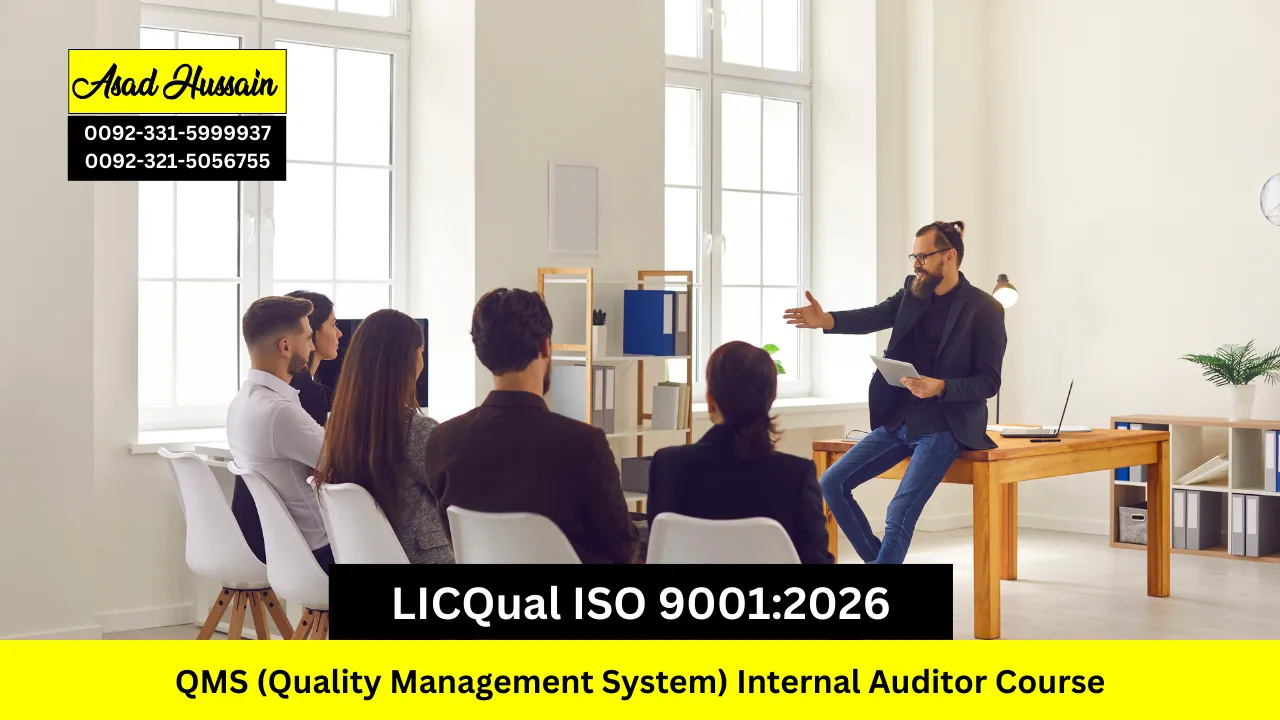
The LICQual ISO 9001:2026 QMS Internal Auditor Course is designed to provide professionals with the essential skills to audit and evaluate quality management systems in line with the updated ISO 9001:2026 standards. This program emphasizes practical knowledge, enabling participants to confidently assess compliance, identify areas for improvement, and strengthen organizational performance. With a focus on transition requirements, learners gain the expertise needed to ensure their organizations meet evolving quality expectations while enhancing efficiency and customer satisfaction.
This course blends theoretical understanding with hands‑on auditing techniques, making it highly relevant for individuals responsible for maintaining and improving quality systems. Participants will explore the principles of auditing, risk‑based thinking, and process evaluation, all of which are critical for ensuring compliance with ISO 9001:2026. By engaging with real‑world scenarios and practical exercises, learners develop the confidence to conduct internal audits that drive continuous improvement and operational excellence.
The LICQual ISO 9001:2026 QMS Internal Auditor Course also provides recognition through certifications and diplomas that validate professional competence in quality auditing. These credentials demonstrate expertise and enhance career prospects by showcasing the ability to lead internal audits with precision and confidence. Completing this course positions participants as trusted professionals capable of driving compliance, efficiency, and excellence in quality management systems.
Program Highlights
Study Units
- Internal Audit Principles & ISO 19011 Guidelines
- ISO 9001:2026 Requirements for Auditors
- Audit Planning & Preparation
- Conducting Internal Audits
- AI & Digital Tools for Smart Auditing
- Reporting, Corrective Actions & Follow-up
Entry Requirements
- Age Requirement: Applicants must be at least 18 years old to enroll, ensuring they have the maturity and responsibility required for professional auditing training.
- Educational Background: A minimum of a high school diploma or equivalent is required. Candidates with related diplomas or certificates in Quality Management, Environmental Management, Business Administration, or Occupational Health & Safety will find the course particularly beneficial.
- Language Proficiency: Learners should have a good command of English, as all course materials, discussions, and assessments are delivered in English.
- Work Experience: Prior auditing experience is not mandatory, but exposure to organizational processes, compliance, or quality management practices will be advantageous.
This course is designed to be accessible yet professional, ensuring that participants with the right foundation can successfully build their auditing skills. Meeting these entry requirements helps learners maximize the value of the LICQual ISO 9001:2026 QMS Internal Auditor Course and achieve recognized certification in quality auditing.
Learning Outcomes
Internal Audit Principles & ISO 19011 Guidelines
- Understand the fundamental principles of internal auditing and their application.
- Apply ISO 19011 guidelines to ensure effective audit management.
- Learn the process approach for auditing quality management systems.
- Maintain audit integrity, impartiality, and confidentiality throughout audits.
- Identify audit objectives, scope, and criteria for internal assessments.
- Develop skills to evaluate processes systematically and identify improvement areas.
ISO 9001:2026 Requirements for Auditors
- Interpret ISO 9001:2026 QMS requirements accurately for auditing purposes.
- Translate clauses into measurable audit criteria and evaluation methods.
- Identify gaps in compliance and suggest effective corrective actions.
- Understand the intent behind each ISO 9001:2026 clause for practical application.
- Link audit findings to organizational objectives and quality goals.
- Evaluate process effectiveness and continual improvement mechanisms.
Audit Planning & Preparation
- Plan internal audits efficiently to align with organizational priorities.
- Define audit scope, objectives, and resource requirements.
- Conduct risk assessments to focus audits on critical areas.
- Prepare checklists, questionnaires, and supporting audit tools.
- Assign tasks and responsibilities within the audit team effectively.
- Schedule audits while ensuring minimal disruption to operations.
Conducting Internal Audits
- Execute internal audits systematically according to ISO standards.
- Collect, verify, and analyze objective evidence to support findings.
- Identify non-conformities and provide actionable recommendations.
- Facilitate interviews and observe processes to assess compliance.
- Ensure audits are documented thoroughly for review and follow-up.
- Communicate audit results clearly to management and stakeholders.
AI & Digital Tools for Smart Auditing
- Utilize AI-driven tools and analytics to enhance audit accuracy and efficiency.
- Implement digital platforms for remote or hybrid internal audits.
- Analyze audit data to detect trends, risks, and opportunities for improvement.
- Use technology to support real-time monitoring and decision-making.
- Apply advanced auditing software to streamline reporting and documentation.
- Maintain data security and confidentiality during digital audits.
Reporting, Corrective Actions & Follow-up
- Prepare professional and comprehensive audit reports aligned with ISO standards.
- Document non-conformities and suggest corrective and preventive actions.
- Evaluate the effectiveness of corrective actions implemented by the organization.
- Communicate audit findings and recommendations clearly to stakeholders.
- Monitor follow-up actions to ensure compliance and continual improvement.
- Support management in the decision-making process for quality enhancements.
Target Audience
The LICQual ISO 9001:2026 QMS Internal Auditor Course is designed for professionals across industries who want to strengthen their auditing expertise, enhance compliance, and contribute to organizational excellence in quality management.
Quality Managers and Supervisors
- Overseeing quality systems and compliance within organizations
- Seeking alignment with ISO 9001:2026 standards
- Focused on improving audit effectiveness and customer satisfaction
- Interested in enhancing leadership in quality management practices
- Looking to strengthen organizational performance and efficiency
Internal Auditors and Compliance Officers
- Conducting internal audits and reporting findings to management
- Aiming to refine auditing techniques and methodologies
- Ensuring adherence to updated ISO requirements
- Developing skills to identify risks and corrective actions
- Building confidence in managing audit processes independently
Operations and Production Professionals
- Managing processes that directly affect product and service quality
- Seeking to understand QMS requirements at operational levels
- Interested in applying ISO 9001:2026 principles to production systems
- Focused on minimizing errors and improving efficiency
- Supporting compliance and continuous improvement initiatives
Business Administration and Process Improvement Specialists
- Driving organizational efficiency and process optimization
- Seeking to integrate QMS principles into business strategies
- Interested in applying risk‑based thinking to management systems
- Focused on reducing inefficiencies and enhancing productivity
- Looking to contribute to long‑term organizational resilience
Health, Safety, and Environment Professionals
- Working in roles that intersect with quality and compliance standards
- Interested in integrating QMS principles into safety practices
- Seeking to enhance organizational resilience through audits
- Focused on aligning safety and quality standards
- Building broader expertise in compliance and management systems
Professionals Seeking Career Growth
- Aspiring to gain certifications and diplomas in quality management
- Looking to validate expertise through recognized credentials
- Interested in expanding career opportunities in auditing and compliance
- Seeking to position themselves as trusted quality professionals
- Focused on long‑term career recognition and advancement
This course empowers individuals across diverse roles, ensuring they gain the skills, confidence, and certification needed to lead internal audits effectively and contribute to organizational excellence in quality management systems.