Accelerate Success with ICTQual ISO 14001:2026 EMS Training – Build Sustainable Skills Today
ICTQual ISO 14001:2026 EMS Foundation Course also provides recognition through certifications and diplomas, validating the learner’s competence in environmental management systems. These credentials demonstrate a commitment to sustainability and professional growth, making participants more competitive in the global marketplace. With a focus on practical knowledge and internationally recognized standards, this course empowers learners to drive impactful environmental initiatives and strengthen organizational resilience.
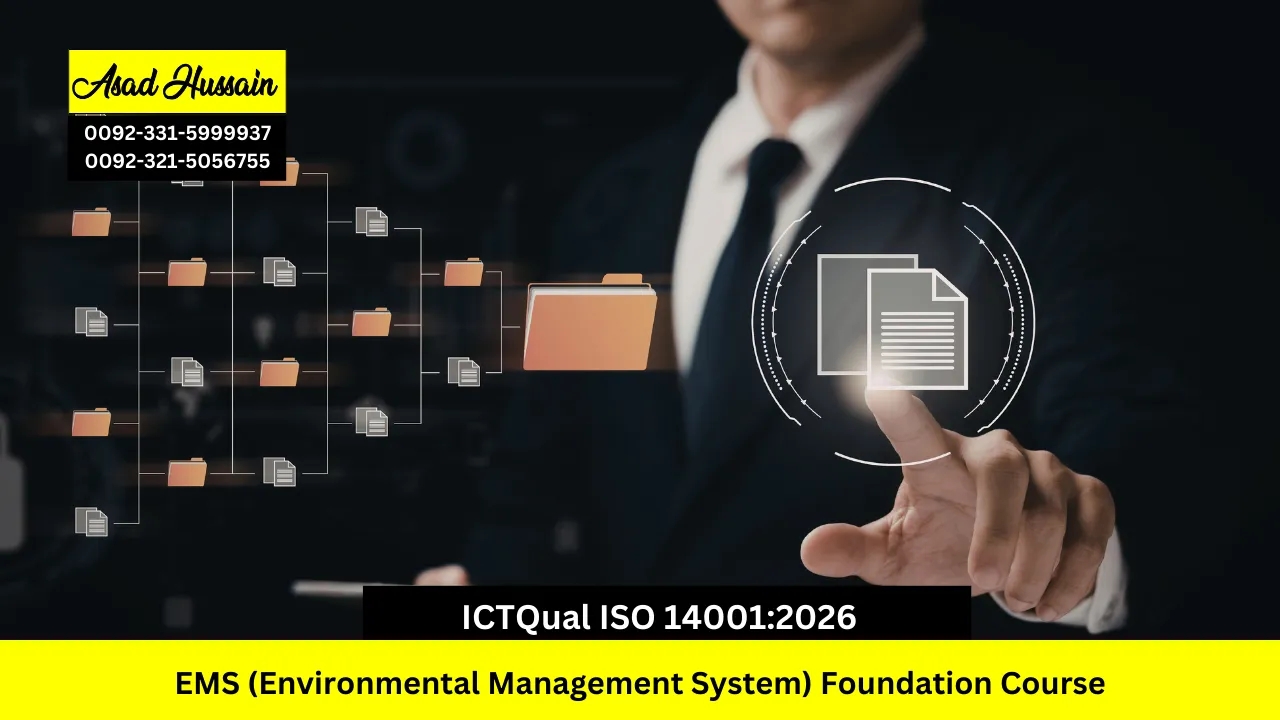
This course is designed to provide learners with a strong introduction to the ISO 14001:2026 Environmental Management System standards. It focuses on the essential principles of environmental management, sustainability practices, and compliance with international guidelines. Participants will gain practical knowledge of how organizations can implement effective systems to reduce environmental impact, improve efficiency, and meet global standards. The training emphasizes real-world applications, making it suitable for professionals who want to strengthen their expertise in environmental responsibility.
The program highlights the importance of proactive environmental management and equips learners with the skills to identify, manage, and improve processes within their organizations. By exploring the framework of ISO 14001:2026, participants will learn how to integrate sustainability into daily operations, enhance leadership involvement, and apply risk-based thinking. The course blends theoretical knowledge with practical insights, ensuring learners are prepared to address modern environmental challenges effectively.
Program Highlights
Study Units
This qualification, the ICTQual ISO 14001:2026 EMS (Environmental Management System) Foundation Course, consists of 6 mandatory units.
- Environmental Governance & Sustainability Frameworks
- ISO 14001:2026 Structure & Lifecycle Thinking
- Organizational Context & Stakeholder Expectations
- Environmental Aspects, Impacts & Risk-Based Thinking
- Digital Environmental Monitoring & AI Analytics
- Compliance Assurance & Continual Improvement
Entry Requirements
- Age Requirement: Applicants must be at least 18 years old to enroll, ensuring maturity and readiness for professional-level training.
- Educational Background: A minimum of a high school diploma or equivalent is required. Learners with related diplomas or certificates in environmental studies, sustainability, or compliance will find the course especially valuable.
- Language Proficiency: Participants should have a good command of English, as all course materials, instructions, and assessments are delivered in English.
- Work Experience: Prior experience in environmental management or sustainability roles is helpful but not mandatory, making the course accessible to both beginners and professionals.
This course is designed to be inclusive and practical, welcoming learners from diverse educational and professional backgrounds. Meeting these entry requirements ensures participants can fully engage with the ICTQual ISO 14001:2026 EMS Foundation Course and gain maximum value from its training and certification.
Learning Outcomes
Environmental Governance & Sustainability Frameworks
- Understand the role of environmental governance in promoting sustainability and regulatory compliance.
- Recognize global sustainability frameworks and how environmental management supports responsible operations.
- Identify organizational responsibilities for environmental protection and resource conservation.
- Understand how digital reporting tools support transparency and sustainability performance tracking.
ISO 14001:2026 Structure & Lifecycle Thinking
- Understand the structure and key components of ISO 14001:2026.
- Recognize lifecycle thinking and its importance in reducing environmental impact.
- Identify how environmental management integrates into organizational processes.
- Understand how digital documentation systems support EMS implementation and control.
Organizational Context & Stakeholder Expectations
- Identify internal and external factors affecting environmental performance.
- Recognize key stakeholders and understand their environmental expectations.
- Understand how stakeholder requirements influence environmental policies and objectives.
- Use digital feedback and data collection tools to gather stakeholder insights.
Environmental Aspects, Impacts & Risk-Based Thinking
- Understand how to identify environmental aspects and evaluate their impacts.
- Recognize environmental risks and opportunities affecting organizational sustainability.
- Apply risk-based thinking to minimize environmental harm and improve performance.
- Understand how digital monitoring systems help track environmental risks and impacts.
Digital Environmental Monitoring & AI Analytics
- Recognize the role of digital monitoring systems in tracking environmental performance.
- Understand how sensors, dashboards, and automated reporting support environmental control.
- Identify how AI analytics can detect trends and support environmental decision-making.
- Understand basic data integrity and reliability considerations in digital monitoring.
Compliance Assurance & Continual Improvement
- Understand environmental compliance obligations and regulatory requirements.
- Recognize methods used to evaluate compliance and environmental performance.
- Identify the importance of corrective actions and continual improvement processes.
- Understand how digital tracking systems support compliance monitoring and improvement initiatives.
Target Audience
The ICTQual ISO 14001:2026 EMS Foundation Course is designed for individuals and organizations committed to building expertise in environmental management systems. It is suitable for professionals across industries who want to strengthen compliance, sustainability, and operational efficiency while adapting to international standards.
Environmental Management Professionals
- Individuals working in environmental compliance and sustainability
- Professionals responsible for implementing EMS frameworks
- Staff engaged in monitoring and reporting environmental performance
- Consultants supporting organizations with environmental audits
- Practitioners aiming to improve environmental processes
Health, Safety, and Sustainability Officers
- Safety officers integrating environmental practices into operations
- Sustainability managers driving eco-friendly initiatives
- Compliance officers ensuring adherence to ISO standards
- Risk managers focusing on environmental risk reduction
- Supervisors overseeing workplace environmental policies
Corporate Leaders and Managers
- Business leaders committed to sustainable growth
- Managers responsible for operational efficiency and compliance
- Executives aligning corporate strategies with ISO 14001:2026
- Decision-makers enhancing organizational resilience
- Leaders promoting environmental responsibility across teams
Quality and Compliance Teams
- Quality assurance professionals ensuring system integration
- Compliance teams managing regulatory requirements
- Internal auditors evaluating EMS effectiveness
- Staff engaged in continuous improvement processes
- Teams aligning EMS with other management systems
Students and Career Builders
- Learners interested in environmental management careers
- Graduates with diplomas or certificates in sustainability or safety
- Individuals seeking recognized credentials in EMS transition
- Students aiming to gain practical knowledge of ISO standards
- Career builders enhancing employability in global industries
Industry Consultants and Trainers
- Consultants advising on ISO 14001 implementation projects
- Trainers delivering environmental awareness programs
- Advisors helping businesses achieve sustainability goals
- Practitioners supporting transition strategies
- Professionals offering EMS compliance solutions
This course empowers a diverse group of learners, from beginners to experienced professionals, ensuring they gain practical knowledge and certification in environmental management systems while contributing to organizational sustainability.