Advance Your Expertise in Alzheimer’s with Professional Diploma
OSHAA 30-Hours Professional Diploma in Alzheimer’s equips participants with specialised knowledge and skills for both personal and professional application. The course provides detailed guidance on practical care strategies, rehabilitation approaches, and lifestyle interventions to support cognitive and emotional wellbeing. Participants will also explore advanced methods for managing behavioral symptoms, ensuring safety, and enhancing independence for those living with Alzheimer’s. By the end of this diploma, learners will be prepared to apply evidence-informed care practices, contribute effectively to support networks, and promote a compassionate and informed approach to Alzheimer’s management.
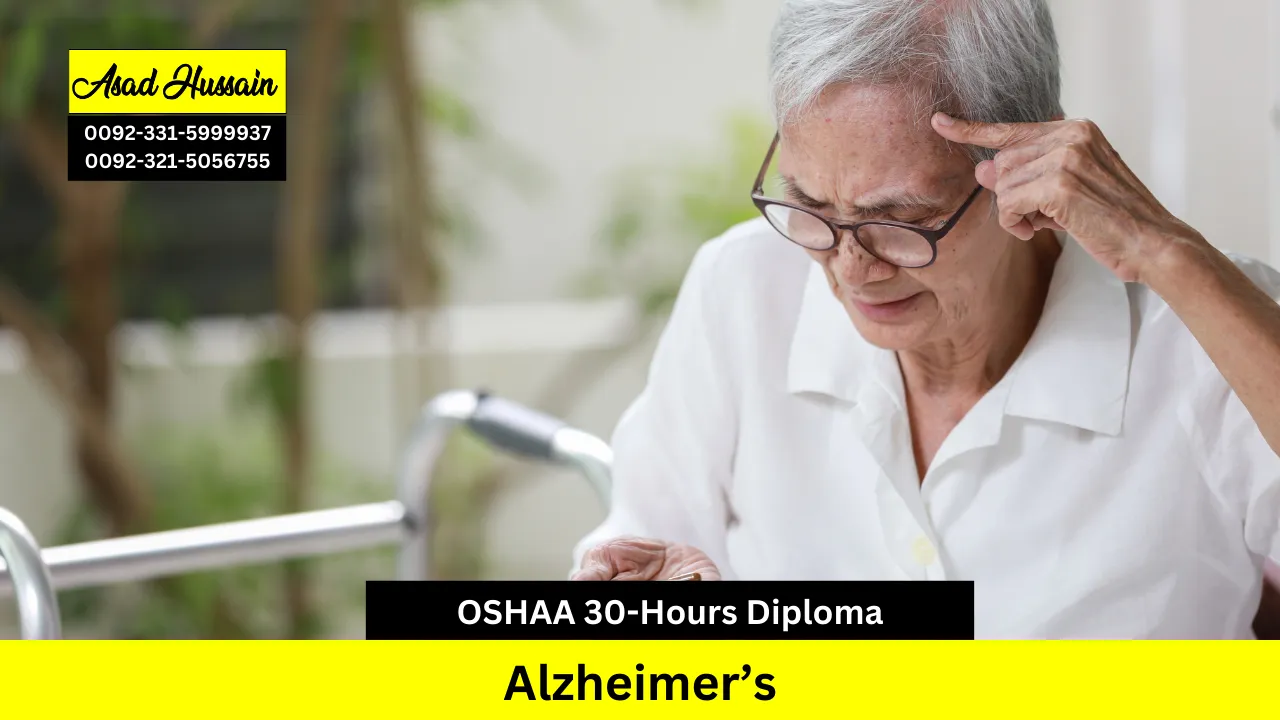
Alzheimer’s disease is a complex neurodegenerative condition that affects millions worldwide, impacting memory, cognition, and daily functioning. This course provides a comprehensive understanding of the disease, including its symptoms, progression, and challenges faced by individuals and caregivers. Participants will gain insights into the emotional, psychological, and social implications of Alzheimer’s, enabling them to approach care with empathy and informed strategies. The course combines theoretical knowledge with practical approaches, ensuring learners are equipped to support patients safely and effectively in various settings.
The program covers critical areas such as early recognition of Alzheimer’s symptoms, understanding the neurological basis of the disease, and exploring effective communication techniques for individuals experiencing cognitive decline. Learners will also examine behavioral and psychological changes associated with Alzheimer’s, and understand the importance of personalised care plans that enhance quality of life. Ethical considerations, caregiver support, and the role of multidisciplinary teams are emphasised to provide a holistic view of patient-centred care. Through engaging content, participants will develop the confidence to handle real-world challenges in caring for Alzheimer’s patients.
Program Highlights
Study Units
- Understanding Alzheimer’s Disease: Causes and Progression (3 hours)
- Recognising Early Signs and Symptoms (5 hours)
- The Stages of Alzheimer’s and Behavioural Changes (4 hours)
- Principles of Person-Centred Dementia Care (4 hours)
- Communication Techniques for Supporting Individuals with Alzheimer’s (3 hours)
- Managing Daily Living and Personal Care Needs (4 hours)
- Supporting Emotional and Mental Wellbeing (5 hours)
- Creating Safe and Supportive Environments (2 hours)
To enrol in the OSHAA 30-Hours Professional Diploma in Alzheimer’s, participants should meet the following basic entry requirements:
- Age Requirement: Participants must be at least 18 years old to ensure maturity for understanding sensitive topics related to Alzheimer’s care.
- Educational Background: A minimum of high school education or equivalent is recommended. Learners with diplomas or certificates in healthcare, social care, nursing, psychology, or related fields will find this course particularly suitable.
- Language Proficiency: Participants should have a good command of English, both written and verbal, to fully engage with course materials and assessments.
- Work Experience: While prior professional experience in healthcare, elderly care, or social services is beneficial, it is not mandatory. Individuals with volunteering experience in care settings will also benefit greatly from the course.
These entry requirements ensure that learners can fully comprehend the course content, actively participate in discussions, and apply knowledge effectively in real-world caregiving and healthcare contexts.
Learning Outcomes
Understanding Alzheimer’s Disease: Causes and Progression (3 Hours)
- Explain the neurological basis and underlying causes of Alzheimer’s disease
- Understand the progressive nature of the condition over time
- Identify key risk factors, including genetics, lifestyle, and health conditions
- Explore preventive strategies to potentially reduce the onset of symptoms
- Recognise how early interventions can influence disease progression
Recognising Early Signs and Symptoms (5 Hours)
- Identify cognitive changes such as memory loss, confusion, and disorientation
- Differentiate between normal ageing and early-stage Alzheimer’s indicators
- Recognise behavioural and emotional changes in the early stages
- Understand the importance of timely diagnosis and professional assessment
- Learn strategies to support early intervention and patient engagement
The Stages of Alzheimer’s and Behavioural Changes (4 Hours)
- Describe the main stages: mild, moderate, and severe Alzheimer’s
- Recognise typical behavioural and psychological symptoms at each stage
- Apply techniques to manage agitation, aggression, or wandering
- Identify changes in daily functioning and communication patterns
- Develop strategies to support quality of life throughout disease progression
Principles of Person-Centred Dementia Care (4 Hours)
- Understand the values of person-centred care in Alzheimer’s management
- Adapt care approaches to respect individual preferences and abilities
- Promote dignity, autonomy, and meaningful engagement in daily life
- Develop personalised care plans that reflect the needs of each individual
- Implement ethical practices that prioritise safety and wellbeing
Communication Techniques for Supporting Individuals with Alzheimer’s (3 Hours)
- Use effective verbal and non-verbal communication strategies
- Address barriers caused by cognitive decline or memory loss
- Encourage clear, patient, and empathetic interactions
- Reduce anxiety and confusion through supportive communication
- Enhance social engagement and maintain positive relationships
Managing Daily Living and Personal Care Needs (4 Hours)
- Assist with hygiene, dressing, and feeding while promoting independence
- Implement strategies to ensure safety and comfort in daily activities
- Recognise changes in functional abilities and adapt care accordingly
- Support routine and structure to reduce stress and confusion
- Encourage participation in meaningful daily tasks
Supporting Emotional and Mental Wellbeing (5 Hours)
- Understand the emotional impact of Alzheimer’s on patients and families
- Apply techniques to reduce agitation, anxiety, and depression
- Encourage engagement in meaningful activities and hobbies
- Foster social interaction and maintain connections with loved ones
- Promote resilience and positive mental health strategies
Creating Safe and Supportive Environments (2 Hours)
- Identify environmental risks in homes and care settings
- Implement safety measures to prevent falls and injuries
- Design spaces that promote orientation, comfort, and independence
- Support mobility and accessibility through practical adjustments
- Create a calming and structured environment for optimal care
Target Audience
This course is designed for individuals who want to gain a deep understanding of Alzheimer’s disease, improve patient care, and develop practical skills to support those affected by cognitive decline. It is suitable for professionals, caregivers, and anyone interested in enhancing their knowledge of dementia care.
Healthcare Professionals and Caregivers
- Nurses, healthcare assistants, and allied health professionals seeking specialised knowledge in Alzheimer’s care
- Social care workers and support staff working in residential or home care settings
- Professionals aiming to improve patient outcomes through enhanced understanding of cognitive disorders
- Caregivers looking to provide better support and empathy to individuals with Alzheimer’s
- Individuals responsible for daily monitoring and assistance of elderly patients
Family Members and Personal Caregivers
- Relatives of individuals diagnosed with Alzheimer’s wanting practical guidance
- Family members seeking strategies to manage challenging behaviours
- Individuals wishing to enhance communication and emotional support for loved ones
- Those aiming to reduce caregiver stress and improve wellbeing
- People looking to create a safer home environment for those affected
Mental Health and Rehabilitation Specialists
- Psychologists and counsellors working with dementia patients
- Occupational therapists seeking practical approaches to cognitive rehabilitation
- Speech and language therapists addressing communication challenges in Alzheimer’s
- Physiotherapists supporting mobility and functional independence in elderly patients
- Professionals developing multidisciplinary care plans
Educators and Trainers in Health and Social Care
- Instructors designing training programs for dementia care
- Workshop facilitators teaching best practices in Alzheimer’s management
- Academics focusing on gerontology or neurology education
- Training coordinators creating resources for caregivers
- Professionals updating educational content in line with current Alzheimer’s research
Volunteers and Community Support Workers
- Individuals volunteering in elderly care facilities or community centres
- People supporting Alzheimer’s awareness campaigns and advocacy programs
- Community health workers seeking specialised training
- Volunteers assisting families with caregiving strategies
- Individuals aiming to improve community engagement and patient support
This course is ideal for anyone committed to improving Alzheimer’s care, whether professionally or personally, providing the skills and knowledge to make a meaningful impact in the lives of those affected by the condition.