Become a Specialist in Emergency Response with Professional Diploma
The OSHAA 30-Hours Professional Diploma in Emergency Response is a comprehensive course designed to equip learners with the knowledge and skills required to respond effectively during emergencies. Participants will gain a deep understanding of different types of emergency situations, including medical, environmental, and workplace incidents. The course covers principles of risk assessment, immediate action, and safety protocols to ensure timely and efficient responses, reducing harm and protecting lives in critical situations.
Learners will also explore the tools, techniques, and strategies needed for emergency preparedness and intervention. Topics include first aid, CPR, fire safety, evacuation procedures, and communication protocols. Participants will understand how to assess hazards, prioritise actions, and implement emergency plans in real-world scenarios. Emphasis is placed on practical application, decision-making under pressure, and teamwork to enhance readiness and confidence in critical situations.
OSHAA 30-Hours Professional Diploma in Emergency Response provides participants with professional-level insights, practical techniques, and confidence to manage emergencies safely and effectively. The course aligns with related certifications and diplomas in first aid, occupational safety, disaster management, and healthcare response. Graduates will be prepared to act decisively in emergency situations, protect individuals and property, and contribute to safer environments in workplaces, communities, and public settings.
Program Highlights
Study Units
- Principles of Emergency Preparedness and Response (3 hours)
- Risk Identification and Emergency Planning (4 hours)
- Incident Assessment and Initial Actions (3 hours)
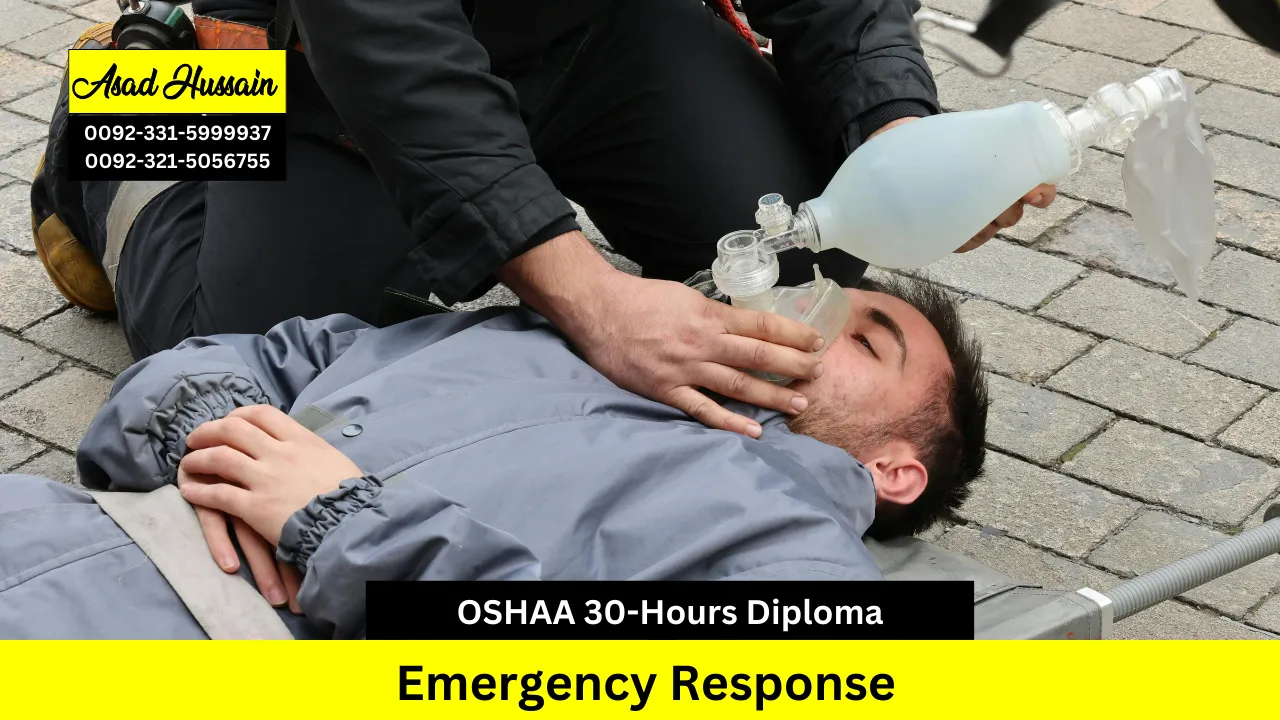
- First Aid for Medical Emergencies (5 hours)
- Fire Safety and Prevention Techniques (4 hours)
- Evacuation Planning and Crowd Management (6 hours)
- Emergency Communication and Reporting Procedures (3 hours)
- Working with Emergency Services and Response Teams (2 hours)
Entry Requirements
The OSHAA 30-Hours Professional Diploma in Emergency Response is designed to ensure learners have the foundational skills to fully benefit from the course content and apply emergency response techniques effectively. The entry requirements focus on accessibility while maintaining professional standards.
- Age Requirement: Participants must be at least 18 years old to enrol in the course, ensuring readiness for adult-level responsibilities and practical scenarios.
- Educational Background: Learners should have a secondary education or equivalent. Individuals with diplomas or certificates in first aid, occupational safety, healthcare, emergency management, or related fields will find prior knowledge advantageous.
- Language Proficiency: Participants should have a good command of English to understand training materials, instructions, and emergency communication protocols.
- Work Experience: While not mandatory, experience in healthcare, safety management, community services, or emergency-related roles will enhance practical understanding and application of the course concepts.
This course is ideal for safety officers, healthcare practitioners, community responders, educators, and professionals seeking practical and evidence-based skills to manage emergencies confidently and effectively.
Learning Outcomes
Principles of Emergency Preparedness and Response (3 Hours)
- Understand the fundamental concepts of emergency preparedness and response
- Recognise the importance of proactive planning in managing emergencies
- Identify different types of emergencies and appropriate levels of response
- Explore the role of prevention in reducing risks
- Learn strategies for creating a culture of safety
Risk Identification and Emergency Planning (4 Hours)
- Conduct basic risk assessments to identify potential hazards
- Develop emergency plans tailored to specific environments
- Understand the role of risk mitigation in effective emergency management
- Analyse potential threats and vulnerabilities in workplaces or communities
- Implement strategies to prevent or minimise emergency impact
Incident Assessment and Initial Actions (3 Hours)
- Perform an initial assessment of emergency situations
- Prioritise actions based on the severity and nature of the incident
- Apply appropriate techniques for ensuring immediate safety and control
- Recognise life-threatening risks and respond promptly
- Make critical decisions under pressure for effective outcomes
First Aid for Medical Emergencies (5 Hours)
- Provide basic first aid for common medical emergencies including bleeding, burns, and fractures
- Recognise symptoms of critical conditions such as heart attacks and strokes
- Apply CPR and use automated external defibrillators (AEDs) confidently
- Manage choking, seizures, and other acute medical events
- Ensure patient safety while awaiting professional medical support
Fire Safety and Prevention Techniques (4 Hours)
- Identify fire hazards and implement basic prevention strategies
- Understand the fire triangle and classes of fire
- Operate fire extinguishers safely and respond effectively to fire incidents
- Learn evacuation routes and safe practices during fire emergencies
- Promote awareness and training to reduce fire-related risks
Evacuation Planning and Crowd Management (6 Hours)
- Design and implement safe evacuation plans for different settings
- Manage the movement of people during emergencies to minimise panic
- Coordinate crowd control and maintain order in high-stress scenarios
- Identify safe assembly points and emergency exits
- Practice drills and evaluate evacuation efficiency
Emergency Communication and Reporting Procedures (3 Hours)
- Communicate clearly and effectively during emergency situations
- Follow reporting protocols for documenting incidents and responses
- Understand the role of communication in maintaining safety and coordination
- Use emergency signaling and alert systems efficiently
- Maintain accurate records for legal and organisational compliance
Working with Emergency Services and Response Teams (2 Hours)
- Recognise the roles of various emergency services in incident response
- Collaborate effectively with emergency personnel during crises
- Understand protocols for integrating with external response teams
- Coordinate handovers to professionals for seamless intervention
- Build teamwork skills for multi-agency emergency management
Target Audience
The OSHAA 30-Hours Professional Diploma in Emergency Response is designed for individuals who want to gain practical skills, knowledge, and confidence in managing emergencies across workplaces, communities, and public settings. This course is ideal for professionals seeking to enhance their emergency preparedness, first aid capabilities, and crisis management expertise.
Safety Officers and Workplace Professionals
- Health and safety officers responsible for emergency planning
- Facility managers implementing workplace safety protocols
- Risk assessment coordinators and compliance officers
- Professionals overseeing employee safety and incident prevention
- Staff responsible for emergency drills and evacuation planning
- Individuals aiming to improve overall workplace safety standards
Healthcare Practitioners and First Responders
- Nurses and paramedics enhancing emergency response knowledge
- Medical assistants supporting acute care situations
- Emergency response volunteers and rescue personnel
- Professionals managing patient triage and first aid in crises
- Staff seeking practical skills for rapid assessment and intervention
- Individuals aiming to integrate first aid with professional healthcare roles
Educators and Childcare Professionals
- Teachers and school administrators managing school emergencies
- Childcare providers implementing safety protocols and evacuation plans
- Staff responsible for student supervision during crises
- Educators training children on emergency preparedness
- Professionals collaborating with parents and local emergency services
- Individuals seeking to ensure safe learning environments for children
Community and Public Service Workers
- Fire safety personnel and volunteers in community programs
- Social workers supporting vulnerable populations during emergencies
- Security staff managing public events or high-risk areas
- Disaster response coordinators and relief volunteers
- Individuals working in emergency management or community resilience
- Staff aiming to improve emergency planning for local populations
Parents and Guardians
- Caregivers wanting to respond effectively during home emergencies
- Parents learning basic first aid and fire safety techniques
- Guardians preparing for natural or accidental emergencies
- Individuals ensuring the safety of children in domestic or public settings
- Families seeking knowledge of evacuation planning and risk prevention
- Caregivers aiming to build confidence in emergency handling
This course is ideal for anyone looking to gain professional-level knowledge and practical skills in emergency response, first aid, and crisis management, empowering participants to act decisively and safely in high-pressure situations.