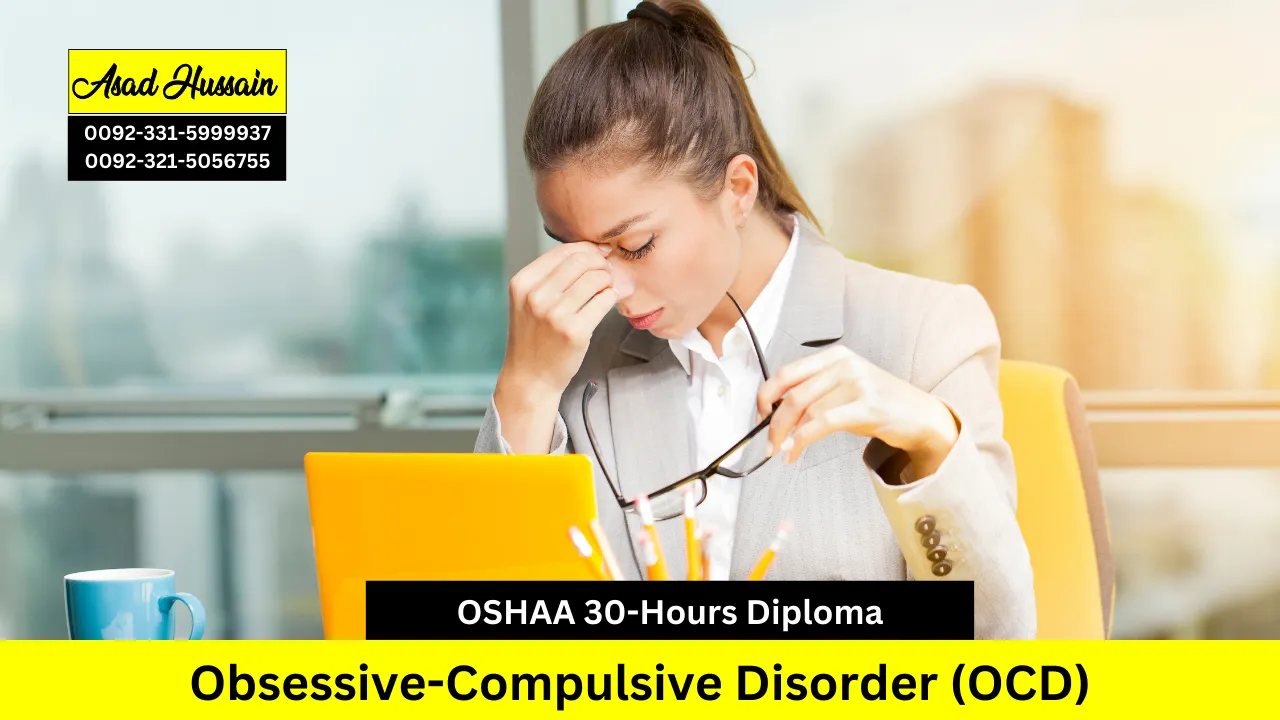
Become a Skilled Mental Health Professional with Diploma in OCD
The OSHAA 30-Hours Professional Diploma in Obsessive-Compulsive Disorder (OCD) is designed to provide learners with a comprehensive understanding of OCD, its symptoms, causes, and psychological impact. This course explores both the cognitive and behavioural aspects of the disorder, helping learners identify compulsions, obsessions, and the ways they affect daily life. Participants will gain insight into the factors influencing OCD, including genetic, environmental, and psychological components, as well as the broader implications for mental health and wellbeing. The structured approach ensures that learners can grasp complex mental health concepts in an accessible and practical way.
The programme also focuses on intervention strategies, support mechanisms, and awareness of therapeutic approaches. Learners will explore the importance of early recognition, assessment techniques, and communication strategies for supporting individuals living with OCD. Emphasis is placed on understanding the psychological, emotional, and social dimensions of the disorder, allowing learners to apply knowledge in professional, caregiving, or personal contexts. The course also highlights the role of mental health awareness in reducing stigma and promoting supportive environments for those affected.
OSHAA 30-Hours Professional Diploma in Obsessive-Compulsive Disorder (OCD) equips learners with essential knowledge to understand, identify, and respond effectively to OCD. The course strengthens professional credibility and awareness in healthcare, counselling, social work, and mental health roles. Participants will gain confidence in recognising symptoms, understanding triggers, and supporting effective coping strategies. This diploma aligns with other professional certifications and diplomas in mental health, psychology, and counselling, providing a practical and career-focused foundation for individuals seeking to enhance their expertise in managing OCD and related mental health conditions.
Program Highlights
Study Units
- Introduction to Obsessive-Compulsive Disorder and Historical Context (3 hours)
- Classification, Symptomatology, and OCD Subtypes (3 hours)
- Psychological and Neurobiological Theories of OCD (4 hours)
- Cognitive and Behavioural Features of OCD (6 hours)
- Assessment Tools and Diagnostic Criteria (4 hours)
- Case Formulation and Individualised Care Planning (3 hours)
- Cognitive Behavioural Therapy (CBT) for OCD (4 hours)
- Exposure and Response Prevention (ERP) Techniques (3 hours)
Entry Requirements
The OSHAA 30-Hours Professional Diploma in Obsessive-Compulsive Disorder (OCD) is designed to be accessible to learners from diverse academic and professional backgrounds. The entry requirements ensure participants can fully engage with the course content and gain maximum benefit.
- Age Requirement: Learners must be at least 18 years old at the time of enrolment to ensure readiness for professional-level learning.
- Educational Background: A basic secondary education is recommended. Prior knowledge in psychology, mental health, social care, or related fields, or possession of certificates or diplomas such as mental health awareness, counselling, caregiving, healthcare support, or social work, will be advantageous but is not mandatory.
- Language Proficiency: Learners should have sufficient proficiency in English to understand course materials, assessments, and terminology effectively.
- Work Experience: Previous work experience is not required; however, individuals working in mental health, healthcare, social work, counselling, or community support roles may find the course especially relevant and easier to contextualise.
This course welcomes motivated learners seeking to build professional knowledge and practical awareness of OCD, providing a strong foundation for career-focused development in mental health, counselling, or healthcare-related roles.
Learning Outcomes
Introduction to Obsessive-Compulsive Disorder and Historical Context (3 Hours)
- Understand the definition and core characteristics of OCD
- Explore the historical development and evolution of OCD diagnosis and treatment
- Recognise cultural and societal perceptions of OCD over time
- Identify the importance of early recognition and intervention
- Gain awareness of how OCD understanding has shaped modern treatment approaches
Classification, Symptomatology, and OCD Subtypes (3 Hours)
- Identify diagnostic criteria for OCD as outlined in major classification systems
- Differentiate between common OCD subtypes and symptom clusters
- Understand the spectrum of obsessive thoughts and compulsive behaviours
- Recognise variations in symptom presentation across age groups
- Explore patterns and nuances in OCD manifestations
Psychological and Neurobiological Theories of OCD (4 Hours)
- Examine key psychological models explaining OCD onset and maintenance
- Understand the role of cognitive distortions and maladaptive beliefs
- Explore neurobiological findings related to brain structure and function
- Evaluate the influence of genetics and environmental factors
- Connect theoretical understanding to practical implications for care
Cognitive and Behavioural Features of OCD (6 Hours)
- Analyse patterns of obsessive thinking and compulsive behaviours
- Understand how avoidance and safety behaviours reinforce OCD symptoms
- Identify behavioural triggers and maintenance cycles
- Apply behavioural theory to understand OCD responses and habits
- Examine the impact of OCD on daily functioning and quality of life
- Recognise the interplay between thought processes and behavioural responses
Assessment Tools and Diagnostic Criteria (4 Hours)
- Learn to use standardised assessment tools for identifying OCD
- Understand structured clinical interviews and rating scales
- Differentiate OCD from similar mental health conditions through accurate assessment
- Apply diagnostic criteria to clinical case examples
- Enhance precision in recognising OCD presentations
Case Formulation and Individualised Care Planning (3 Hours)
- Construct detailed case formulations using cognitive-behavioural models
- Identify personal, behavioural, and environmental contributing factors
- Develop individualised intervention strategies based on case formulations
- Tailor care plans to suit diverse OCD presentations
- Apply theory to practical care planning scenarios
Cognitive Behavioural Therapy (CBT) for OCD (4 Hours)
- Understand core principles and structure of CBT for OCD
- Learn how to challenge obsessive thoughts and cognitive distortions
- Explore strategies for reducing compulsive behaviours through CBT
- Apply CBT techniques to real-life case examples
- Strengthen practical understanding of therapy application
Exposure and Response Prevention (ERP) Techniques (3 Hours)
- Understand the theory and rationale behind ERP in OCD treatment
- Learn to design and implement graded exposure hierarchies
- Support participants in managing anxiety during ERP sessions
- Evaluate the effectiveness of ERP strategies in clinical practice
- Develop confidence in applying ERP methods safely and effectively
Target Audience
The OSHAA 30-Hours Professional Diploma in Obsessive-Compulsive Disorder (OCD) is designed for individuals who want to gain a thorough understanding of OCD, improve mental health awareness, and enhance their professional skills in healthcare, counselling, or social support roles.
Mental Health Professionals
- Psychologists seeking to expand knowledge of OCD
- Counsellors and therapists aiming to support OCD clients
- Psychiatrists and psychiatric nurses enhancing mental health care skills
- Professionals working in clinical or community mental health settings
- Individuals looking to improve treatment planning and patient outcomes
- Learners interested in understanding cognitive and behavioural therapy techniques
Healthcare and Support Staff
- Caregivers and healthcare assistants working with mental health clients
- Hospital and clinic staff seeking awareness of OCD symptoms
- Professionals in rehabilitation or support services
- Individuals aiming to recognise and respond to mental health challenges
- Staff wanting to strengthen patient interaction and observation skills
- Healthcare workers looking to apply practical mental health knowledge
Students and Learners in Psychology or Social Work
- Students of psychology or behavioural sciences seeking foundational knowledge
- Learners preparing for careers in counselling, social work, or mental health support
- Individuals interested in applied mental health theory
- Those wanting a professional diploma to complement their academic studies
- Students seeking practical insight into OCD interventions
- Learners aiming to build confidence in mental health assessment and care
Community and Social Care Workers
- Social workers supporting individuals with mental health conditions
- Community support staff engaging with OCD awareness programmes
- Individuals assisting clients with daily living and mental health management
- Professionals aiming to identify early signs of OCD in community settings
- Care coordinators wanting to improve support and guidance strategies
- Workers enhancing skills for safe, supportive environments
Career Changers and Lifelong Learners
- Professionals exploring new paths in mental health or counselling
- Individuals seeking flexible, accessible professional learning
- Learners wanting to gain recognised mental health knowledge
- Those interested in developing transferable skills for care and support roles
- Individuals committed to continuous personal and professional growth
Family Members and Caregivers
- Relatives supporting loved ones with OCD
- Parents seeking to understand obsessive-compulsive behaviours
- Individuals aiming to provide informed and compassionate care
- Family caregivers wanting practical strategies for daily support
- Learners looking to enhance communication and coping strategies
- Those dedicated to promoting mental health awareness at home
This course is suitable for anyone interested in understanding OCD, equipping learners with practical knowledge, professional skills, and confidence to support individuals affected by obsessive-compulsive disorder in healthcare, social, or community settings.