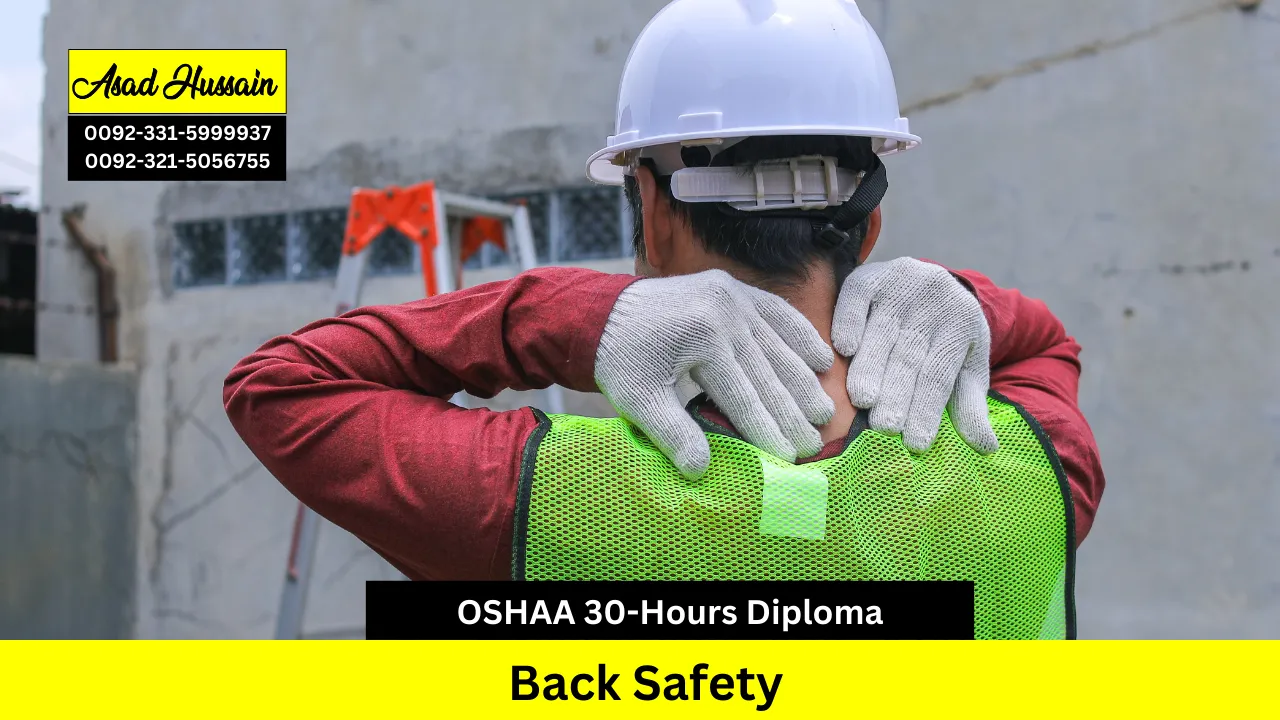
Become a Certified Back Safety Expert with Diploma – Safeguard Workplaces
The OSHAA 30-Hours Professional Diploma in Back Safety is designed to equip professionals, supervisors, and health and safety officers with advanced knowledge and practical tools for back injury prevention. The program combines theoretical insights with hands-on learning, including ergonomic assessments, correct lifting techniques, and injury management strategies. Graduates of this diploma will be able to implement effective back safety programs, train colleagues, and promote a culture of safety across organisations. Completing this course not only strengthens professional credibility but also helps protect employees, reduce workplace injuries, and enhance operational efficiency.
Back pain and injuries are among the leading causes of workplace absences and reduced productivity across industries. Understanding proper back safety practices is essential not only for employees’ health but also for organisational efficiency. This course focuses on the principles of ergonomics, manual handling, posture awareness, and injury prevention. Participants will gain practical skills to identify potential risks, apply safe lifting techniques, and implement strategies that reduce strain on the back in various work environments. By learning these techniques, individuals can contribute to creating safer, healthier, and more productive workplaces.
The course also addresses the physiological and anatomical aspects of the spine, muscles, and supporting structures to provide participants with a solid understanding of how back injuries occur. Emphasis is placed on risk assessment, proper use of personal protective equipment, and the development of workplace policies to ensure compliance with occupational safety standards. Participants will explore real-world scenarios and practical exercises that reinforce safe practices, empowering them to make immediate improvements in their daily work routines and overall workplace health culture.
Program Highlights
Study Units
- Introduction to Back Safety and Musculoskeletal Health (3 hours)
- Anatomy and Physiology of the Spine and Core Muscles (3 hours)
- Types and Causes of Workplace Back Injuries (4 hours)
- Principles of Safe Lifting and Manual Handling (6 hours)
- Ergonomics in the Workplace: Risk Factors and Adjustments (4 hours)
- Identifying and Assessing Back Injury Risks (4 hours)
- Early Signs of Back Strain and Preventive Strategies (3 hours)
- Postural Awareness and Core Strengthening Techniques (3 hours)
Entry Requirements
To enrol in the OSHAA 30-Hours Professional Diploma in Back Safety, candidates should meet the following entry requirements to ensure they can fully benefit from the course content:
- Age Requirement: Participants must be at least 18 years old.
- Educational Background: A minimum of high school education or equivalent is recommended. Candidates with prior diplomas or certificates in occupational safety, health and safety, ergonomics, or workplace wellness will find it advantageous.
- Language Proficiency: Participants should have a good command of English, as all course materials, assessments, and instructions are delivered in English.
- Work Experience: While prior professional experience in health and safety, manual handling, or workplace ergonomics is beneficial, it is not mandatory. Individuals from supervisory roles, construction, manufacturing, healthcare, or office environments can apply and will gain practical insights relevant to their fields.
These requirements are designed to ensure participants can engage effectively with the course content, participate in practical exercises, and successfully implement back safety strategies in their workplaces. Graduates will be equipped to lead safety initiatives, reduce workplace injuries, and promote healthier working environments.
Learning Outcomes
Introduction to Back Safety and Musculoskeletal Health (3 hours)
- Understand the importance of back safety in workplace environments
- Recognise the impact of musculoskeletal disorders on health and productivity
- Identify basic concepts in musculoskeletal health and injury prevention
- Explore the role of personal responsibility and workplace culture in back safety
Anatomy and Physiology of the Spine and Core Muscles (3 hours)
- Identify the main structures of the spine and their functions
- Understand the role of core muscles in supporting posture and movement
- Recognise how spinal alignment influences physical health and injury risk
- Relate anatomical knowledge to practical back safety applications
Types and Causes of Workplace Back Injuries (4 hours)
- Identify common types of back injuries associated with occupational tasks
- Understand how repetitive movement, improper lifting, and poor posture contribute to strain
- Explore the relationship between task design and injury prevalence
- Recognise high-risk environments and work habits
Principles of Safe Lifting and Manual Handling (6 hours)
- Learn proper techniques for lifting, lowering, and carrying objects safely
- Apply mechanical principles to reduce physical strain during movement
- Understand the use of equipment and aids in manual handling tasks
- Practise safe manual handling techniques for different workplace scenarios
- Recognise the importance of planning and communication in lifting tasks
- Support safe handling practices in team-based environments
Ergonomics in the Workplace: Risk Factors and Adjustments (4 hours)
- Understand how ergonomics influence workplace safety and back health
- Identify common ergonomic hazards in both physical and desk-based roles
- Learn to adjust workspaces and tools to support safe posture and movement
- Apply ergonomic principles to minimise fatigue and physical strain
Identifying and Assessing Back Injury Risks (4 hours)
- Recognise potential risk factors for back injury in different work settings
- Learn the process of conducting a basic back safety risk assessment
- Understand the role of observation and task analysis in hazard identification
- Contribute to back injury prevention planning and risk control
Early Signs of Back Strain and Preventive Strategies (3 hours)
- Identify early warning signs of back pain and musculoskeletal stress
- Understand the importance of early reporting and intervention
- Learn basic strategies to prevent further strain or injury
- Promote awareness of physical limits and self-monitoring
Postural Awareness and Core Strengthening Techniques (3 hours)
- Understand the relationship between posture and spinal health
- Practise correct sitting, standing, and movement techniques
- Learn simple core exercises to improve strength and stability
- Support personal and team efforts in maintaining safe posture at work
Target Audience
This course is designed for professionals and individuals who want to enhance workplace safety, prevent back injuries, and promote musculoskeletal health. It is suitable for employees across various industries, safety managers, and anyone responsible for occupational health.
Workplace Safety Officers and Managers
- Enhance knowledge of back safety protocols and injury prevention
- Develop skills to train staff on safe lifting and posture practices
- Implement ergonomic strategies in diverse work environments
- Monitor compliance with workplace safety standards
- Reduce workplace accidents and injury-related absenteeism
- Promote a culture of safety and proactive risk management
Manual Handling and Physical Labor Staff
- Learn correct lifting, lowering, and carrying techniques
- Reduce the risk of musculoskeletal injuries during daily tasks
- Understand the impact of repetitive movements on back health
- Apply safe handling practices in team-based operations
- Increase awareness of body mechanics and personal safety
- Support long-term physical wellbeing and job performance
Ergonomics and Occupational Health Professionals
- Identify ergonomic risk factors in office and industrial settings
- Assess workstations, tools, and equipment for injury prevention
- Implement adjustments to improve posture and reduce strain
- Develop strategies for sustainable workplace design
- Educate employees on maintaining spinal health
- Integrate ergonomic principles into organizational policies
Healthcare and Rehabilitation Specialists
- Understand common causes and types of back injuries
- Apply knowledge to support patient recovery and injury prevention
- Design intervention plans for safe movement and rehabilitation
- Educate clients on proper posture and body mechanics
- Promote long-term musculoskeletal health and wellness
- Enhance professional credibility in occupational health
Fitness Trainers and Wellness Coaches
- Integrate back safety techniques into training programs
- Design core strengthening and posture improvement routines
- Advise clients on injury prevention strategies
- Promote holistic physical wellness and musculoskeletal stability
- Support healthy movement patterns for diverse populations
- Increase client engagement and safety awareness
General Workforce and Employees
- Gain awareness of personal responsibility in back safety
- Recognise early signs of strain and injury
- Adopt safe lifting and posture practices in daily work
- Minimise risk of workplace musculoskeletal disorders
- Improve physical comfort and productivity at work
- Contribute to a safer and healthier organizational environment
This course equips participants with the knowledge and practical skills needed to prevent back injuries, promote musculoskeletal health, and create safer workplaces across all industries.