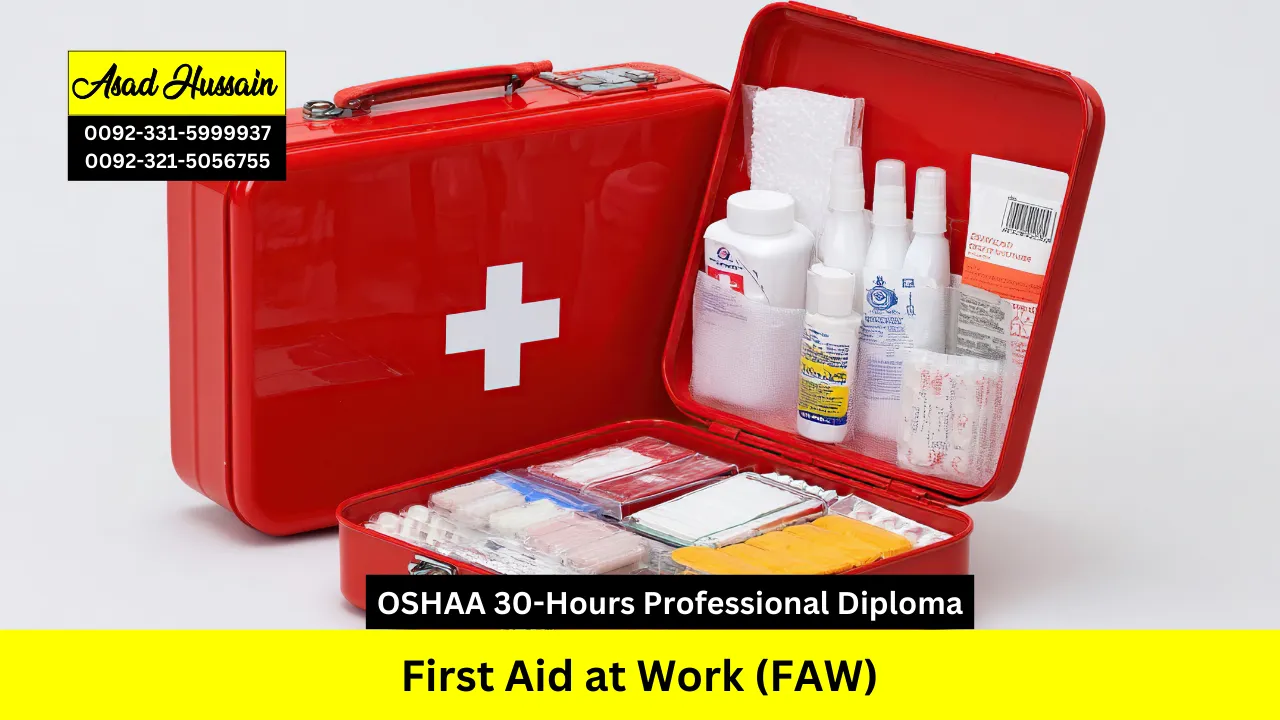
OSHAA 30-Hours Professional Diploma in First Aid at Work (FAW) – Learn to Act Fast, Save Lives
The OSHAA 30-Hours Professional Diploma in First Aid at Work (FAW) is a comprehensive training programme designed to develop essential workplace first aid knowledge and practical emergency response skills. This course prepares learners to confidently handle common workplace injuries, sudden illnesses, and critical incidents, ensuring timely and effective first aid support. Through structured learning and real-world scenarios, participants gain a strong understanding of first aid responsibilities within professional environments. Although this course is not Ofqual regulated, it is professionally designed to meet industry expectations and promote a safer, more prepared workplace culture across various sectors.
This intensive diploma focuses on practical first aid techniques, emergency assessment, and appropriate response procedures required in workplace settings. Learners develop the confidence to act decisively during emergencies, supporting the wellbeing of colleagues, visitors, and the wider workforce. The course content is suitable for a wide range of industries and roles, making it highly adaptable and relevant. Completion of this diploma supports professional growth and enhances workplace competence, while also providing a strong foundation for pursuing further certifications and diplomas in first aid, health and safety, and emergency response disciplines.
OSHAA 30-Hours Professional Diploma in First Aid at Work (FAW) delivers career-focused training that strengthens emergency readiness and promotes responsible first aid practices in professional environments. The course enhances decision-making, communication, and risk awareness during workplace emergencies, enabling learners to provide immediate and appropriate care. Designed for global relevance, this diploma supports continuous professional development and encourages learners to build upon their skills through additional certifications and professional diplomas, making it an excellent choice for individuals and organisations committed to workplace safety and effective emergency response.
Program Highlights
Mandatory Unit
- Introduction to First Aid at Work and Workplace Safety Regulations (2 Hours)
- Risk Assessment and Emergency Preparedness in the Workplace (3 Hours)
- Primary Survey, Casualty Assessment, and Incident Management (3 Hours)
- Cardiopulmonary Resuscitation (CPR) and Automated External
- Defibrillator (AED) Operation (5 Hours)
- Management of Unconscious Casualties and Recovery Position Techniques (3 Hours)
- Bleeding Control, Wound Care, and Shock Management (4 Hours)
- First Aid for Burns, Scalds, and Chemical Injuries (4 Hours)
- Management of Fractures, Sprains, and Soft Tissue Injuries (3 Hours)
- Response to Medical Emergencies: Heart Attack, Stroke, and Seizures (3 Hours)
The OSHAA 30-Hours Professional Diploma in First Aid at Work (FAW) is open to learners who meet basic eligibility criteria.
- Age Requirement: Learners must be at least 16 years of age to ensure they have the maturity and responsibility required to understand and apply workplace first aid procedures effectively.
- Educational Requirements: There are no formal academic prerequisites for this course. A basic educational background is sufficient; however, learners with prior certificates or diplomas in First Aid, Health and Safety, Workplace Safety, Emergency Response, Fire Safety, Risk Assessment, or Occupational Safety may find the course particularly beneficial.
- Language Proficiency: Learners should have a basic to intermediate level of English proficiency, as all learning materials, instructions, and assessments are delivered in English to support clear understanding and effective communication.
- Work Experience: Previous work experience is not mandatory. However, individuals currently working in offices, factories, construction sites, warehouses, hospitality, or supervisory roles may be able to relate the course content more easily to real workplace situations.
Learning Outcomes
Introduction to First Aid at Work and Workplace Safety Regulations (2 Hours)
- Understand the role and responsibilities of a workplace first aider
- Recognise the importance of adhering to workplace safety regulations and guidelines
- Identify legal requirements for first aid provision in the workplace
Risk Assessment and Emergency Preparedness in the Workplace (3 Hours)
- Conduct basic workplace risk assessments to identify potential hazards
- Develop and implement effective emergency response plans
- Apply strategies to minimise workplace accidents and injuries
Primary Survey, Casualty Assessment, and Incident Management (3 Hours)
- Perform a primary survey to assess casualty condition
- Apply systematic casualty assessment techniques to prioritise treatment
- Manage incidents effectively to ensure safety and coordinated response
Cardiopulmonary Resuscitation (CPR) and Automated External Defibrillator (AED) Operation (5 Hours)
- Perform CPR for adults, children, and infants according to recognised guidelines
- Operate an AED safely and effectively in an emergency
- Integrate CPR and AED use to maximise survival chances during cardiac arrest
Management of Unconscious Casualties and Recovery Position Techniques (3 Hours)
- Assess and manage unconscious casualties to maintain airway safety
- Apply correct recovery position techniques to prevent complications
- Monitor and provide ongoing care until professional help arrives
Bleeding Control, Wound Care, and Shock Management (4 Hours)
- Apply appropriate techniques to control external and internal bleeding
- Administer basic wound care to prevent infection and complications
- Recognise and manage different types of shock effectively
First Aid for Burns, Scalds, and Chemical Injuries (4 Hours)
- Identify types and severity of burns and scalds
- Apply appropriate first aid for thermal, electrical, and chemical burns
- Prevent further injury and minimise long-term damage through correct care
Management of Fractures, Sprains, and Soft Tissue Injuries (3 Hours)
- Recognise signs and symptoms of fractures, sprains, and soft tissue injuries
- Apply appropriate immobilisation and support techniques
- Provide effective care to reduce pain and prevent further injury
Response to Medical Emergencies: Heart Attack, Stroke, and Seizures (3 Hours)
- Recognise early signs and symptoms of heart attack, stroke, and seizures
- Provide immediate and appropriate first aid response for each condition
- Support and monitor casualties until advanced medical help arrives
Target Audience
The OSHAA 30-Hours Professional Diploma in First Aid at Work (FAW) is designed for individuals who want to develop essential workplace first aid skills and respond confidently to emergencies in professional environments.
Workplace First Aiders and Safety Representatives
- Designated workplace first aiders
- Health and safety representatives
- Emergency response team members
- Fire wardens and safety marshals
- Shift supervisors and team leaders
- Office and site safety coordinators
Managers, Supervisors, and Team Leaders
- Line managers and department heads
- Site supervisors and floor managers
- Operations and production supervisors
- Human resource professionals
- Compliance and safety officers
- Business owners and employers
Office, Industrial, and Site-Based Workers
- Office and administrative staff
- Factory and warehouse workers
- Construction and site operatives
- Maintenance and technical staff
- Hospitality and retail employees
- Logistics and transport workers
Healthcare and Support Personnel
- Healthcare assistants and support workers
- Care home and facility staff
- Occupational health support staff
- Community care workers
- Facility and building management teams
- First aid volunteers
Security, Events, and Public-Facing Staff
- Security officers and guards
- Event stewards and coordinators
- Reception and front-desk staff
- Customer service personnel
- Transport and travel staff
- Public service workers
Individuals Seeking Safety and Emergency Skills
- Employees aiming to enhance workplace safety knowledge
- Individuals responsible for team wellbeing
- Learners preparing for additional certifications
- Professionals strengthening emergency readiness
- Career switchers into safety-focused roles
- Volunteers in organisational settings