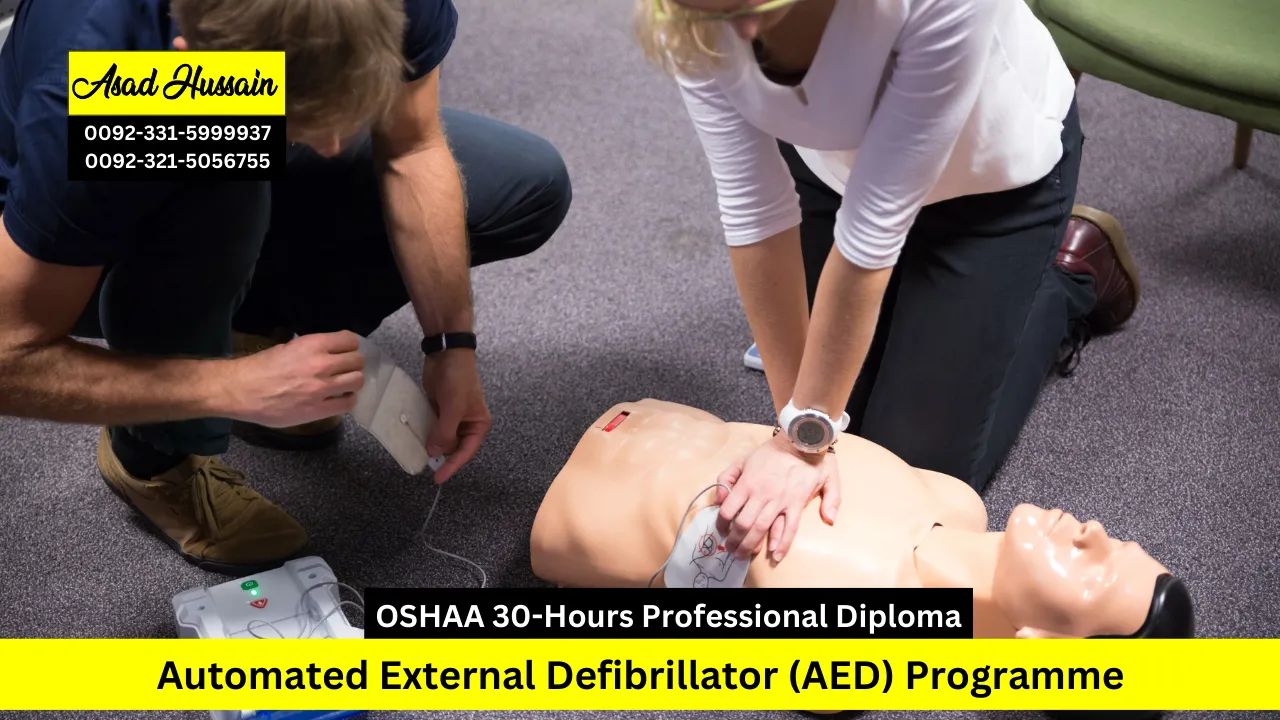
The OSHAA 30-Hours Professional Diploma in Automated External Defibrillator (AED) Programme is a comprehensive and career-focused training course designed to equip learners with the essential knowledge and practical skills required to respond confidently to sudden cardiac arrest emergencies. Sudden cardiac arrest is a leading cause of unexpected death, and timely use of an AED can significantly increase survival rates. This professional diploma provides structured, in-depth learning aligned with international health and safety standards.
This AED training certification course covers the fundamentals of cardiac emergencies, early recognition of cardiac arrest, safe and effective use of Automated External Defibrillators, and coordination with emergency medical services. Learners will also gain an understanding of AED maintenance, safety precautions, legal considerations, and workplace or public-access defibrillation programs. The course emphasizes real-world application, helping participants build confidence in emergency response situations.
Delivered through a flexible online learning format, the 30-hour professional diploma supports continuing professional development (CPD) and skill enhancement for healthcare professionals, first aiders, safety officers, educators, and caregivers. Upon successful completion, learners receive an OSHAA-certified professional diploma, strengthening professional credibility and improving employability. Whether in healthcare, education, public safety, or workplace environments, this course empowers individuals with life-saving AED skills that can make a critical difference in emergency situations.
Program Highlights
Mandatory Unit
- Introduction to Cardiac Arrest and the Importance of Early Defibrillation (3 Hours)
- Anatomy and Physiology of the Heart and Circulatory System (3 Hours)
- Recognition of Sudden Cardiac Arrest and Emergency Response (4 Hours)
- Fundamentals of Automated External Defibrillator (AED) Technology (3 Hours)
- Safe Operation and Application of AED Devices (5 Hours)
- Integration of CPR and AED Use in Cardiac Emergencies (4 Hours)
- Troubleshooting Common AED Issues and Device Maintenance (3 Hours)
- Legal and Ethical Considerations in AED Use (2 Hours)
- Emergency Scenario Simulations and Practical AED Training (3 Hours)
To ensure learners can successfully meet the academic and practical demands of this specialised programme, applicants are expected to meet the following entry requirements.
Entry Requirements
- Minimum Age Requirement: Applicants must be at least 18 years of age at the time of enrolment.
- Educational Background: Minimum secondary education (high school certificate or equivalent)
- Experience: No prior AED or medical experience required
- English Language Proficiency: Basic to intermediate English proficiency is required
Learning Outcomes
Introduction to Cardiac Arrest and the Importance of Early Defibrillation (3 Hours)
- Understand the causes and impact of cardiac arrest
- Recognise the critical role of early defibrillation in improving survival rates
- Comprehend the chain of survival and how AED fits into emergency response
Anatomy and Physiology of the Heart and Circulatory System (3 Hours)
- Gain knowledge of heart structure and function
- Understand the basics of the circulatory system relevant to cardiac emergencies
- Identify how cardiac arrest affects heart and blood flow
Recognition of Sudden Cardiac Arrest and Emergency Response (4 Hours)
- Identify signs and symptoms of sudden cardiac arrest
- Learn appropriate steps to initiate emergency response
- Develop skills to assess and prioritise emergency situations
Fundamentals of Automated External Defibrillator (AED) Technology (3 Hours)
- Understand how AED devices work and their components
- Learn about different types of AEDs and their functions
- Recognise the limitations and capabilities of AED technology
Safe Operation and Application of AED Devices (5 Hours)
- Demonstrate correct use of AED devices following safety protocols
- Apply AED pads properly and operate the device confidently
- Manage safety for both casualty and responders during AED use
Integration of CPR and AED Use in Cardiac Emergencies (4 Hours)
- Understand how CPR complements AED use during cardiac arrest
- Perform coordinated CPR and AED procedures effectively
- Maintain high-quality chest compressions with minimal interruptions
Troubleshooting Common AED Issues and Device Maintenance (3 Hours)
- Identify and resolve common operational problems with AED devices
- Understand maintenance routines to ensure AED readiness
- Learn to check and replace AED batteries and pads appropriately
Legal and Ethical Considerations in AED Use (2 Hours)
- Understand legal responsibilities and protections for AED users
- Recognise ethical issues related to emergency care and AED application
- Learn about consent and liability in emergency situations
Emergency Scenario Simulations and Practical AED Training (3 Hours)
- Participate in realistic emergency simulations involving AED use
- Develop hands-on experience applying AED skills under pressure
- Build confidence and decision-making abilities for real-life emergencies
This course is designed for individuals who want to gain essential, life-saving skills to respond effectively to cardiac emergencies and use an Automated External Defibrillator (AED) with confidence in real-world situations.
Who This Course Is For:
- Healthcare professionals and healthcare support staff
- First aiders and emergency response personnel
- Workplace health and safety officers
- Teachers, school staff, and education professionals
- Security staff and public safety workers
- Caregivers and support workers
- Individuals responsible for AED use in workplaces or public spaces
- Beginners seeking AED certification and emergency response skills
- Anyone interested in improving cardiac emergency preparedness