
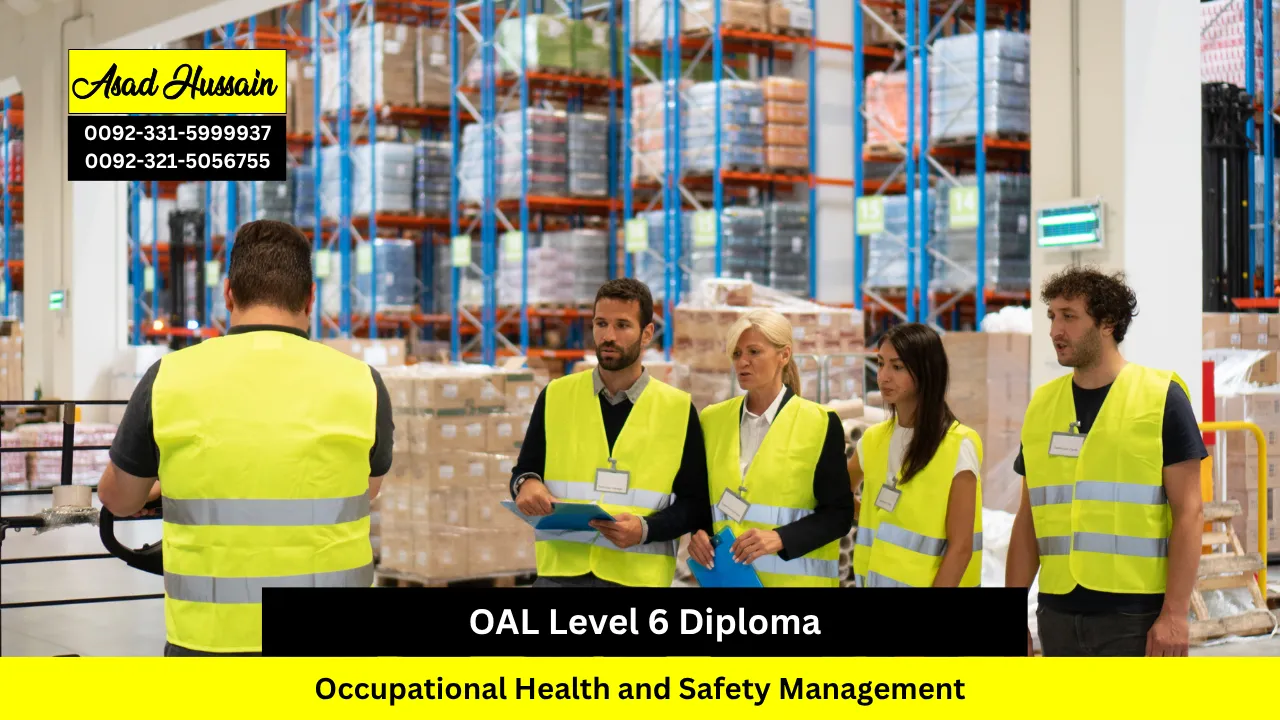
The OAL Level 6 Diploma in Occupational Health and Safety Management is an advanced qualification designed for Learners seeking to develop professional knowledge and management skills in occupational health and safety. It provides a comprehensive understanding of workplace health and safety management, risk assessment, hazard control, incident prevention, safety culture, legal compliance and continuous improvement. The qualification is suitable for individuals who want to build or strengthen their career in occupational health and safety management across a range of industries.
Learners develop the ability to analyse workplace risks, evaluate health and safety management systems, implement effective control measures and contribute to organisational safety strategies. The programme also supports understanding of health and safety legislation, workplace responsibilities, emergency preparedness, incident management and effective safety communication.
The OAL Level 6 Diploma in Occupational Health and Safety Management can be relevant to health and safety officers, safety supervisors, managers, risk professionals, construction and engineering professionals, and individuals progressing towards senior safety responsibilities. It provides a strong foundation for applying effective occupational health and safety management principles within modern workplaces.
By completing this Level 6 qualification, Learners can strengthen their professional knowledge, demonstrate advanced understanding of health and safety management and support career progression into roles involving workplace safety, risk management, compliance and organisational health and safety improvement.
Program Highlights
Study Units
- Develop the Health and Safety Policy
- Prepare to Implement the Health and Safety Policy
- Manage Work-Based Hazards through Control Measures
- Manage Emergency Response Procedures
- Manage Organisational Health and Safety Competence and Training
- Manage Proactive Health and Safety Monitoring in the Workplace
- Manage Reactive Health and Safety Monitoring in the Workplace
- Review Health and Safety Management Systems
Entry Requirements
The OAL Level 6 Diploma in Occupational Health and Safety Management is suitable for Learners with a relevant academic, professional or workplace background who want to progress in occupational health and safety management.
- Age: Normally 18 years or above.
- Education: Relevant Level 5 qualification or equivalent prior learning is recommended.
- Experience: Relevant health and safety or management experience is beneficial.
- English Language: Sufficient English reading, writing and communication skills.
- Professional Background: Suitable for Learners working in health and safety, construction, engineering, manufacturing, facilities management and related sectors.
- Prior Learning: Relevant qualifications, knowledge and experience may be considered by the approved centre.
Course Learning Outcome
Learning outcomes for OAL Level 6 Diploma in Occupational Health and Safety Management
1. Develop the Health and Safety Policy
Learning Outcomes:
- Analyse the legal and organisational requirements for a health and safety policy.
- Develop a comprehensive health and safety policy aligned with organisational objectives.
- Define roles, responsibilities, and arrangements within the policy.
- Ensure stakeholder engagement and communication of the policy across the organisation.
2. Prepare to Implement the Health and Safety Policy
Learning Outcomes:
- Plan the resources and actions required for effective policy implementation.
- Identify and address barriers to implementation.
- Develop an action plan with defined roles, responsibilities, and timeframes.
- Establish communication strategies to support implementation.
3. Manage Work-Based Hazards Through Control Measures
Learning Outcomes:
- Identify and evaluate common workplace hazards across various environments.
- Apply appropriate risk assessment methodologies.
- Recommend and implement suitable control measures in line with the hierarchy of control.
- Monitor the effectiveness of implemented control measures and recommend improvements.
4. Manage Emergency Response Procedures
Learning Outcomes:
- Assess organisational requirements for emergency preparedness.
- Develop and document emergency response plans and procedures.
- Coordinate emergency drills and simulations to test response capability.
- Evaluate and revise emergency procedures based on outcomes and feedback.
5. Manage Organisational Health and Safety Competence and Training
Learning Outcomes:
- Assess organisational training needs in relation to health and safety.
- Develop a competence and training framework for all staff levels.
- Implement effective training programmes and maintain accurate records.
- Monitor training outcomes and update learning plans accordingly.
6. Manage Proactive Health and Safety Monitoring in the Workplace
Learning Outcomes:
- Design and implement proactive monitoring systems and techniques.
- Conduct routine inspections and audits to identify potential risks.
- Analyse monitoring data to identify trends and areas for improvement.
- Report findings and propose actions to enhance safety performance.
7. Manage Reactive Health and Safety Monitoring in the Workplace
Learning Outcomes:
- Respond effectively to health and safety incidents and near misses.
- Lead or support investigations into workplace incidents.
- Identify root causes and contributing factors of incidents.
- Implement corrective actions and update risk controls accordingly.
8. Review Health and Safety Management Systems
Learning Outcomes:
- Evaluate the effectiveness of the current health and safety management system.
- Identify areas for continuous improvement using data, audits, and stakeholder feedback.
- Recommend and implement system improvements aligned with recognised standards (e.g., ISO 45001).
- Develop reporting mechanisms to inform strategic decision-making.
Target Audience
The OAL Level 6 Diploma in Occupational Health and Safety Management is designed for Learners who want to develop advanced knowledge and management capabilities in workplace health and safety. It is suitable for professionals seeking career progression, greater responsibility and stronger expertise in occupational health and safety management.
- Health and Safety Officers seeking to advance their professional knowledge and responsibilities.
- Health and Safety Advisors and Supervisors involved in workplace risk control and safety management.
- Safety Managers responsible for implementing and monitoring organisational health and safety systems.
- Risk and Compliance Professionals working with workplace risk, legal requirements and safety performance.
- Construction and Engineering Professionals managing occupational hazards and workplace safety.
- Manufacturing and Industrial Professionals responsible for maintaining safe working environments.
- Managers and Team Leaders with health and safety responsibilities within their organisations.
- Occupational Health and Safety Practitioners seeking advanced professional development.
- Learners with Relevant Level 5 Qualifications progressing to advanced study in occupational health and safety management.
- Career Changers looking to develop a professional pathway into health and safety management.
- Professionals Seeking Career Progression towards senior safety, risk, compliance and occupational health and safety roles.
Expand Your Professional Opportunities
OAL Level 6 Diploma in Occupational Health and Safety Management can support professional progression and may provide access to further recognition and verification pathways, subject to the requirements of the relevant organisations.
BCSP – TSP® Pathway
The qualification provides a potential pathway towards the Transitional Safety Practitioner® (TSP®) designation through the Qualified Equivalent Program (QEP) of the Board of Certified Safety Professionals (BCSP).
British Council
The qualification may also be suitable for document attestation, verification and related recognition processes through the British Council, subject to the applicable requirements and verification procedures.
Ministry of Foreign Affairs (MOFA)
The qualification may be suitable for document attestation, verification and related recognition processes through the Ministry of Foreign Affairs (MOFA), depending on the purpose and applicable requirements.
Professional & International Recognition
These pathways can support learners seeking professional progression, qualification verification or international documentation. Requirements may vary according to the organisation, country and intended purpose.