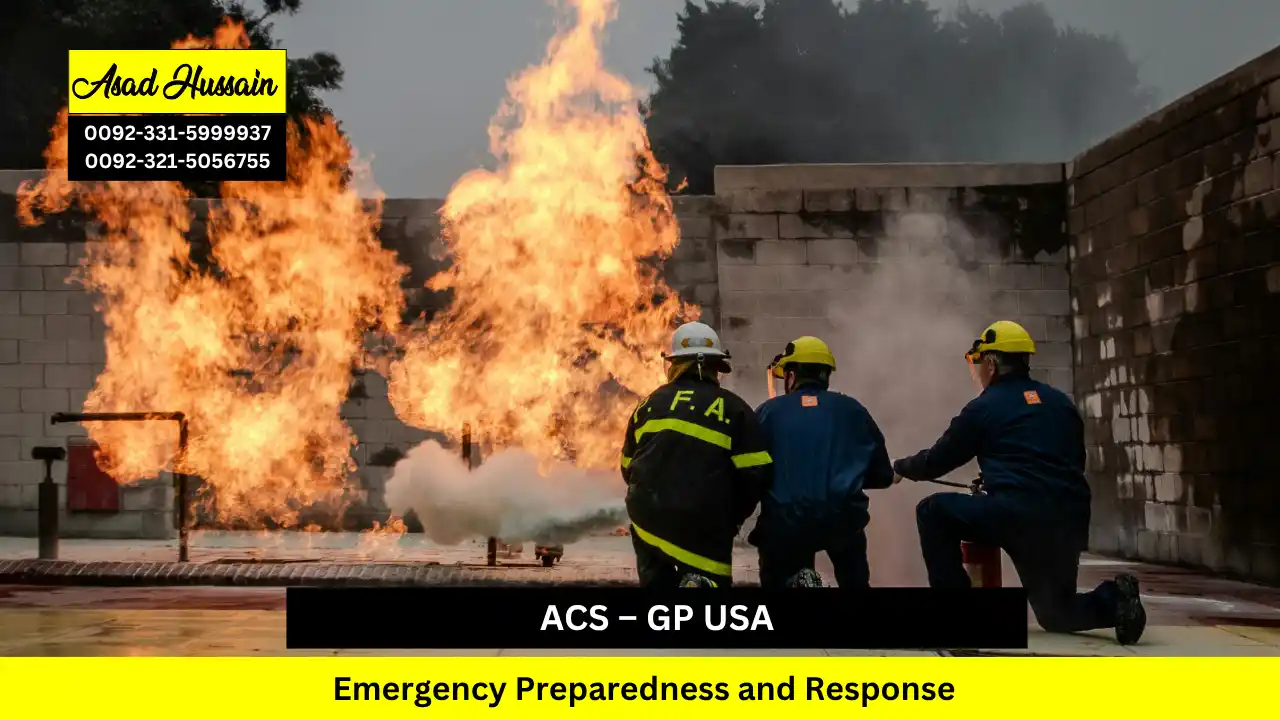
The ACS – GP USA Emergency Preparedness and Response course is designed to equip learners with the knowledge and practical understanding needed to effectively prepare for, respond to, and recover from workplace emergencies. Emergencies such as fires, chemical spills, natural disasters, medical incidents, security threats, and operational disruptions can occur without warning, making preparedness essential for protecting people, assets, and business continuity.
This course introduces the key principles of emergency planning, risk assessment, evacuation procedures, communication systems, incident response, and crisis management. Learners will gain an understanding of how to identify potential emergency situations, implement preventive measures, and coordinate appropriate responses during critical incidents. The training also emphasises the importance of emergency drills, teamwork, leadership, and compliance with workplace safety requirements.
Suitable for employees, supervisors, managers, health and safety professionals, and emergency response personnel, this course helps organisations strengthen resilience, minimise risks, and ensure a safer and more prepared working environment.
Program Highlights
Course Objective
- Understand OSHA and FEMA emergency preparedness and response standards for workplaces.
- Identify potential workplace emergencies, including fires, chemical spills, and natural disasters.
- Learn to develop and implement comprehensive emergency action plans (EAPs).
- Develop skills to coordinate emergency response efforts with internal teams and external agencies.
- Explore the use of emergency equipment, such as alarms, evacuation tools, and communication systems.
- Gain knowledge of evacuation procedures and crowd management during emergencies.
- Understand the importance of regular emergency drills and employee training.
- Learn to evaluate and improve emergency plans based on incident reviews.
Entry Requirements
The following entry requirements are recommended to ensure learners can successfully complete the program:
- Age Requirement: Learners should be at least 16 years of age.
- Educational Background: There are no formal academic prerequisites for this course. However, a basic secondary school education or equivalent is recommended to support understanding of emergency preparedness and response concepts.
- Professional Experience: No prior emergency management, safety, or response experience is required.
- English Proficiency: Learners should have a good understanding of English and strong communication skills.
Course Learning Outcomes
- Demonstrate a strong understanding of emergency preparedness standards by developing effective Emergency Action Plans (EAPs).
- Identify, assess, and mitigate potential workplace emergencies through appropriate preventive measures.
- Coordinate efficient emergency response actions with internal teams and external emergency services.
- Operate emergency equipment and communication systems effectively during crisis situations.
- Execute safe evacuation procedures and manage crowd control during emergencies and drills.
- Conduct emergency drills and preparedness training to strengthen workplace readiness.
- Review, evaluate, and update emergency response plans based on incident outcomes and lessons learned.
Target Audience
The ACS – GP USA Emergency Preparedness and Response course is suitable for individuals and organisations seeking to improve their ability to prepare for, manage, and respond to workplace emergencies effectively. This course is particularly beneficial for:
- Health, Safety, and Environment (HSE) Professionals
- Emergency Response Team Members
- Safety Officers and Safety Supervisors
- Fire Wardens and Fire Safety Personnel
- Site Supervisors and Site Managers
- Operations Managers
- Facilities Managers
- Security Personnel
- Maintenance and Engineering Staff
- Construction Workers and Supervisors
- Manufacturing and Industrial Personnel
- Oil and Gas Industry Workers
- Warehouse and Logistics Personnel
- Risk Management Professionals
- Business Continuity and Crisis Management Teams
- Human Resources Personnel responsible for emergency planning
- Healthcare Facility Staff and Administrators
- School, College, and University Safety Coordinators
- Government and Public Sector Employees
- Team Leaders and Department Managers
- Workplace First Aiders
- Contractors and Subcontractors
- Learners pursuing careers in occupational health, safety, and emergency management
- Any employee responsible for workplace emergency preparedness and response
This course is also valuable for organisations seeking to strengthen emergency readiness, improve incident response capabilities, protect personnel, and ensure business continuity during unexpected events.s.employees and visitors.ent.tor.